
Testing 12 Volt Electric Motor: Complete Performance, Wiring & Troubleshooting Guide
A 12 volt electric motor is widely used in automotive systems, solar applications, water pumps, robotics, battery-powered machines, and DIY equipment. Proper Testing 12 Volt Electric Motor performance is important to ensure efficiency, safety, and long operational life. A weak or faulty motor can reduce system performance, overheat wiring, drain batteries quickly, and even damage connected equipment.
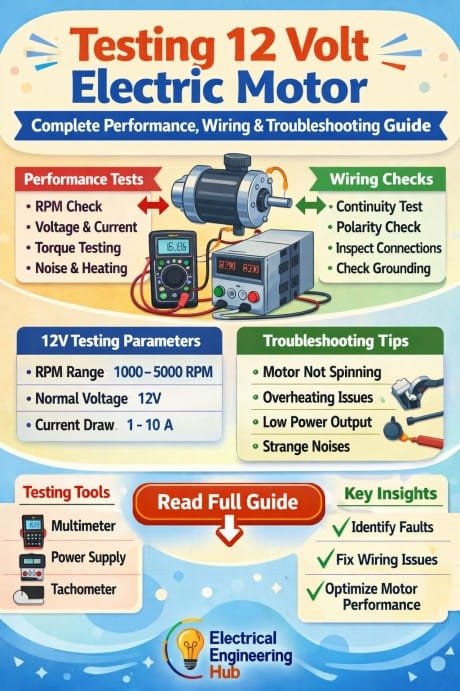
Table of Contents
Whether you are working with a DC water pump motor, automotive fan motor, actuator, or small machinery, understanding how to test and troubleshoot the motor can save both time and repair costs. This guide explains the complete process of Testing 12 Volt Electric Motor systems, including wiring inspection, voltage testing, continuity checks, load performance evaluation, and troubleshooting methods.
Why Testing a 12 Volt Electric Motor Is Important
Electric motors operate under varying loads and environmental conditions. Over time, carbon brushes wear out, windings weaken, bearings become rough, and wiring connections loosen. Regular Testing 12 Volt Electric Motor systems helps identify these issues before major failure occurs.
Know more about Electric Motor Visual Inspection Checklist
Some key benefits of motor testing include:
- Improved motor efficiency
- Reduced battery consumption
- Prevention of overheating
- Early detection of damaged wiring
- Longer equipment lifespan
- Better safety during operation
A properly functioning 12V DC motor should rotate smoothly, maintain stable speed, and operate without excessive heat or unusual noise.
Common Applications of 12 Volt Electric Motors
The following table shows where 12V electric motors are commonly used.
| Application | Motor Purpose |
|---|---|
| Solar water pumps | Water circulation and pumping |
| Automotive cooling fans | Engine temperature control |
| Power windows | Window movement |
| Electric actuators | Mechanical movement |
| Battery-operated tools | Portable machine operation |
| Robotics projects | Motion and automation |
| Ventilation systems | Air circulation |
Understanding the application helps during Testing 12 Volt Electric Motor systems because each load condition affects motor behavior differently.
Tools Required for Motor Testing
Before starting the testing process, gather the required tools.
| Tool | Purpose |
|---|---|
| Digital multimeter | Voltage and continuity testing |
| 12V battery | Power source |
| Test wires with clips | Temporary motor connection |
| Clamp meter | Current measurement |
| Screwdrivers | Opening motor terminals |
| Safety gloves | Electrical protection |
| Tachometer | RPM measurement |
Using quality testing equipment improves accuracy and reduces the risk of electrical faults.
Know more about Best 7 Electric Motor Vibration Testers
Understanding Basic 12 Volt Motor Wiring
Most 12V electric motors use two-wire DC connections. One wire connects to positive voltage, while the other connects to the negative terminal or ground.
Basic Wiring Structure
| Wire Type | Function |
|---|---|
| Positive wire | Supplies 12V power |
| Negative wire | Completes circuit path |
| Ground connection | Safety and stability |
| Fuse line | Overcurrent protection |
If the polarity is reversed, the motor direction usually changes in DC motors. During Testing 12 Volt Electric Motor wiring, always verify polarity before applying power.
Step-by-Step Process for Testing 12 Volt Electric Motor
Visual Inspection
Start with a physical inspection of the motor body and wiring.
Check for:
- Burn marks
- Melted insulation
- Loose terminals
- Rust or moisture
- Broken connectors
- Damaged brushes
A visual inspection often reveals obvious issues before advanced testing begins.
Voltage Testing
Use a digital multimeter to verify voltage supply.
Steps
- Set the multimeter to DC voltage.
- Connect probes to motor input terminals.
- Apply power to the motor.
- Check voltage reading.
Know more about Electric Motor Stator Testing
A healthy supply should show around 12V to 13.8V depending on battery condition.
| Voltage Reading | Condition |
|---|---|
| 12V – 13.8V | Normal |
| Below 11V | Weak battery or voltage drop |
| Zero voltage | Wiring fault or disconnected circuit |
Low voltage can cause slow motor rotation and overheating.
Continuity Testing
Continuity testing checks whether internal motor windings are intact.
Procedure
- Disconnect power supply.
- Set multimeter to continuity mode.
- Place probes on motor terminals.
- Listen for beep or observe resistance reading.
| Result | Meaning |
|---|---|
| Continuity present | Windings are connected |
| No continuity | Open winding or broken circuit |
| Very low resistance | Possible short circuit |
This step is essential during Testing 12 Volt Electric Motor winding conditions.
Current Consumption Test
Current draw indicates motor health under load.
How to Test
- Connect clamp meter around positive wire.
- Start the motor.
- Observe amp reading.
| Motor Condition | Current Behavior |
|---|---|
| Healthy motor | Stable current |
| Bearing issue | High current |
| Weak winding | Low power output |
| Mechanical jam | Excessive current spike |
A motor drawing excessive current usually suffers from mechanical resistance or internal damage.
Know more about Best 5 Electric Motor RPM Testers
Motor Speed and Performance Test
Motor RPM testing helps evaluate overall performance.
Signs of Proper Operation
- Smooth rotation
- Stable speed
- Minimal vibration
- No unusual noise
- Moderate temperature
If the motor struggles under load, inspect brushes, bearings, or voltage supply.
Common Problems Found During Testing
Motor Does Not Start
This is one of the most common issues.
Possible Causes
- Dead battery
- Broken wire
- Burned windings
- Faulty switch
- Loose terminal
Solution
Check voltage supply first. Then inspect continuity and terminal connections.
Motor Runs Slowly
A slow motor usually indicates power loss or internal wear.
| Cause | Solution |
|---|---|
| Low voltage | Recharge battery |
| Worn brushes | Replace brushes |
| Dirty commutator | Clean surface |
| Bearing resistance | Lubricate bearings |
Slow speed is a clear warning sign during Testing 12 Volt Electric Motor performance.
Know more about Best 5 Electric Motor Rotor Testing Machines
Motor Overheating
Overheating reduces motor lifespan and damages insulation.
Main Reasons
- Excessive load
- Poor ventilation
- Shorted windings
- Incorrect voltage
- Continuous operation
Allow the motor to cool and inspect airflow around the motor housing.
Excessive Sparking
Sparking inside DC motors often comes from brush problems.
Check For
- Worn carbon brushes
- Dirty commutator
- Loose brush springs
- Moisture contamination
Proper cleaning and brush replacement usually solve the issue.
Testing 12 Volt Electric Motor Under Load
Testing without load is useful, but real performance appears under operating conditions.
Load Testing Procedure
- Connect the motor to its actual application.
- Run the system normally.
- Measure current and voltage.
- Observe speed stability.
- Monitor temperature rise.
| Observation | Possible Issue |
|---|---|
| Voltage drop | Weak battery |
| High amps | Overload |
| Reduced RPM | Internal wear |
| Excessive heat | Poor efficiency |
Load testing provides a realistic picture of motor condition.
Know more about Types of Electric Motor Testing
Safety Tips During Motor Testing
Electrical testing should always be performed carefully.
Important Safety Measures
- Disconnect power before continuity testing
- Use insulated tools
- Avoid wet environments
- Never short battery terminals
- Wear protective gloves
- Use proper fuse protection
Safe Testing 12 Volt Electric Motor procedures reduce the risk of electrical accidents and equipment damage.
Preventive Maintenance for 12V Motors
Regular maintenance keeps motors operating efficiently for years.
Maintenance Checklist
| Maintenance Task | Recommended Frequency |
|---|---|
| Clean motor housing | Monthly |
| Inspect wiring | Monthly |
| Check brushes | Every 6 months |
| Lubricate bearings | As needed |
| Test voltage | Regularly |
| Tighten terminals | Quarterly |
Preventive maintenance reduces downtime and improves motor reliability.
Best Practices for Accurate Motor Testing
For consistent results, follow these professional recommendations:
- Use a fully charged battery
- Test with proper load conditions
- Keep terminals clean
- Measure current during startup
- Compare readings with manufacturer specifications
- Avoid overheating during long tests
Know more about Electric Motor Core Loss Test
These practices improve the accuracy of Testing 12 Volt Electric Motor diagnostics.
Final Thoughts
Testing 12 Volt Electric Motor systems is an essential process for maintaining efficiency, reliability, and safety in automotive, solar, industrial, and portable equipment. Proper testing involves checking voltage supply, continuity, current draw, motor speed, wiring integrity, and load performance.
A healthy 12V motor should operate smoothly with stable current, minimal heat, and consistent speed. Early detection of issues such as worn brushes, voltage drops, damaged windings, or bearing resistance can prevent costly repairs and unexpected failures.
By following systematic inspection and troubleshooting methods, users can extend motor lifespan and ensure dependable performance in everyday applications. Regular maintenance and accurate testing procedures remain the key to achieving reliable operation from any 12 volt electric motor.
Know more about Electric Motor Polarization Index Test
Get new guides in your feed. Follow Electrical Insights on LinkedIn for new electrical standards guides, calculators and design tips from Azad Circuit Hub.
#Testing12VoltElectricMotor,#12VoltMotorTesting,#ElectricMotorTest,#DCMotorTesting,#12VMotorRepair,#MotorPerformanceTest,#ElectricMotorMaintenance,#MotorTroubleshooting,#DCMotorInspection,#IndustrialMotorTesting
