
PAT Electrical Testing Requirements & Cost | Complete Guide for Compliance, Pricing & Safety Standards
Pat Electrical Testing is a critical process for ensuring the safety, reliability, and compliance of electrical appliances in workplaces and commercial environments. Businesses across industries rely on this inspection method to prevent electrical hazards, reduce downtime, and meet legal safety obligations. Whether you manage an office, factory, or agricultural setup, understanding testing requirements and cost factors helps you make informed decisions.
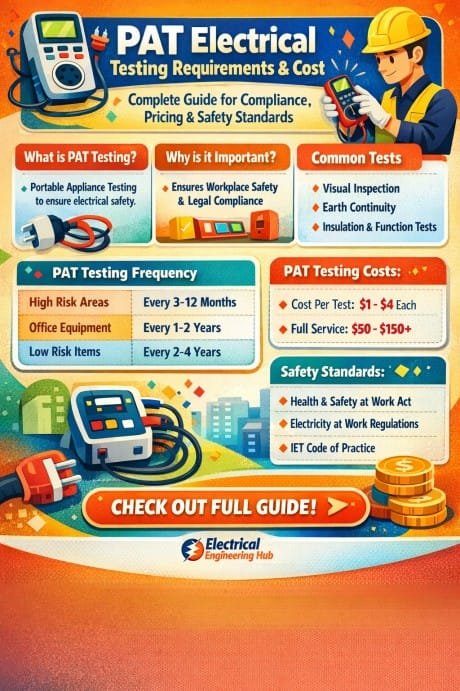
Table of Contents
What is Pat Electrical Testing
Pat Electrical Testing refers to the routine inspection and testing of electrical appliances to confirm they are safe to use. It includes both visual inspections and specialized instrument testing carried out by qualified professionals. The process identifies faults such as damaged cables, poor insulation, or internal electrical issues that may lead to shocks or fire hazards.
This testing applies to all portable and movable electrical equipment, including computers, extension leads, kitchen appliances, and industrial tools.
Know more about Top 12 Electrical Testing Equipment Suppliers in USA
Why Pat Electrical Testing is Important
Electrical faults are one of the leading causes of workplace accidents. Regular Pat Electrical Testing helps minimize these risks while maintaining compliance with safety regulations.
Key benefits include:
- Prevention of electrical accidents and fires
- Compliance with workplace safety laws
- Improved equipment lifespan
- Reduced maintenance costs
- Enhanced employee safety and confidence
Organizations that neglect testing often face penalties, insurance issues, and operational disruptions.
Legal Requirements and Compliance Standards
While Pat Electrical Testing is not always explicitly mandated by law in some regions, safety regulations require employers to ensure all electrical equipment is safe. Compliance is typically guided by standards such as:
| Requirement Area | Description |
|---|---|
| Workplace Safety Laws | Employers must maintain safe equipment conditions |
| Electrical Standards | Equipment must meet national wiring and safety codes |
| Risk Assessment | Regular checks based on usage and environment |
| Documentation | Test records must be maintained for audits |
The frequency of testing depends on the type of equipment and working conditions. High-risk environments like construction sites require more frequent inspections compared to low-risk office settings.
Know more about Power Quality Analyzer Buying Guide for Engineers
Types of Equipment Covered
Pat Electrical Testing covers a wide range of appliances. These are generally categorized based on risk level and usage.
| Equipment Type | Examples | Risk Level | Testing Frequency |
|---|---|---|---|
| IT Equipment | Computers, printers | Low | 12–24 months |
| Office Equipment | Photocopiers, monitors | Low | 12–24 months |
| Portable Tools | Drills, grinders | High | 3–6 months |
| Kitchen Appliances | Microwaves, kettles | Medium | 6–12 months |
| Extension Leads | Power strips, cables | High | 3–6 months |
This classification ensures that high-risk devices receive more frequent attention.
Pat Electrical Testing Process
The testing process involves several steps to ensure comprehensive inspection and safety verification.
Visual Inspection
Technicians first check for visible damage such as:
- Frayed cables
- Cracked plugs
- Burn marks
- Loose connections
Know more about VLF Testing vs Hipot: Best Guide on Key Differences and Applications
Electrical Testing
Using specialized instruments, the following tests are performed:
- Earth continuity test
- Insulation resistance test
- Polarity check
- Leakage current test
Labeling and Documentation
After testing, each appliance is labeled with a pass or fail sticker. A detailed report is also provided for compliance records.
Cost of Pat Electrical Testing
The cost of Pat Electrical Testing varies based on multiple factors including location, number of appliances, and complexity of equipment. Understanding pricing helps businesses budget effectively.
Average Pricing Structure
| Number of Appliances | Cost Per Item (Approx) | Total Estimated Cost |
|---|---|---|
| 1–50 | $2 – $5 | $100 – $250 |
| 50–200 | $1.5 – $3 | $75 – $600 |
| 200+ | $1 – $2 | $200+ |
In Pakistan and similar markets, pricing may vary depending on service provider expertise and travel requirements.
Explore details on High Voltage Cable Testing Procedure: Step-by-Step Guide for Safe & Accurate HV Cable Testing
Factors Affecting Cost
Several elements influence the final cost:
- Quantity of equipment
- Type of appliances
- Location and accessibility
- Urgency of service
- Certification requirements
Bulk testing usually reduces the per-unit cost, making it more economical for large organizations.
Choosing the Right Testing Provider
Selecting a qualified provider is essential for accurate results and compliance. Not all service providers offer the same level of expertise.
Consider the following when choosing:
- Certified and trained technicians
- Use of calibrated testing equipment
- Experience in your industry
- Clear reporting and documentation
- Transparent pricing structure
A reliable provider ensures your Pat Electrical Testing is conducted professionally and meets safety standards.
Find all about Partial Discharge vs Tan Delta Cable Testing: Important Key Differences Every Engineer Must Know
How Often Should Testing Be Done
Testing frequency depends on risk level and usage intensity. There is no one-size-fits-all schedule, but general guidelines include:
| Environment Type | Suggested Frequency |
|---|---|
| Offices | Every 1–2 years |
| Construction Sites | Every 3–6 months |
| Industrial Areas | Every 6–12 months |
| Public Use Equipment | Every 6 months |
Regular inspections combined with risk assessment ensure optimal safety.
Common Issues Found During Testing
Pat Electrical Testing often reveals hidden faults that could lead to serious incidents. Some common issues include:
- Damaged insulation
- Incorrect wiring
- Faulty grounding
- Overloaded circuits
- Loose internal connections
Know more about Partial Discharge Test Equipment Price in USA & Europe
Early detection allows timely repairs and prevents costly breakdowns.
Tips to Reduce Testing Costs
Businesses can optimize costs without compromising safety by following practical strategies:
- Schedule bulk testing for all equipment
- Maintain appliances regularly
- Train staff for basic visual checks
- Keep an updated inventory list
- Partner with long-term service providers
Preventive maintenance reduces failures and minimizes the need for frequent replacements.
Future Trends in Electrical Safety Testing
With advancements in technology, Pat Electrical Testing is evolving. Digital reporting, automated testing devices, and cloud-based compliance tracking are becoming common. These innovations improve accuracy, reduce testing time, and enhance record management.
Smart monitoring systems may soon allow real-time fault detection, reducing reliance on periodic inspections.
Findt all about AC Hipot Test Procedure for Cables
Conclusion
Pat Electrical Testing remains an essential practice for maintaining workplace safety and regulatory compliance. From identifying hidden faults to ensuring operational efficiency, it plays a vital role in protecting both people and assets. Understanding testing requirements, cost structures, and best practices enables businesses to implement effective safety strategies.
Investing in regular testing is not just about compliance; it is a proactive step toward a safer and more reliable working environment.
Explore all about AC Hipot Tester Price in Canada
Follow Us on Social:
Subscribe our Newsletter on Electrical Insights for latest updates from Electrical Engineering Hub
#PATElectricalTesting,#PATTestingCost,#ElectricalSafetyTesting,#PATCompliance,#EquipmentTesting,#WorkplaceSafety,#ElectricalInspection,#SafetyStandards,#TestingServices,#IndustrialSafety
