IEC 60364 Insulation Resistance Test: Comprehensive Overview
Electrical installations must maintain a high level of insulation to ensure safety, reliability, and compliance with international standards. The IEC 60364 insulation resistance test is one of the most important verification procedures used during installation, commissioning, and maintenance of electrical systems. It helps identify insulation deterioration, moisture ingress, damaged cables, and potential leakage paths before they lead to equipment failure or electrical hazards.
Whether you are an electrical engineer, maintenance technician, contractor, or inspector, understanding the IEC 60364 insulation resistance test is essential for ensuring safe operation of low-voltage electrical installations.
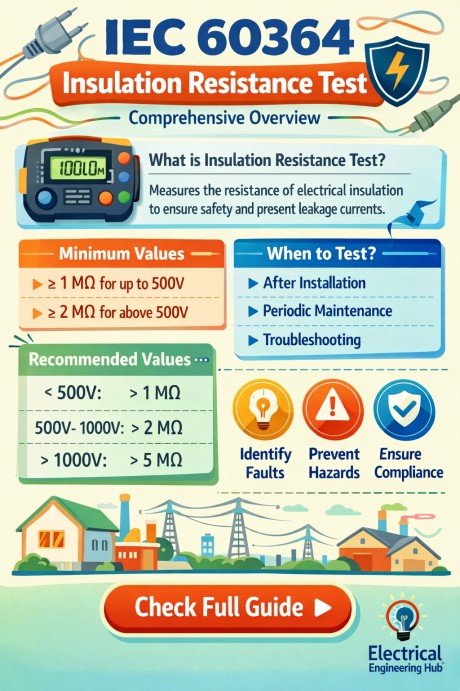
Table of Contents
What Is the IEC 60364 Insulation Resistance Test?
The IEC 60364 insulation resistance test is a verification procedure specified within the IEC 60364 series of standards for low-voltage electrical installations. The purpose of the test is to confirm that conductors, cables, equipment, and electrical circuits have adequate insulation resistance to prevent dangerous leakage currents.
The test is typically performed using an insulation resistance tester, commonly known as a megger. A DC test voltage is applied between conductors and earth, and the resulting insulation resistance value is measured in megaohms (MΩ).
A satisfactory result indicates that the insulation system can safely withstand operating conditions without creating shock hazards or unwanted current leakage.
Know more about insulation resistance test standard
Why Is Insulation Resistance Testing Important?
Insulation degradation can occur due to several factors, including:
- Aging of insulation materials
- Excessive heat
- Moisture contamination
- Mechanical damage
- Chemical exposure
- Dust accumulation
- Improper installation practices
Performing the IEC 60364 insulation resistance test helps detect these issues before they develop into serious faults.
Key Benefits
| Benefit | Description |
|---|---|
| Improved Safety | Reduces risk of electric shock and fire |
| Regulatory Compliance | Ensures compliance with IEC standards |
| Fault Detection | Identifies damaged insulation early |
| Reduced Downtime | Prevents unexpected equipment failures |
| Asset Protection | Extends lifespan of electrical systems |
Explore details on IEC 60364 Voltage Drop
IEC 60364 Requirements for Insulation Resistance
IEC 60364 specifies minimum acceptable insulation resistance values based on the circuit voltage and testing conditions.
The installation must be disconnected from the power supply before testing. Sensitive electronic equipment should also be isolated to prevent damage from the applied test voltage.
Minimum Insulation Resistance Values
| Circuit Nominal Voltage | Test Voltage (DC) | Minimum Insulation Resistance |
|---|---|---|
| SELV and PELV Circuits | 250 V | 0.5 MΩ |
| Up to 500 V Circuits | 500 V | 1 MΩ |
| Above 500 V Circuits | 1000 V | 1 MΩ |
These values represent the minimum acceptable limits. In practice, much higher resistance values are generally expected in healthy installations.
Equipment Required for Testing
To perform the IEC 60364 insulation resistance test, the following equipment is commonly used:
- Insulation resistance tester (Megger)
- Personal protective equipment (PPE)
- Lockout and tagout devices
- Voltage detector
- Test leads and probes
- Electrical drawings and circuit schedules
Modern digital insulation testers can store measurements, generate reports, and provide trend analysis for maintenance programs.
Find all about IEC 60364 Part 5-54
Test Preparation Procedure
Before conducting the IEC 60364 insulation resistance test, proper preparation is necessary to obtain accurate readings and maintain safety.
Step 1: Disconnect the Supply
Ensure the electrical installation is completely isolated from all power sources.
Step 2: Verify Absence of Voltage
Use an approved voltage tester to confirm that the circuit is de-energized.
Step 3: Disconnect Sensitive Equipment
Electronic devices such as:
- Variable frequency drives
- PLCs
- Surge protection devices
- Control modules
- Electronic meters
should be disconnected to avoid damage from the test voltage.
Step 4: Inspect the Installation
Perform a visual inspection for:
- Damaged cables
- Loose connections
- Moisture presence
- Signs of overheating
Explore all about IEC 60364 5 52
How to Perform the IEC 60364 Insulation Resistance Test
The testing process follows a structured procedure to ensure reliable results.
Between Live Conductors and Earth
- Isolate the circuit.
- Connect all live conductors together.
- Connect one tester lead to the grouped conductors.
- Connect the second lead to the protective earth conductor.
- Apply the required DC test voltage.
- Record the insulation resistance value.
Between Conductors
Testing should also be carried out between:
- Phase and neutral
- Phase and phase
- Neutral and earth where applicable
This helps identify insulation weaknesses between conductors that may not appear during earth testing.
Understanding Test Results
Interpreting measurements correctly is essential after performing the IEC 60364 insulation resistance test.
Typical Readings
| Insulation Resistance Value | Condition |
|---|---|
| Above 200 MΩ | Excellent |
| 50–200 MΩ | Very Good |
| 10–50 MΩ | Acceptable |
| 1–10 MΩ | Marginal |
| Below 1 MΩ | Unsatisfactory |
Although IEC standards specify minimum values, many engineers prefer readings well above the minimum threshold for long-term reliability.
Find all about IEC 60364-6
Common Causes of Low Insulation Resistance
When a circuit fails the IEC 60364 insulation resistance test, several factors may be responsible.
Moisture Ingress
Water penetration into cable insulation is one of the most common causes of low readings.
Cable Damage
Cuts, abrasions, and crushing can reduce insulation integrity.
Dirt and Contamination
Conductive dust and chemical deposits create leakage paths across insulation surfaces.
Aging Insulation
Over time, insulation materials naturally deteriorate due to thermal and environmental stress.
Improper Installation
Poor workmanship can result in insulation damage during cable pulling or termination.
Explore all about IEC 60364-5
Relationship Between Insulation Testing and Earthing
Insulation resistance and earthing are closely connected elements of electrical safety. While insulation prevents leakage currents, the earthing system provides a safe path for fault currents when insulation failure occurs.
For a complete understanding of electrical installation safety requirements, refer to our detailed guide on IEC 60364 earthing. Understanding both topics together helps ensure full compliance with modern electrical standards.
Best Practices for Accurate Testing
To obtain reliable results during the IEC 60364 insulation resistance test, follow these recommendations:
- Use calibrated test instruments.
- Keep test leads clean and undamaged.
- Perform testing in dry conditions whenever possible.
- Record environmental conditions.
- Compare readings with previous test records.
- Follow lockout and tagout procedures.
- Maintain proper documentation.
Regular testing also helps establish insulation trends and predict future maintenance requirements.
Know more about IEC 60364-1
Documentation and Record Keeping
A complete test report should include:
| Information Required | Details |
|---|---|
| Circuit Identification | Circuit number or description |
| Test Date | Date of inspection |
| Test Voltage | Applied DC voltage |
| Measured Resistance | Resistance value in MΩ |
| Technician Name | Person conducting the test |
| Observations | Any abnormalities found |
Accurate records support compliance audits and preventive maintenance programs.
Conclusion
The IEC 60364 insulation resistance test is a critical verification method used to assess the integrity of electrical insulation in low-voltage installations. It plays a vital role in preventing electric shock, fire hazards, equipment damage, and unexpected system failures. By following IEC requirements, using appropriate test voltages, and maintaining accurate records, electrical professionals can ensure safe and reliable operation of electrical systems.
Regular insulation resistance testing, combined with proper earthing and routine inspections, provides a strong foundation for electrical safety and long-term system performance.
See our comprehensive guide on cable bending radius iec standard
FAQs
What is the purpose of the IEC 60364 insulation resistance test?
The primary purpose of the IEC 60364 insulation resistance test is to verify that electrical insulation is capable of preventing dangerous leakage currents and ensuring safe operation of the installation.
Which instrument is used for insulation resistance testing?
An insulation resistance tester, commonly called a megger, is used to perform the test and measure insulation resistance values in megaohms.
What is the minimum acceptable insulation resistance according to IEC 60364?
For most circuits up to 500 V, the minimum acceptable insulation resistance is 1 MΩ when tested at 500 V DC.
Why should electronic equipment be disconnected before testing?
The DC test voltage used during insulation testing can damage sensitive electronic devices such as PLCs, surge protection devices, and variable frequency drives.
How often should insulation resistance testing be performed?
Testing frequency depends on the installation type, environmental conditions, and maintenance requirements. It is commonly performed during commissioning, periodic inspections, and major maintenance activities.
Follow Us on Social:
Subscribe our Newsletter on Electrical Insights for latest updates from Electrical Engineering Hub
#IEC60364insulationresistancetest,#InsulationResistanceTest,#IEC60364,#ElectricalTesting,#MeggerTest,#CableTesting,#ElectricalSafety,#LowVoltageTesting,#IRTest,#EarthingInspection
