
Motor Failure Causes: 7 Most Common Reasons Your Motor Stops Working
Discover the most motor failure causes and learn the top 7 reasons electric motors fail. Improve motor reliability with expert maintenance tips and prevent costly downtime
Empower your understanding of electrical power with Electrical Hub’s comprehensive category. Explore the core principles, generation methods, and distribution of electrical power. Stay current with industry trends and best practices for efficient and reliable power management
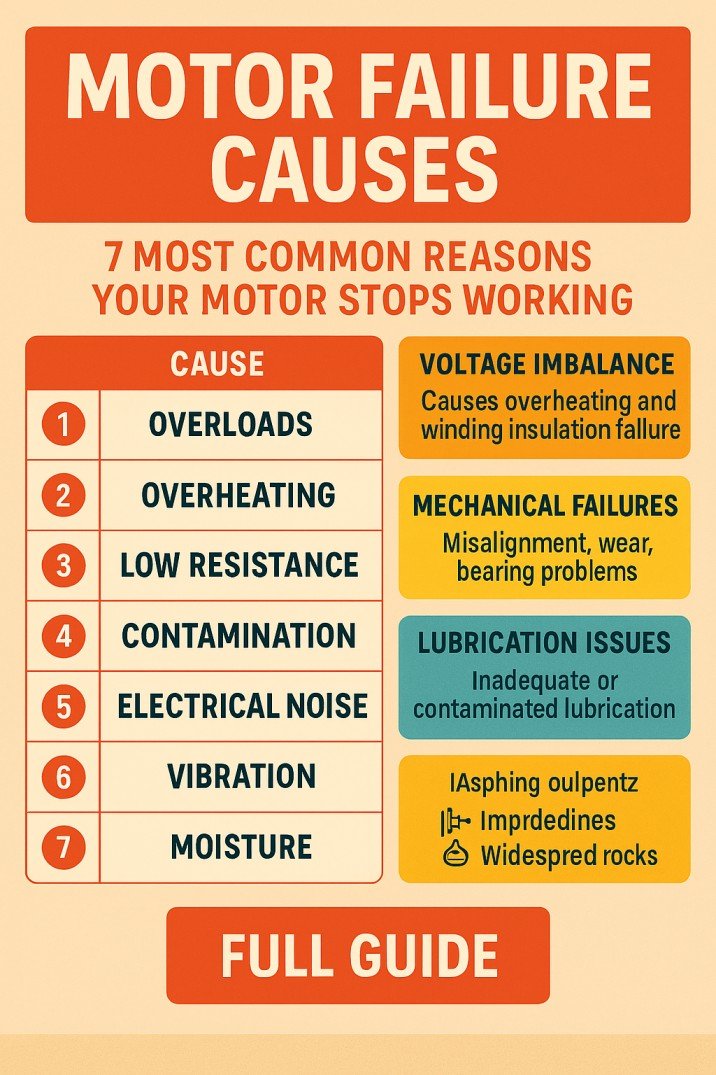
Discover the most motor failure causes and learn the top 7 reasons electric motors fail. Improve motor reliability with expert maintenance tips and prevent costly downtime
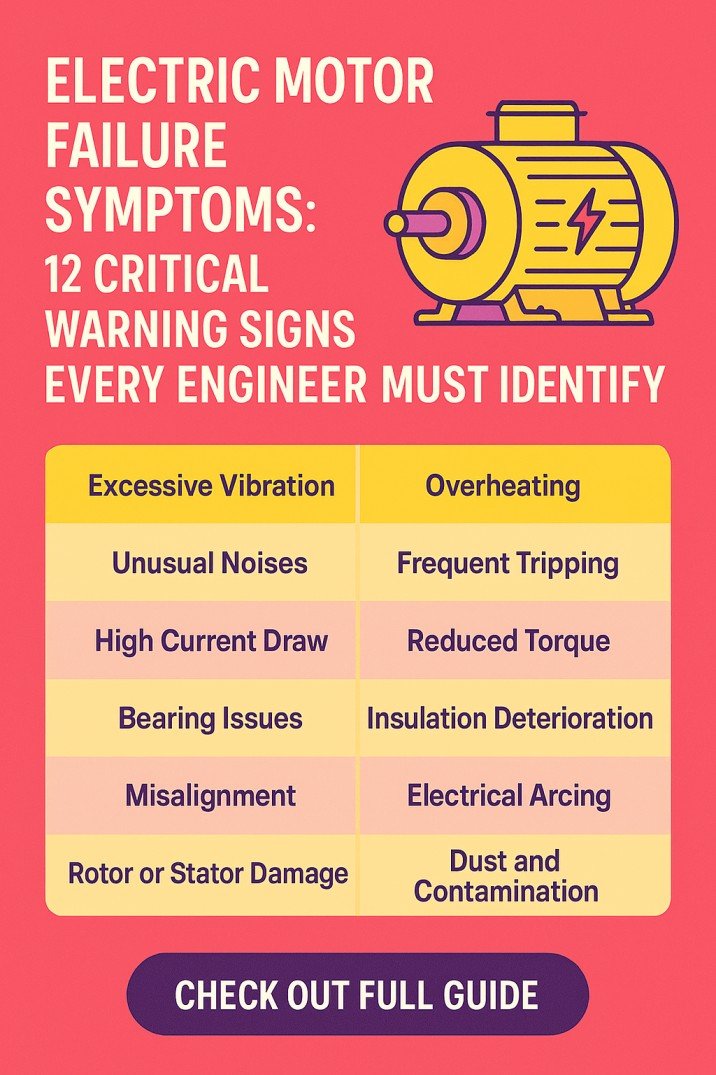
Electric motor failure symptoms can lead to costly downtime and unexpected breakdowns if ignored. Learn the 12 critical warning signs, root causes, and proven diagnostic steps to prevent motor damage and improve system reliability.
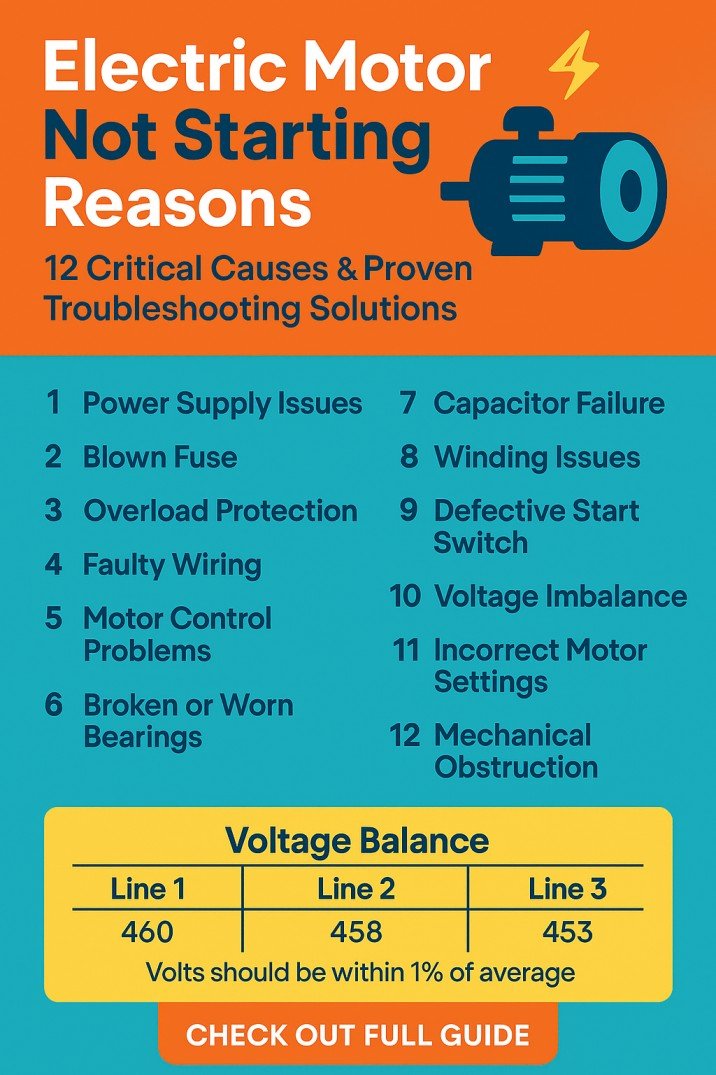
Discover the most common electric motor not starting reasons, including power supply faults, capacitor failure, overload trips, winding damage, and mechanical jamming. Learn expert troubleshooting steps to quickly diagnose and fix motor startup problems safely and efficiently.

Single-phase motor problems and solutions explained in a practical troubleshooting guide covering starting issues, capacitor failure, overheating, humming noise, low torque, and repair methods for engineers and technicians.
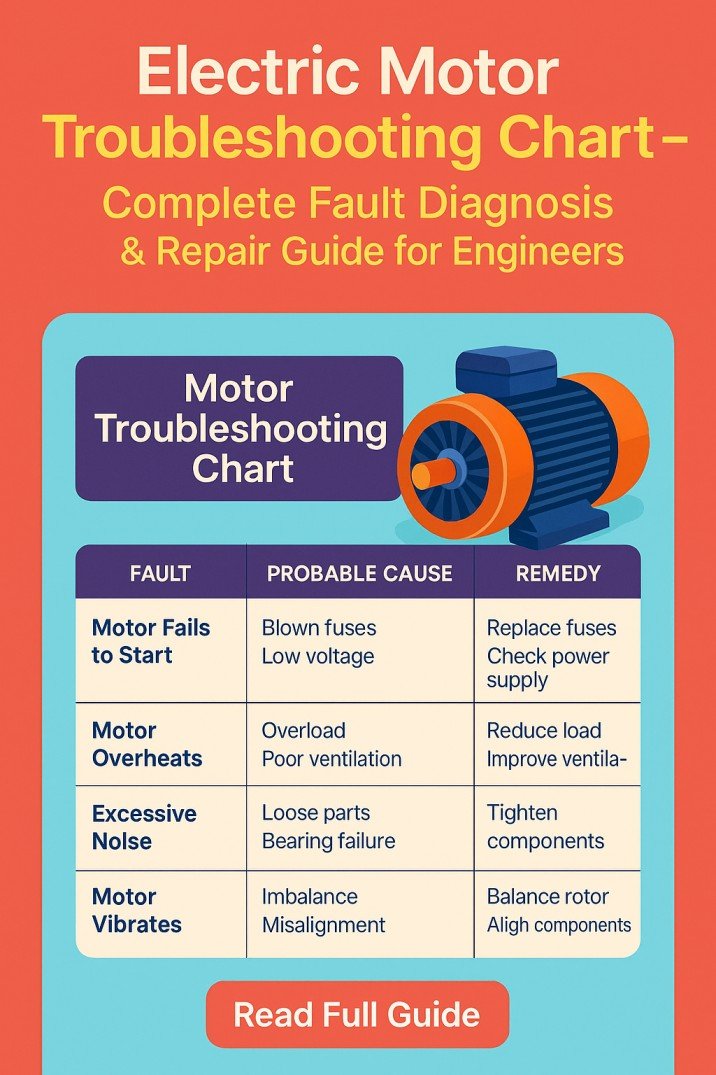
Electric motor troubleshooting chart helps engineers, technicians, and maintenance professionals quickly diagnose motor faults, identify root causes, and implement effective repair solutions. This comprehensive guide covers common motor problems, testing methods, fault analysis techniques, and preventive maintenance strategies to minimize downtime and improve reliability.

Transformer OCPD Sizing Chart for accurate breaker and fuse selection based on NEC guidelines. Learn primary and secondary overcurrent protection sizing, kVA calculations, and code-compliant transformer protection methods for safe electrical system design.
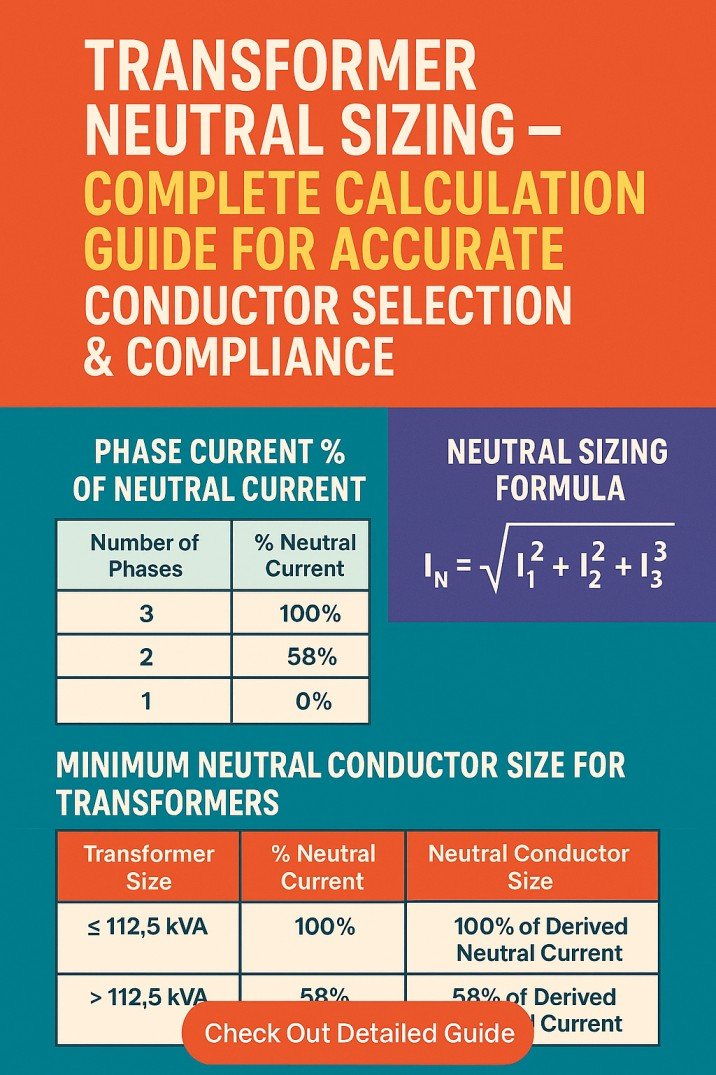
Sizing disconnect for transformer requires precise load calculation, NEC compliance, and proper overcurrent protection coordination. Learn how to correctly size a transformer disconnect switch or breaker for safe and efficient electrical system design in residential, commercial, and industrial applications.
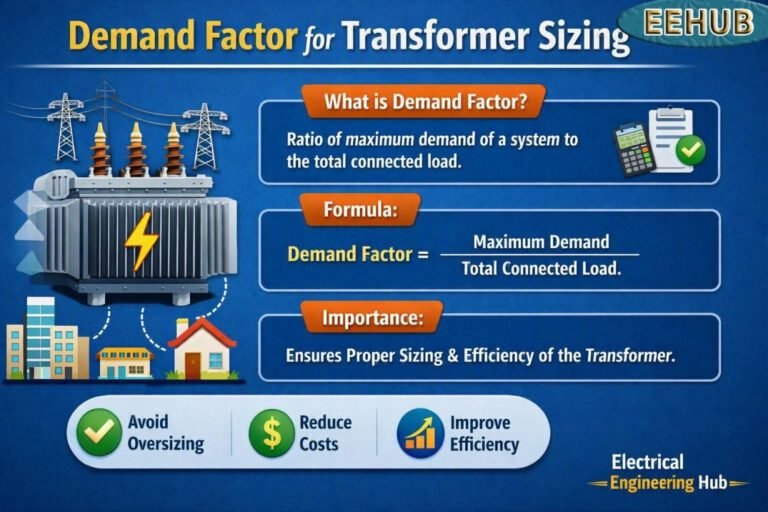
Demand factor for transformer sizing plays a critical role in accurate load calculation, optimal kVA selection, and efficient power distribution design. Learn how to apply demand factor correctly to prevent oversizing or undersizing transformers in residential, commercial, and industrial electrical systems.

Distribution transformer sizing explained with practical load calculation methods, demand factor considerations, kVA rating selection, and voltage drop analysis for safe and efficient power distribution system design.
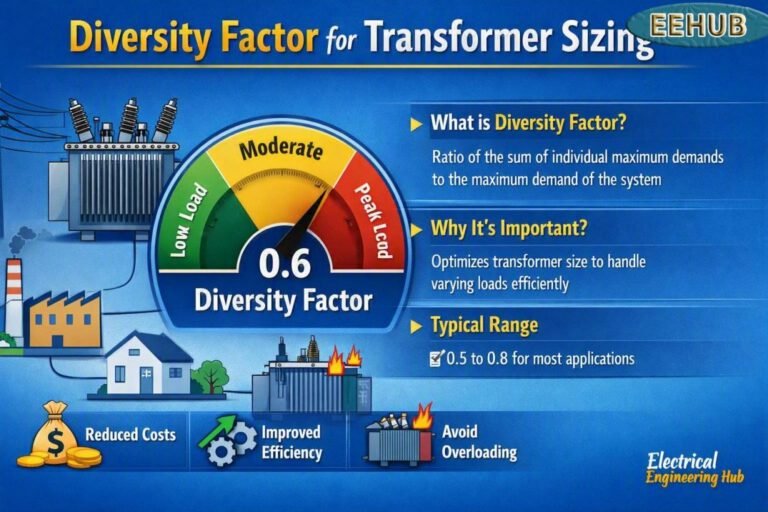
Learn how Diversity Factor for Transformer Sizing improves load estimation, transformer capacity selection, and system efficiency with practical formulas and examples.

Buck and boost transformer sizing explained with practical formulas, step-by-step calculation methods, and real-world examples. Learn how to correctly select kVA rating, current capacity, and voltage correction values for safe and efficient electrical system design.

Dry type transformer sizing chart for accurate kVA calculation, load estimation, and proper transformer capacity selection. Use this professional engineering guide to select the right dry type transformer based on load demand, voltage level, and safety margins for reliable power system design.

Auxiliary transformer sizing calculation is a critical step in power system design to ensure reliable operation of plant auxiliaries, control systems, and essential loads. This detailed guide explains auxiliary transformer sizing calculation methods, load estimation, demand factor application, voltage considerations, short-circuit checks, and practical engineering tips for accurate transformer capacity selection in industrial and substation projects.

Transformer ground size chart explained with accurate grounding conductor sizing guidelines for safe and code-compliant electrical installations. Learn how to select the correct ground wire size based on transformer rating, fault current, and NEC standards for reliable system protection.