EPEVER Tracer 4210A Review: 40A MPPT Solar Charge Controller
The EPEVER Tracer 4210A is worth considering if you need a 40A MPPT solar charge controller for a 12V or 24V battery system. It is designed to regulate solar charging, improve energy harvesting, and support off-grid setups such as cabins, RVs, sheds, and backup power systems.
In this epever tracer 4210a review, I will cover its key specifications, battery compatibility, solar panel sizing, advantages, and limitations to help you decide whether it fits your system.

- 12/24VDC automatically identifying system voltage, 150V Max. PV Open Circuit Voltage. Die-cast aluminum design, ensuring…
- Advanced MPPT (maximum power point tracking) technology, tracking efficiency no less than 99.5%, maximum conversion effi…
- Support 4 charging options: Sealed, Gel, Flooded and User.
As an electrical engineer with practical experience in solar power systems, electrical protection, and DC troubleshooting, I pay close attention to controller limits, cable sizing, battery charging profiles, and voltage drop. These details matter because even a capable MPPT controller cannot deliver good results when the solar array or battery is poorly matched.
EPEVER Tracer 4210A Review Specifications at a Glance
| Feature | EPEVER Tracer 4210A |
|---|---|
| Controller type | MPPT |
| Rated charging current | 40A |
| Battery voltage | 12V / 24V, automatic recognition |
| Maximum PV open-circuit voltage | 150V |
| Battery types | Supported lead-acid types; verify exact model settings for lithium |
| Grounding design | Negative-ground system |
| Main purpose | Off-grid solar battery charging |
| Best suited for | RVs, cabins, and small off-grid systems |
| Amazon buying option | Check current listing |
Always confirm the exact Tracer BN series model, supported battery settings, and maximum PV power in the manufacturer’s manual before installation. Specifications can vary between product versions.
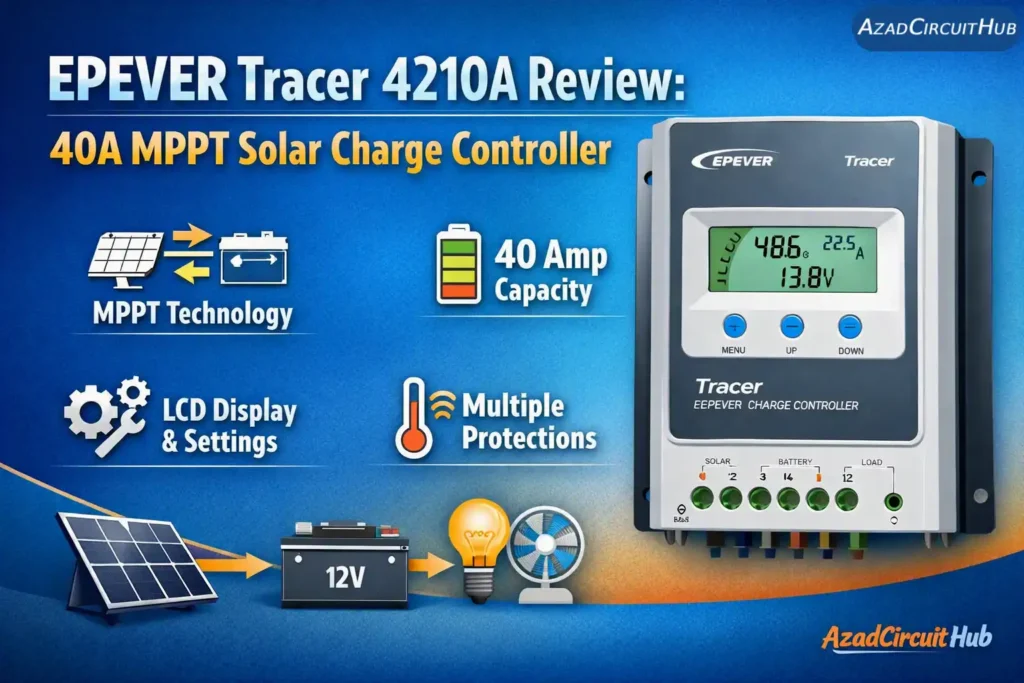
Table of Contents
Table of Contents
What Makes the EPEVER Tracer 4210A Worth Considering?
The main attraction is its 40A charging capacity combined with MPPT technology. Unlike a basic PWM controller, an MPPT regulator adjusts the solar panel operating point to make better use of the available power.
This can be especially useful when your solar array operates at a higher voltage than your battery bank. The controller converts the available panel power into suitable battery charging output, subject to conversion losses and its rated limits.
The 150V maximum PV open-circuit voltage also provides flexibility when designing a solar array with panels connected in series. However, the array’s cold-weather open-circuit voltage must remain within the controller limit.
Check the current price and availability: Buy EPEVER Tracer 4210A MPPT Solar Charge Controller on Amazon
Solar Panel Sizing for a 40A MPPT Controller
Choosing the correct solar array is essential. A 40A rating describes the controller’s maximum battery charging current, not the amount of power every solar panel configuration can safely deliver.
| Battery System | Approximate Charging Power at 40A | Practical Note |
|---|---|---|
| 12V battery | 560W at 14V charging voltage | Verify the manufacturer’s permitted PV wattage |
| 24V battery | 1,120W at 28V charging voltage | Check the controller’s maximum PV power rating |
These figures are illustrative calculations using typical charging voltages. They are not substitutes for the manufacturer’s maximum recommended solar array specifications.
Before connecting panels, check:
- Maximum PV open-circuit voltage, including cold-weather increases
- Maximum permitted PV array power for the selected battery voltage
- Maximum charging current
- Panel current and series/parallel arrangement
- Battery charging voltage and current limits
For readers planning a complete off-grid setup, my guide to the best home solar kit options can help you compare panels, batteries, and charging equipment.
Battery Compatibility and Charging Performance
The Tracer 4210A is intended for battery charging applications, but the correct settings depend on the battery chemistry and exact controller version.
Flooded lead-acid, sealed lead-acid, and gel batteries have different charging requirements. Incorrect voltage settings can shorten battery life or cause unsafe operating conditions.
Lithium batteries need particular care. Check whether the exact controller version provides suitable lithium charging settings and whether the battery manufacturer’s recommended voltage profile can be configured. A battery management system does not eliminate the need for correct charger settings.
As an electrical engineer, I recommend checking the battery manufacturer’s maximum charge current before choosing a 40A controller. A controller’s full output should not exceed the battery’s permitted charging rate.
Installation and Safety Considerations
Correct installation helps protect both the controller and the battery bank.
- Mount the controller in a dry, well-ventilated location.
- Confirm the battery voltage before connecting the equipment.
- Follow the manufacturer’s required battery-first connection sequence.
- Install correctly rated fuses or breakers and suitable DC cables.
- Confirm PV polarity before connecting the solar array.
- Set the correct battery charging profile.
- Check the charging current and voltage during operation.
Do not assume that a 150V PV rating makes every series-connected array acceptable. Calculate the combined panel open-circuit voltage at the lowest expected temperature and keep it within the controller’s specified limit.
Also verify the negative-ground design against your installation. Grounding and bonding must follow the manufacturer’s instructions and the applicable electrical code.
EPEVER Tracer 4210A Review: Pros and Cons
| Pros | Limitations |
|---|---|
| 40A MPPT charging capacity | Requires careful solar array sizing |
| Supports 12V and 24V systems | Maximum PV voltage must never be exceeded |
| 150V PV input limit | Lithium compatibility needs model-specific verification |
| Suitable for off-grid applications | Monitoring features depend on the exact configuration |
| Useful for moderate solar arrays | Not a complete battery or inverter protection system |
Who Should Buy the EPEVER Tracer 4210A?
This controller is a sensible candidate for someone building an off-grid solar system with a 12V or 24V battery bank and a solar array that fits its electrical limits.
It may suit RV owners, remote cabins, small workshops, and backup battery systems. It is also worth considering if you want MPPT charging without immediately moving to a much larger controller.
However, a larger home solar installation may need a higher charging current, more PV capacity, or a different system voltage. Compare complete system requirements before purchasing. My guide to the best solar kits can help you evaluate solar panel and battery packages for different power needs.
Frequently Asked Questions
Is the EPEVER Tracer 4210A a good MPPT controller?
It can be a good option for suitable 12V and 24V off-grid systems. Check the exact model specifications, battery compatibility, and solar array limits before buying.
How many solar panels can a Tracer 4210A handle?
The number depends on each panel’s wattage, open-circuit voltage, current, and series or parallel arrangement. Stay within the controller’s maximum PV voltage and permitted array power.
Can I use the Tracer 4210A with a 12V battery?
Yes, the controller supports 12V systems. Confirm that the battery’s charging requirements and the solar array are compatible with the controller.
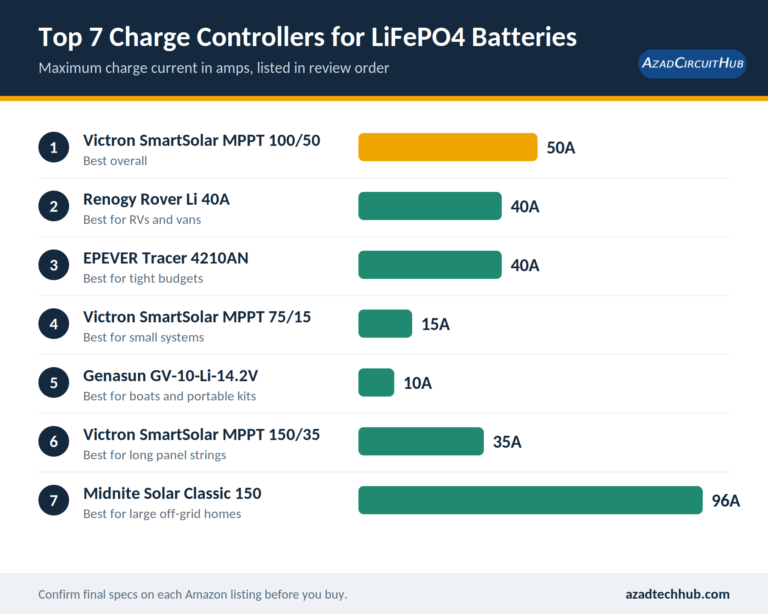
Can the EPEVER Tracer 4210A charge LiFePO4 batteries?
Compatibility depends on the exact model and its available charging settings. Verify the lithium profile and voltage limits against the battery manufacturer’s specifications before connecting it.
Is MPPT better than PWM for off-grid solar?
MPPT is generally more effective at extracting available power from solar panels, particularly when panel voltage is higher than battery charging voltage. Actual gains depend on temperature, sunlight, panel configuration, and system design.
Related Tools
Final Verdict
The EPEVER Tracer 4210A offers a useful combination of 40A MPPT charging, 12V/24V operation, and a 150V maximum PV open-circuit voltage rating. For a correctly sized off-grid solar system, these features make it a practical controller to consider.
Before ordering, verify the maximum solar array power, battery charging profile, grounding arrangement, and protection requirements for your exact model. A well-matched solar controller can improve charging performance, but correct installation and battery settings are just as important.
Check the EPEVER Tracer 4210A on Amazon: View current price and availability
Get new guides in your feed. Follow Electrical Insights on LinkedIn for new electrical standards guides, calculators and design tips from Azad Circuit Hub.