
Best EMT Conduit Bender for Beginners: Klein Tools Review
Choosing the best emt conduit bender for beginners can make electrical work easier, safer, and more accurate. A good hand bender helps you make clean 90-degree bends, offsets, and saddles without wasting conduit. For apprentices and DIY users learning electrical installation, ease of use and clear bending marks matter as much as durability.
My background as an electrical engineer includes electrical panel work, power systems, installation practices, and field troubleshooting. When choosing a conduit bender, I look for accurate markings, a stable foot pedal, a strong head, and features that help new users avoid common bending mistakes. The Klein Tools EMT Conduit Bender, designed for 1/2-inch and 3/4-inch EMT conduit, is worth considering for a starter toolkit.
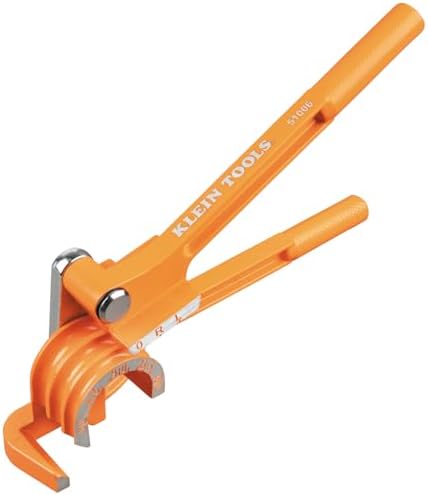
- 3-IN-1 CAPABILITY: Tube Bender bends 1/4-Inch, 5/16-Inch and 3/8-Inch O.D. tubing
- VERSATILE DESIGN: Ideal for bending soft copper and aluminum tubing
- 180-DEGREE BENDS: Easy-to-use tubing bender offers wide range of bend up to 180 degrees
Klein Tools EMT Conduit Bender: Quick Features
| Feature | Details |
|---|---|
| Brand | Klein Tools |
| Conduit type | EMT |
| Conduit sizes | 1/2 inch and 3/4 inch, depending on configuration |
| Operation | Manual hand bending |
| Common bends | 90-degree bends, offsets, and saddles |
| Main benefit | Practical tool for learning conduit bending |
| Ideal users | Apprentices, electricians, and DIY users |
Check the current price on Amazon: Klein Tools EMT Conduit Bender for 1/2-Inch and 3/4-Inch EMT
Before ordering, confirm whether the listing includes one bender or separate heads or models for both conduit sizes. Product configurations can vary.
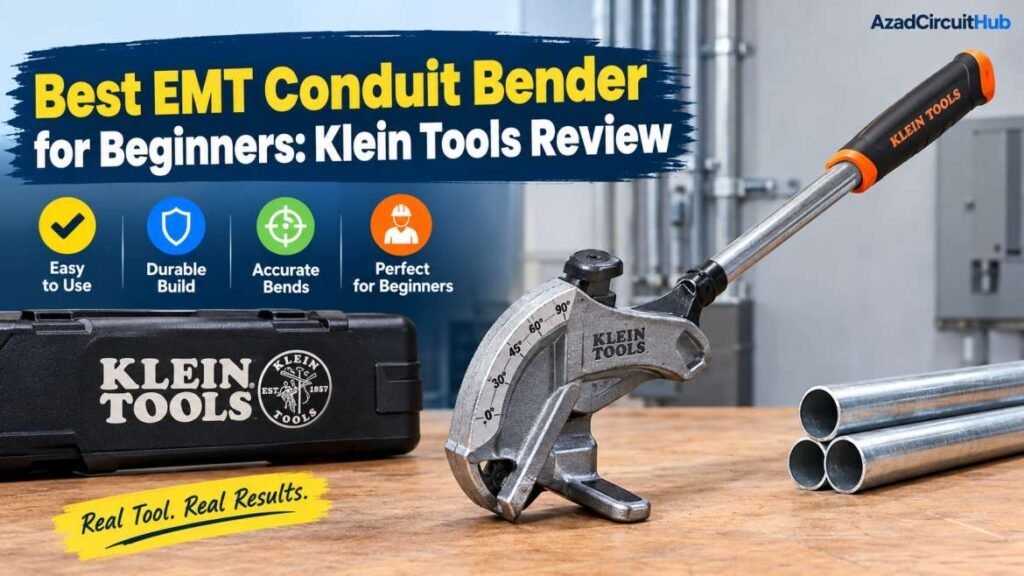
Table of Contents
Table of Contents
Why Klein Tools Is a Good Choice for Beginners
Klein Tools is a familiar name in the electrical trade. Its EMT hand benders are designed for field use, where electricians need repeatable bends and dependable tool performance.
For new users, the main advantage of a manual bender is the direct control it provides. You can learn how conduit responds to pressure and develop a feel for bend alignment. Clear degree markings also help you track progress while making common bends.
A good bender should sit firmly against the floor and provide a comfortable position for applying pressure. These details matter when you are learning to bend conduit without flattening it or creating unwanted kinks.
If you mainly work with 3/4-inch conduit, read my 3/4 EMT Hand Bender Review for a closer look at tool selection and bending considerations.
Key Features to Consider
1. Support for Common EMT Sizes
Half-inch and three-quarter-inch EMT are common choices for many electrical installations. A suitable bender lets you practise the sizes you are most likely to encounter in residential and light commercial work.
Always match the bender’s marked conduit size to the actual EMT. A bender designed for one size should not be assumed to work correctly with another.
2. Degree Markings for Accurate Bends
Degree markings help beginners make 10-, 22.5-, 30-, 45-, and 90-degree bends, where supported by the tool’s scale. These marks are useful when laying out conduit routes around walls, beams, and electrical panels.
Remember that the correct bend angle is only part of the job. You must also account for the bender’s take-up when measuring a 90-degree stub-up.
3. Durable Construction
A hand bender needs to withstand repeated pressure in the field. A strong head and stable foot surface can make bending more controlled and comfortable.
Before buying, check the product listing for construction details, handle type, and included accessories. Do not assume every Klein model has identical features.
How to Choose the Best EMT Conduit Bender for Beginners
| Your Requirement | What to Look For |
|---|---|
| Learning basic bends | Clear degree markings |
| Residential wiring | Compatible 1/2-inch or 3/4-inch EMT size |
| Repeated field work | Durable head and stable foot pedal |
| Tight installation spaces | Suitable bending radius and head design |
| Apprentice toolkit | Easy-to-read markings and simple operation |
The best emt conduit bender for beginners should match your conduit size, typical jobs, and budget. A more expensive tool is not always necessary for someone learning basic bends, but poor size compatibility can lead to wasted conduit and frustrating results.
Tips for Your First EMT Bends
Start with a short piece of scrap conduit before working on a finished installation.
- Mark the conduit clearly with a pencil or marker.
- Check the bender’s take-up value before measuring a stub-up.
- Align the conduit with the correct arrow or reference mark.
- Apply steady pressure instead of forcing the bend quickly.
- Check the angle with a level or suitable measuring tool.
- Avoid bending EMT beyond the intended radius or creating sharp kinks.
As an electrical engineer, I recommend practising offsets and 90-degree bends separately before attempting more complex layouts. Good measuring habits reduce waste and help keep conduit runs neat.
Is the Klein Tools EMT Conduit Bender Worth Buying?
The Klein Tools EMT Conduit Bender is a practical candidate for apprentices and electricians who want a manual tool for common EMT bending tasks. Its suitability depends on the exact model, supported conduit size, markings, and construction.
For a beginner, the priority should be reliable size compatibility, readable bend references, and a design that provides good control. Confirm the included equipment and current price before ordering.
Buy the Klein Tools EMT Conduit Bender on Amazon: Check Klein Tools EMT Bender Availability
Frequently Asked Questions
What is the easiest EMT conduit bender for beginners?
A manual hand bender with clear degree markings, a stable foot pedal, and the correct conduit size is a good starting point. Klein Tools is one option to consider.
Should beginners buy a 1/2-inch or 3/4-inch EMT bender?
Choose the size that matches your planned work. Half-inch EMT is useful for smaller conduit runs, while 3/4-inch EMT is common in many larger wiring applications.
Can one EMT bender bend both 1/2-inch and 3/4-inch conduit?
Some product listings cover both sizes, but not every bender supports both. Check the exact model and included heads before buying.
What bends should an apprentice learn first?
Start with 90-degree stub-ups, then practise offsets and three-point saddles. Learn how to measure take-up and deducts before making bends for a real installation.
How do you prevent EMT conduit from kinking?
Use a bender designed for the correct conduit size, align the conduit with the proper reference marks, and apply steady pressure. Avoid forcing a bend too sharply.
Final Verdict
The Klein Tools EMT Conduit Bender is worth considering for beginners who want to learn accurate manual conduit bending. Match the model to your conduit size, practise on scrap EMT, and focus on careful measurements before starting an installation. These habits will help you make cleaner bends and reduce material waste as your skills improve.
Follow Us on Social:
Subscribe our Newsletter on Electrical Insights for latest updates from Azad Circuit Hub
#BestEMTConduitBender, #KleinToolsReview, #EMTConduitBender, #ConduitBender, #ElectricianTools, #ElectricalTools, #EMTBending, #ConduitBending, #ToolsForElectricians, #ElectricalContractor
