
Fluke 117 vs 17B+: Which Fluke Multimeter Should You Buy? Features & Comparison
When comparing fluke 117 vs 17b+, the main question is not simply which meter has more features. The better choice depends on where you work, the type of electrical measurements you make, and whether True-RMS performance and electrician-focused functions are important to you.
I have spent more than 15 years working as an electrical engineer around control panels, industrial electrical systems, automation, PLCs, and troubleshooting. In field work, I prefer a multimeter that is quick to use, dependable around electrical panels, and easy to read when measurements need to be taken repeatedly.
For most electricians and technicians working on commercial or residential electrical systems, the Fluke 117 is the stronger overall choice.
Fluke 117 vs 17B+

Fluke 117 vs 17B+ Quick Comparison
| Feature | Fluke 117 | Fluke 17B+ |
|---|---|---|
| True-RMS | Yes | Yes |
| AC/DC Voltage | Up to 600V | Up to 600V |
| AC/DC Current | Yes | Yes |
| Resistance | Yes | Yes |
| Capacitance | Yes | Yes |
| Frequency | Yes | Yes |
| Non-contact voltage detection | Yes, VoltAlert | No |
| Auto-ranging | Yes | Yes |
| Display | 6,000 counts | 6,000 counts |
| Best suited for | Electricians | General electrical/electronic work |
| Amazon availability | Yes | Yes, availability varies |
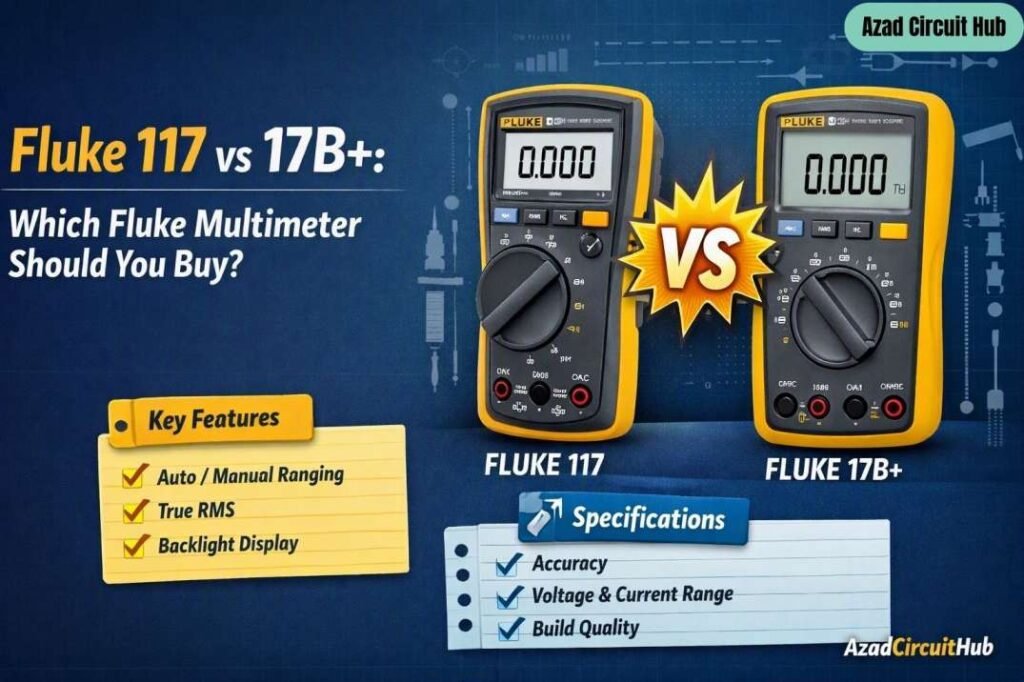
Table of Contents
Table of Contents
Why Choose the Fluke 117?
The Fluke 117 is designed specifically with electricians in mind. One of its most useful features is VoltAlert non-contact voltage detection, which can provide a quick preliminary check for the presence of AC voltage.
The meter also uses True-RMS measurement, which is useful when measuring electrical systems with non-linear loads. Modern buildings contain plenty of electronic equipment, LED drivers, variable-frequency drives, computers, and switching power supplies that can produce distorted waveforms.
The Fluke 117 also includes AutoVolt automatic AC/DC voltage selection, which can make routine troubleshooting faster.
Check the Fluke 117 price on Amazon: Fluke 117 Electrician’s True-RMS Multimeter
If you are comparing more electrician-focused meters, see my guide to best multimeter for electricians for additional options.
Fluke 17B+ Strengths
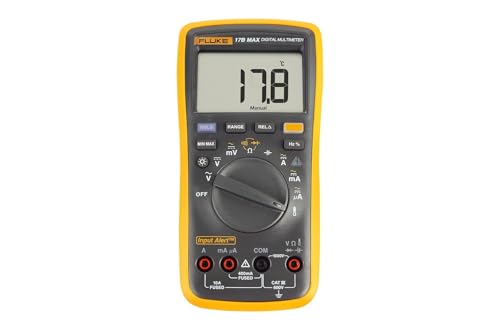
The Fluke 17B+ is a versatile digital multimeter intended for general electrical and electronic measurement work. It provides True-RMS measurement and includes functions such as voltage, current, resistance, capacitance, frequency, and temperature measurement.
That broader measurement approach can make the 17B+ attractive for technicians who work across electrical and electronic equipment.
However, the Fluke 117 has several features that are especially useful in everyday electrical service work. The VoltAlert function and AutoVolt capability can save time during routine troubleshooting.
Availability and specifications can also vary by market, so buyers should check the exact version being offered.
Measurement Features Compared
| Measurement | Fluke 117 | Fluke 17B+ |
|---|---|---|
| AC voltage | Yes | Yes |
| DC voltage | Yes | Yes |
| AC current | Yes | Yes |
| DC current | Yes | Yes |
| Resistance | Yes | Yes |
| Capacitance | Yes | Yes |
| Frequency | Yes | Yes |
| Temperature | No | Yes |
| Non-contact voltage | Yes | No |
| True-RMS | Yes | Yes |
The choice becomes clearer when you consider the actual work. Electricians who spend most of their time testing circuits, receptacles, panels, disconnects, and equipment can benefit from the Fluke 117’s electrician-oriented design.
Technicians who also need temperature measurement may find the 17B+ more versatile.
Fluke 117 for HVAC and Electrical Troubleshooting
HVAC technicians often need a meter for voltage, continuity, resistance, capacitance, and other electrical checks. The Fluke 117 handles many common electrical measurements well, although technicians who need dedicated HVAC functions such as specialized capacitance or temperature-related workflows should compare meters carefully.
For a closer look at its HVAC applications, see my guide to Fluke 117 for HVAC Technicians.
Which One Is Better for Electricians?
For most electricians, I would choose the Fluke 117.
Its True-RMS capability, AutoVolt function, VoltAlert non-contact voltage detection, compact design, and electrician-focused controls make it particularly practical for field troubleshooting.
That does not mean the 17B+ is a poor meter. It can be a useful general-purpose instrument, especially when temperature measurement is valuable.
The final decision should also consider where the meter was manufactured, authorized distribution, warranty coverage, and the exact specifications of the model being sold in your market.
What I Like About the Fluke 117
From a field-use perspective, the Fluke 117 has several advantages:
- True-RMS AC measurement
- Automatic AC/DC voltage selection
- Non-contact voltage detection
- Easy-to-use interface
- Compact handheld design
- Useful range of electrical measurements
- Suitable for residential and commercial electrical troubleshooting
A multimeter should also be used with properly rated test leads and appropriate personal protective equipment. Non-contact voltage detection is a screening function, not a substitute for proving a circuit dead with an appropriate test procedure.
See the current Fluke 117 on Amazon: Fluke 117 Electrician’s True-RMS Multimeter
For a wider comparison of professional meters, my best multimeter for electricians guide covers other Fluke and competing options.
Frequently Asked Questions
Is the Fluke 117 better than the 17B+?
For electricians, the Fluke 117 is generally the better fit because of features such as VoltAlert and AutoVolt. The 17B+ can be attractive for technicians who need temperature measurement and broader general-purpose functionality.
Are both Fluke 117 and 17B+ True-RMS meters?
Yes. Both models provide True-RMS measurement, making them suitable for measuring AC signals where waveform distortion can affect average-responding meters.
Does the Fluke 117 detect voltage without touching the conductor?
Yes. The Fluke 117 includes VoltAlert non-contact voltage detection. It should be treated as a preliminary detection method rather than the sole method for determining that a circuit is de-energized.
Is the Fluke 117 good for residential electricians?
Yes. The Fluke 117 is particularly well suited to common residential and commercial electrical troubleshooting, including voltage, continuity, resistance, and current measurements.
Should I buy the Fluke 117 for professional electrical work?
The Fluke 117 is a strong choice for many professional electricians. Before purchasing, confirm that its measurement ranges and safety ratings match the electrical systems you work on.
Final Verdict
In the fluke 117 vs 17b+ comparison, I would pick the Fluke 117 for most electricians and electrical technicians. Its electrician-focused functions make it convenient for everyday troubleshooting, while True-RMS measurement gives it an advantage when working around modern electronic loads.
The Fluke 17B+ remains worth considering if you need temperature measurement or want a more general-purpose multimeter.
For an electrician who wants one dependable meter for everyday field work, however, the Fluke 117 is the more natural choice.
Check today’s Fluke 117 price and availability on Amazon: Fluke 117 Electrician’s True-RMS Multimeter
Follow Us on Social:
Subscribe our Newsletter on Electrical Insights for latest updates from Azad Circuit Hub
#Fluke117, #Fluke17BPlus, #Fluke117vs17BPlus, #FlukeMultimeter, #MultimeterComparison, #DigitalMultimeter, #ElectricianTools, #ElectricalTesting, #MultimeterReview, #FlukeTools
