
FLIR ONE Edge Pro vs FLIR ONE Pro: Which Thermal Camera Is Better?
The FLIR ONE Edge Pro and FLIR ONE Pro are both compact thermal imaging cameras designed to turn a smartphone into a useful infrared inspection tool. The biggest difference is how you use them. The Edge Pro can work wirelessly and be positioned away from the phone, while the ONE Pro connects directly to a compatible smartphone.
For electricians, maintenance technicians, HVAC professionals, and home inspectors, that difference can matter more than resolution alone. In this flir one edge pro vs flir one pro comparison, I will look at image quality, connectivity, inspection flexibility, temperature measurement, smartphone compatibility, and practical electrical troubleshooting.
As an electrical engineer with more than 15 years of field experience in electrical panels, industrial automation, PLCs, SCADA systems, and troubleshooting, I use thermal imaging as a diagnostic aid rather than simply looking for the highest specification. A thermal camera needs to help you find abnormal heating quickly and safely.
FLIR ONE Edge Pro vs FLIR ONE Pro: Key Features
| Feature | FLIR ONE Edge Pro | FLIR ONE Pro |
|---|---|---|
| Thermal resolution | 160 × 120 native IR | 160 × 120 native IR |
| Enhanced image | Super resolution | Super resolution |
| Connection | Wireless | Direct smartphone connection |
| Smartphone positioning | Can be separated from phone | Attached to phone |
| MSX imaging | Yes | Yes |
| Thermal inspection | Electrical, HVAC, mechanical, building | Electrical, HVAC, mechanical, building |
| Temperature measurement | Yes | Yes |
| Best advantage | Flexible inspection angle | Simple direct connection |
| Best for | Hard-to-reach inspection points | Portable everyday inspections |
The hardware capabilities are close, but the user experience is quite different.
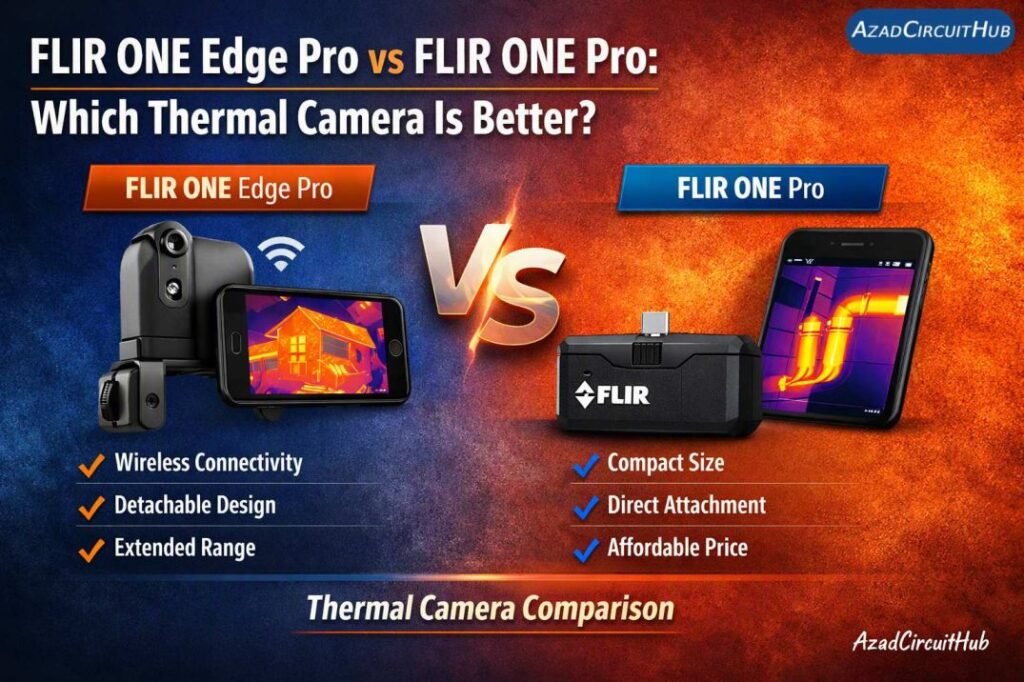
Table of Contents
Table of Contents
Connectivity and Inspection Flexibility
This is where the Edge Pro has its strongest advantage. Because it can operate wirelessly, you can position the thermal camera in a difficult location while viewing the image on your smartphone.
That can be useful when checking electrical equipment where holding both the phone and camera in front of a panel is inconvenient. It can also help with HVAC vents, machinery, ceilings, pipes, and other locations where getting the phone into the same position as the camera is awkward.
The ONE Pro takes a simpler approach. It connects directly to the smartphone, creating a compact inspection package with fewer separate components to manage.
For straightforward inspections, this direct connection is convenient. For awkward inspection angles, the Edge Pro is more flexible.
If you want a closer look at the direct-connect model, see my FLIR ONE Pro Review for its features and practical applications.
Image Quality and Thermal Resolution
Both cameras use a 160 × 120 native infrared sensor, which is an important specification when comparing compact thermal cameras.
FLIR's MSX technology combines thermal information with visible-light detail to make edges and physical features easier to identify. The result is more useful than a thermal image alone because you can often see exactly which component or surface is producing the temperature pattern.
The cameras can also provide enhanced-resolution imagery through FLIR's processing technology. However, users should distinguish between native infrared sensor resolution and enhanced image resolution.
For electrical inspection, sensor resolution is only one part of the equation. Emissivity, reflected temperature, distance, focus, environmental conditions, and the temperature difference between a healthy and abnormal component all influence the usefulness of an inspection.
Which One Is Better for Electrical Inspection?
For electricians, both cameras can be useful for locating thermal anomalies in electrical systems.
Typical applications include:
- Circuit breakers
- Distribution boards
- Electrical panels
- Terminal connections
- Contactors
- Motor connections
- Cable terminations
- Transformers
- HVAC electrical components
- Overloaded conductors
A loose termination may create localized heating that is easy to miss during a visual inspection. A thermal camera can reveal the temperature pattern without requiring physical contact with the energized component.
However, infrared imaging should not replace electrical testing. If a connection appears unusually hot, the next step should be to investigate the electrical cause using appropriate test equipment and safe working procedures.
For more options, see my guide to the best thermal camera for electrical inspection before choosing a thermal imaging tool for professional work.
Wireless vs Direct Smartphone Connection
The practical difference in the flir one edge pro vs flir one pro comparison becomes clearer during real inspections.
The Edge Pro's wireless operation lets you separate the camera from the phone. You can place the camera at an angle, look around an obstruction, or inspect a location where holding a smartphone would be difficult.
The ONE Pro is more compact when attached to the phone. There is no separate wireless camera positioning to manage, which can make quick inspections faster.
| Inspection Situation | Better Choice |
|---|---|
| Quick component check | ONE Pro |
| Tight inspection angle | Edge Pro |
| Checking behind an obstruction | Edge Pro |
| Simple smartphone operation | ONE Pro |
| Electrical panel inspection | Both |
| HVAC inspection | Both |
| Frequent handheld inspections | Depends on workflow |
Smartphone Compatibility Matters
The ONE Pro version supplied for this comparison is designed for iPhones 15 and newer with USB-C. This is important because the connector and smartphone operating system should be confirmed before ordering.
The Edge Pro's wireless design can provide broader practical flexibility, but you should still verify current device compatibility and app requirements before purchasing.
For an affiliate purchase, I recommend checking the exact Amazon listing and selecting the version that matches your phone. Connector changes between smartphone generations can make an otherwise excellent thermal camera inconvenient to use.
Check the current FLIR ONE Pro price on Amazon: FLIR ONE Pro Thermal Imaging Camera on Amazon
FLIR ONE Edge Pro vs FLIR ONE Pro for HVAC and Maintenance
Thermal imaging is not limited to electrical work. HVAC technicians can use these cameras to identify temperature differences around air outlets, pipes, insulation, heat exchangers, and mechanical equipment.
Maintenance technicians can also use infrared images as part of preventive maintenance. A bearing, motor connection, electrical terminal, or other component that runs hotter than comparable components may deserve further investigation.
The Edge Pro has an advantage when inspection geometry becomes difficult. You can position the camera independently and view the thermal image remotely on the smartphone.
The ONE Pro remains attractive when portability and a direct phone connection are more important.
Temperature Measurement and Thermal Analysis
Both models are designed for more than simply taking colorful thermal photographs. Temperature measurement can help identify abnormal areas and compare similar components.
Still, temperature readings from compact thermal cameras should be interpreted carefully. A shiny metal surface may produce misleading readings because of reflected infrared energy. Emissivity settings also affect measurement accuracy.
When inspecting an electrical panel, I prefer comparing similar breakers, terminals, or phases under similar load conditions. A single absolute temperature reading can be less informative than a clear temperature difference between otherwise similar components.
This is one reason I consider thermal cameras valuable diagnostic tools rather than replacements for a multimeter, clamp meter, insulation tester, or other electrical test equipment.
Which FLIR Camera Should You Buy?
Choose the FLIR ONE Pro if you want a compact thermal camera that connects directly to your compatible smartphone and is mainly used for quick electrical, HVAC, mechanical, and building inspections.
Choose the Edge Pro if wireless positioning is important to your work. Its ability to separate the camera from the smartphone can make difficult inspection angles much easier.
The flir one edge pro vs flir one pro decision therefore comes down largely to workflow rather than a dramatic difference in thermal sensor resolution.
If you are comparing several compact thermal cameras, my best thermal camera for electrical inspection guide is a useful next step.
Pros and Cons
FLIR ONE Edge Pro
Pros
- Wireless inspection capability
- Flexible camera positioning
- Useful for difficult access points
- 160 × 120 native IR resolution
- MSX image enhancement
- Suitable for electrical and HVAC inspection
Cons
- More expensive than basic smartphone thermal cameras
- Wireless workflow may be unnecessary for simple inspections
- Requires attention to app and device compatibility
FLIR ONE Pro
Pros
- Compact smartphone-based design
- 160 × 120 native IR resolution
- MSX technology
- Useful temperature measurement features
- Excellent for electrical troubleshooting
- Simple direct connection
Cons
- Camera remains attached to the phone
- USB-C compatibility must be checked
- Less flexible for difficult viewing angles
Frequently Asked Questions
Is FLIR ONE Edge Pro better than FLIR ONE Pro?
The Edge Pro is better when wireless camera positioning is important. The ONE Pro can be the better choice for users who prefer a compact direct smartphone connection.
Is FLIR ONE Pro good for electrical inspections?
Yes. Its thermal imaging capabilities can help identify unusual heating in breakers, terminals, cables, motors, and other electrical components. It should be used as a diagnostic aid alongside appropriate electrical testing and safe work practices.
What is the thermal resolution of FLIR ONE Pro?
The FLIR ONE Pro uses a 160 × 120 native infrared sensor and provides enhanced imagery through FLIR's image-processing technology.
Can a FLIR ONE camera find electrical problems?
A thermal camera can help identify abnormal heat patterns associated with issues such as overloaded connections, loose terminations, or unbalanced loads. It cannot determine the electrical cause by itself, so further testing is normally required.
Should I buy FLIR ONE Pro or Edge Pro?
Buy the ONE Pro if you value a compact direct smartphone connection. Choose the Edge Pro if wireless operation and flexible camera positioning are more important to your inspection work.
Final Verdict
The flir one edge pro vs flir one pro comparison is less about choosing the camera with the biggest specification and more about choosing the inspection workflow that fits your work.
The FLIR ONE Pro is a strong option for electricians and technicians who want a compact thermal imaging camera that works directly with a compatible smartphone. The Edge Pro is more appealing when you regularly inspect difficult angles, confined areas, or components that are easier to view with the camera separated from the phone.
For most electrical troubleshooting, either model can provide useful thermal information. The deciding factor should be your inspection style, smartphone compatibility, budget, and need for wireless positioning.
If you want a broader comparison before buying, explore the seek thermal vs flir one guide and compare sensor specifications, image quality, software, and practical electrical inspection performance.
Follow Us on Social:
Subscribe our Newsletter on Electrical Insights for latest updates from Azad Circuit Hub
#FLIRONEEdgePro, #FLIRONEPro, #FLIRONEEdgeProvsFLIRONEPro, #ThermalCamera, #ThermalImaging, #InfraredCamera, #FLIRThermalCamera, #ThermalImagingCamera, #ElectricalInspection, #ThermalCameraComparison
