EV Charger Rebates by State (2026 Guide)
Installing a Level 2 charging station at home is more affordable than ever thanks to state incentives across the United States. While the federal tax credit has changed over the years, many states continue to offer rebates, tax credits, grants, and utility incentives that significantly reduce installation costs.
This EV Charger Rebates by State guide explains where homeowners can save money in 2026, which states offer the best incentives, and how to maximize your total savings before purchasing a charger.
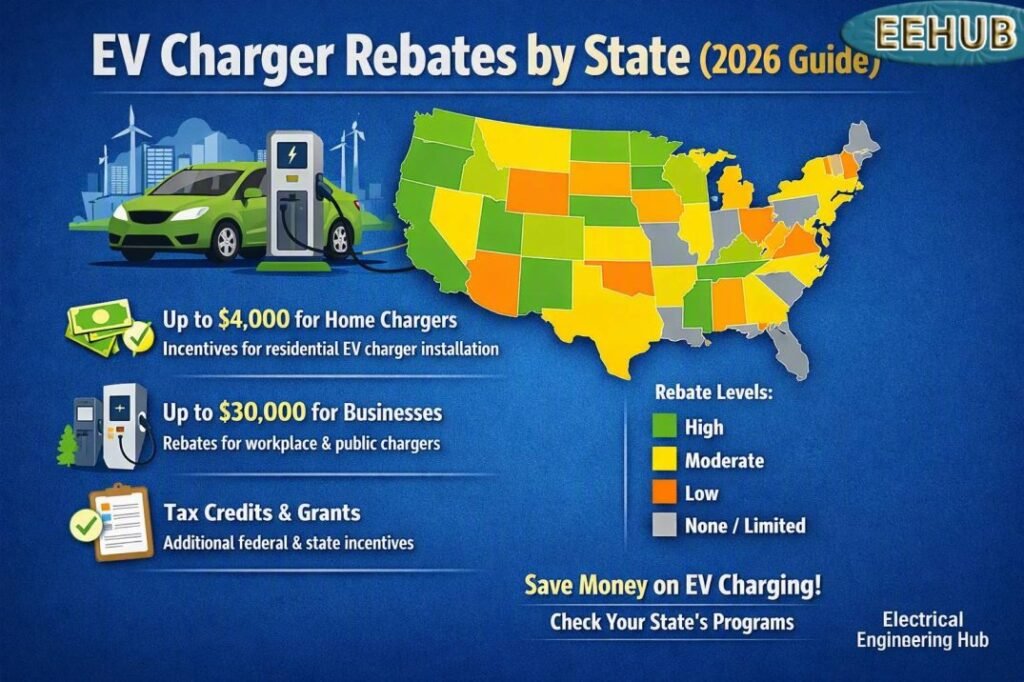
Table of Contents
Table of Contents
EV Charger Rebates by State Overview
| State | Incentive Type | Estimated Benefit | Available in 2026 |
|---|---|---|---|
| California | Utility Rebates | Up to $1,500 | Yes |
| New York | Utility Incentives | Up to $1,000 | Yes |
| New Jersey | State & Utility Programs | Up to $1,500 | Yes |
| Massachusetts | Residential Rebates | Up to $700 | Yes |
| Colorado | State Tax Credit | Varies | Yes |
| Oregon | Charge Ahead Programs | Up to $500 | Yes |
| Maryland | Tax Credit | Up to 50% of cost | Yes |
| Connecticut | Utility Rebates | Varies | Yes |
| Vermont | Utility Rebates | Up to $900 | Yes |
| Washington | Utility Incentives | Varies | Yes |
EV Charger Incentive Snapshot
| Incentive | Typical Savings |
|---|---|
| State Rebate | $250–$1,500 |
| Utility Rebate | $250–$1,000 |
| Tax Credit | Up to 50% (selected states) |
| Off-Peak Charging Programs | Lower monthly electricity bills |
| Time-of-Use Discounts | Reduced charging costs |
Why State Rebates Matter
Buying a Level 2 EV charger usually costs between $350 and $800, while professional installation often ranges from $400 to $2,000 depending on electrical work.
State incentive programs can offset a large portion of these expenses. In many cases, homeowners combine utility rebates with state tax incentives to reduce their total investment by hundreds or even thousands of dollars.
Many utility companies also reward drivers who charge during off-peak hours. These programs lower electricity rates and reduce demand on the power grid.
States Offering the Best EV Charger Incentives
Although rebate programs change throughout the year, several states consistently provide attractive incentives.
EV Charger Rebates by State (2026 Guide)
California
California remains one of the most generous states for EV owners.
Available incentives may include:
- Utility rebates
- Income-qualified rebates
- Grid modernization incentives
- Smart charger rewards
Several utility providers including PG&E, SCE, and SDG&E frequently update their residential charging programs.
New York
New York utilities encourage home charging through rebate programs and reduced electricity rates.
Benefits may include:
- Home charger rebates
- Time-of-use electricity plans
- Smart charging enrollment bonuses
These programs help reduce both installation costs and long-term charging expenses.
New Jersey
New Jersey continues expanding EV adoption with multiple residential programs.
Residents may qualify for:
- Utility charger rebates
- Installation incentives
- Discounted overnight electricity rates
The available amount depends on the utility provider and installation location.
Massachusetts
Massachusetts supports electric vehicle adoption through utility rebate programs.
Homeowners often receive rebates for:
- Qualified Level 2 chargers
- Professional installation
- Smart charging participation
Many incentives are available through local electric companies.
Colorado
Colorado offers various clean energy incentives.
Residents may benefit from:
- State tax credits
- Utility rebates
- Renewable energy incentives
These programs frequently change, making it important to verify current eligibility before purchasing equipment.
Utility Rebates Can Save Even More
Many drivers focus only on state incentives, but local utility companies often provide additional savings.
Examples include:
| Utility Incentive | Potential Benefit |
|---|---|
| Charger Purchase Rebate | Up to $500 |
| Installation Rebate | Up to $1,000 |
| Smart Charging Program | Annual bill credits |
| Off-Peak Charging | Lower electricity rates |
| Demand Response Program | Seasonal incentives |
Combining these utility benefits with state programs often produces the highest total savings.
Eligibility Requirements
Most rebate programs have similar qualification requirements.
Typical requirements include:
- Purchase a qualified Level 2 EV charger.
- Use a licensed electrician for installation.
- Install the charger at a primary residence.
- Submit proof of purchase.
- Provide installation invoices.
- Apply before the program deadline.
- Meet utility or state residency requirements.
Reading the program guidelines before purchasing can prevent application delays.
Wondering if you qualify for additional federal savings beyond state incentives? Read our Tax Credit for EV Charger guide to learn about eligibility, claim requirements, and the latest 2026 updates.
How to Apply for State Rebates
The application process is generally straightforward.
Step 1
Choose an approved EV charger from the eligible equipment list.
Step 2
Hire a licensed electrician if professional installation is required.
Step 3
Keep all purchase receipts and installation invoices.
Step 4
Complete the online rebate application.
Step 5
Upload supporting documents.
Step 6
Wait for approval and receive the rebate according to the program’s payment schedule.
Processing times vary from several weeks to a few months.
Choosing a Rebate-Eligible Charger
Not every charger qualifies for every incentive program.
Look for chargers that include:
- UL or ETL safety certification
- Energy Star certification (where required)
- Wi-Fi connectivity
- Smart charging capability
- Adjustable charging current
- Utility program compatibility
These features improve the likelihood of qualifying for multiple incentive programs.
Recommended Home EV Chargers
The following chargers are widely accepted by many rebate programs and utility providers.
| Charger | Smart Features | Max Output | Best For |
|---|---|---|---|
| EVIQO Level 2 EV Charger | Wi-Fi, Scheduling, App Control | 48A | Overall Value |
| ChargePoint Home Flex | Wi-Fi, Energy Tracking | 50A | Premium Homes |
| Emporia EV Charger | Energy Monitoring | 48A | Budget Buyers |
| Wallbox Pulsar Plus | Compact Smart Features | 48A | Small Garages |
| Grizzl-E Smart | Wi-Fi Connectivity | 40A | Outdoor Installation |
Why We Recommend EVIQO Level 2 EV Charger
If you plan to take advantage of state incentives, the EVIQO Level 2 EV Charger is an excellent choice. It offers smart scheduling, Wi-Fi connectivity, adjustable charging speeds, and a weather-resistant enclosure suitable for indoor and outdoor installations. Its modern smart charging features make it compatible with many utility demand-response and time-of-use programs. Combined with available rebates, it delivers outstanding value for homeowners looking to reduce installation costs while enjoying reliable daily charging.
Buy on Amazon: Check today’s price and available discounts on the EVIQO Level 2 EV Charger before completing your rebate application.
Tips to Maximize Your Savings
Many homeowners miss available incentives simply because they do not research all available programs.
To maximize savings:
- Check both state and utility rebates.
- Apply before purchasing if pre-approval is required.
- Compare multiple utility programs.
- Install a smart charger.
- Keep digital copies of all receipts.
- Monitor program deadlines.
- Review updated incentive lists annually.
These simple steps can significantly reduce the total cost of home charging.
State rebates can often be combined with federal incentives for greater savings. Visit our Tax Credit for EV Charger guide to maximize your EV charger installation benefits and avoid missing available tax credits.
Final Thoughts
The availability of EV Charger Rebates by State continues to expand as more states invest in electric vehicle infrastructure. Whether you live in California, New York, Colorado, New Jersey, or another state, combining state incentives with utility rebates can substantially lower the cost of installing a Level 2 home charger.
Before purchasing any charger, verify your state’s current rebate requirements and utility incentives. Selecting a rebate-eligible smart charger can maximize both your upfront savings and long-term electricity cost reductions.
Related Guide & Tools
Frequently Asked Questions
Which state offers the highest EV charger rebate?
California and New Jersey often provide some of the highest combined state and utility incentives, with total savings that can exceed $1,500 depending on eligibility.
Can I combine state rebates with utility incentives?
Yes. Many homeowners qualify for both state programs and utility rebates, allowing them to maximize their overall savings.
Do all Level 2 chargers qualify for rebates?
No. Most programs require chargers that meet specific certification or smart charging requirements. Always check the approved equipment list before purchasing.
Are apartment residents eligible for EV charger rebates?
Some states and utilities offer incentives for multi-family housing, but eligibility varies by program and property ownership.
How often do EV charger rebate programs change?
Many programs are updated annually or whenever funding changes. Review your state’s official energy office or utility website before making a purchase to ensure you receive the latest available incentives.
Get new guides in your feed. Follow Electrical Insights on LinkedIn for new electrical standards guides, calculators and design tips from Azad Circuit Hub.
EVChargerRebatesByState, #EVChargerRebates, #EVTaxCredits, #HomeEVCharging, #ElectricVehicle, #EVIncentives, #StateRebates, #EVChargingStation, #CleanEnergy, #EVGuide