EV Battery Health & Charging Best Practices
Electric vehicles depend on a high-voltage lithium-ion battery pack for both driving range and overall performance. How you charge, store, and use an EV can affect battery capacity over time. Understanding EV Battery Health helps owners make practical charging choices without unnecessarily worrying about normal battery wear.
Modern EVs use sophisticated battery management systems (BMS) to control charging, temperature, voltage, and current. These systems protect the battery from many conditions that could cause excessive degradation. Still, charging habits, extreme temperatures, high battery state of charge, and frequent high-power DC charging can influence long-term battery aging.
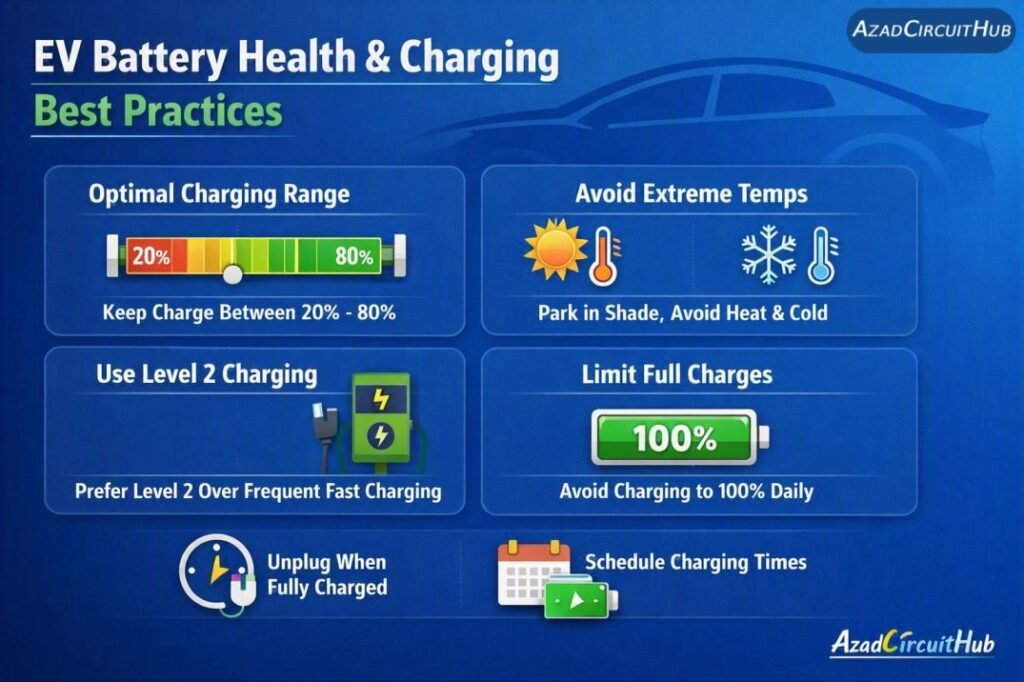
Table of Contents
Table of Contents
| EV Battery Charging Practice | Recommended Approach | Main Benefit |
|---|---|---|
| Daily charging | Keep within a moderate state of charge | Reduces battery stress |
| AC home charging | Use for routine charging | Lower charging heat |
| DC fast charging | Use when speed is needed | Convenient long-distance travel |
| Charging to 100% | Use when full range is required | Maximum driving range |
| Parking at very low charge | Avoid for extended periods | Helps prevent deep discharge |
| Extreme temperatures | Precondition when possible | Improves charging efficiency |
| Long-term storage | Leave battery at moderate charge | Limits calendar aging |
What Affects EV Battery Health?
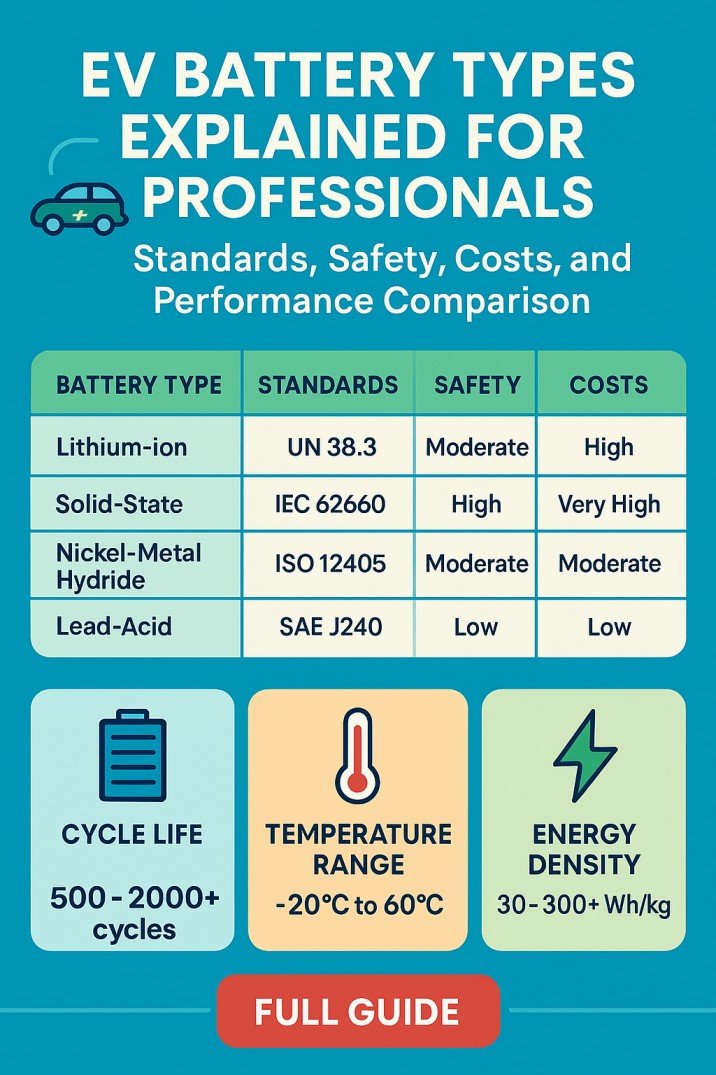
Battery degradation is influenced by several factors rather than one charging habit. Lithium-ion cells naturally lose some capacity as they age. This process is called battery degradation, and it occurs even when an EV is not being driven.
Heat is one of the most important factors. High battery temperatures can accelerate chemical reactions inside the cells. Very cold conditions can also temporarily reduce charging performance and available range.
Charging power matters as well. Level 1 and Level 2 AC charging generally produce less heat than high-power DC charging. However, modern EVs are designed to manage thermal conditions, so occasional fast charging is not automatically harmful.
| Factor | Effect on Battery | Practical Approach |
|---|---|---|
| High temperatures | Can accelerate degradation | Use thermal management and shade |
| Very low charge | Increases risk if left for long periods | Recharge before extended parking |
| High state of charge | More battery stress over time | Use a lower daily limit when practical |
| High-power charging | Produces more heat | Use DC charging when needed |
| Battery age | Natural capacity loss | Normal and unavoidable |
| Frequent deep cycling | Adds battery wear | Avoid unnecessary 0–100% cycles |
Does Fast Charging Damage EV Battery?
The short answer is that fast charging does not normally cause immediate battery damage when the vehicle is operated within its designed charging limits. EV manufacturers build battery management and thermal control systems specifically to regulate high-power charging.
However, frequent high-power charging can contribute to faster degradation under some conditions. The effect depends on battery chemistry, charging temperature, charging power, vehicle design, and how frequently fast charging is used.
When a battery is cold or very hot, the BMS may reduce charging power. This protective action is one reason charging speeds can vary during a trip.
For everyday use, AC home charging is often a convenient option. DC charging is particularly useful for road trips, commercial fleets, and situations where the vehicle needs substantial range quickly.
Does Fast Charging Reduce EV Battery Life?
Frequent DC fast charging may contribute to additional battery degradation compared with predominantly slower AC charging, but the difference varies considerably between vehicles and operating conditions.
Modern EVs use several strategies to limit this effect. Charging power typically falls as the battery approaches a high state of charge. Thermal management systems can cool or heat the battery, while the BMS continuously monitors individual cell conditions.
Therefore, avoiding fast charging completely is not necessary. Instead, use it when its speed provides a real benefit.
| Charging Type | Typical Use | Battery Consideration |
|---|---|---|
| Level 1 AC | Overnight or low-mileage charging | Gentle but slow |
| Level 2 AC | Daily home charging | Practical routine option |
| DC fast charging | Travel and quick top-ups | Higher heat and battery stress |
| High-power DC | Long trips and rapid charging | Best used when speed matters |
How Bad Is Fast Charging for EV?
For most owners, occasional fast charging is not something to fear. The more useful question is how the vehicle is used over its entire lifetime.
An EV that uses DC fast charging occasionally may still retain substantial battery capacity after many years. On the other hand, a vehicle that repeatedly charges at high power, especially in hot conditions, may experience more stress.
Charging from a low state of charge to around 50–70% can also be more time-efficient at a fast charger because charging power often decreases substantially at higher battery levels.
For long-distance travel, a series of shorter charging stops can therefore be more practical than waiting for a very high state of charge.
Does Fast Charging Damage EV Batteries?
Fast charging does not automatically damage EV batteries. The vehicle’s charging system is designed around the battery’s safe operating limits.
The important distinction is between normal manufacturer-approved charging and charging under unfavorable conditions. Excessive heat, repeated high-power sessions, and prolonged high states of charge can increase battery aging.
Battery chemistry also matters. Different EVs use different cell chemistries and pack designs, so charging recommendations should always be checked against the manufacturer’s instructions.
Things to Avoid While Charging Your EV
Good charging habits are mostly about avoiding unnecessary extremes. You do not need to follow complicated routines every time you plug in your vehicle.
Avoid leaving the battery at 100% for days unless the vehicle manufacturer specifically recommends it. Similarly, avoid leaving the vehicle nearly empty for extended periods.
Extreme temperatures should also be considered. If the vehicle provides battery preconditioning, use it before a high-power charging session when appropriate.
| Avoid | Why It Matters | Better Practice |
|---|---|---|
| Leaving at 100% for long periods | Increases high-SOC exposure | Charge near departure when possible |
| Repeated unnecessary DC charging | May increase thermal stress | Use AC charging for routine use |
| Parking empty for extended periods | Can cause battery-management issues | Maintain a moderate charge |
| Charging when extremely hot | Adds thermal load | Allow thermal management to operate |
| Ignoring warning messages | May indicate charging problems | Follow manufacturer guidance |
| Using damaged charging equipment | Creates electrical and safety risks | Inspect cables and connectors |
Does the 80% Charging Rule Still Matter?
The 80% rule remains useful as a general daily-charging guideline, but it should not be treated as a universal requirement for every EV.
Lithium-ion batteries generally experience greater stress at very high and very low states of charge. Keeping a vehicle within a moderate range for routine driving can therefore help reduce unnecessary battery stress.
Some EVs, especially those using lithium iron phosphate (LFP) batteries, may have different recommendations. Certain manufacturers may also recommend periodically charging to 100% to help the BMS calibrate its state-of-charge estimate.
The best approach is to follow the vehicle’s charging instructions rather than applying the 80% rule blindly.
| Driving Situation | Practical Charge Target |
|---|---|
| Normal daily driving | Moderate charge limit |
| Long road trip | Charge higher before departure |
| Short daily commute | Lower limit may be sufficient |
| Extended parking | Moderate state of charge |
| Manufacturer recommends 100% | Follow the specified procedure |
Secrets of EV Battery Longevity
There is no single trick that guarantees maximum battery life. Instead, several simple habits work together to support EV Battery Health.
First, use AC Level 2 charging for routine home charging when practical. Second, avoid unnecessary exposure to very high or very low states of charge. Third, pay attention to temperature management.
Planning charging around your driving schedule can also help. For example, charging shortly before departure can reduce the time the battery remains at a high state of charge.
Software updates are another consideration. Manufacturers can modify battery management strategies through updates, improving charging control, thermal management, and energy estimation.
| Longevity Habit | Recommended Action |
|---|---|
| Routine charging | Prefer convenient AC charging |
| High charge level | Avoid leaving at maximum for long periods |
| Fast charging | Use when speed is genuinely useful |
| Temperature | Use battery preconditioning where available |
| Long-term parking | Follow manufacturer’s storage guidance |
| Software | Keep vehicle systems updated |
For drivers comparing charging equipment, choosing an appropriately rated home charger can also make daily charging easier. A reliable Level 2 EV charger can provide practical overnight charging without depending on public DC stations.
How Long Do EV Batteries Last?
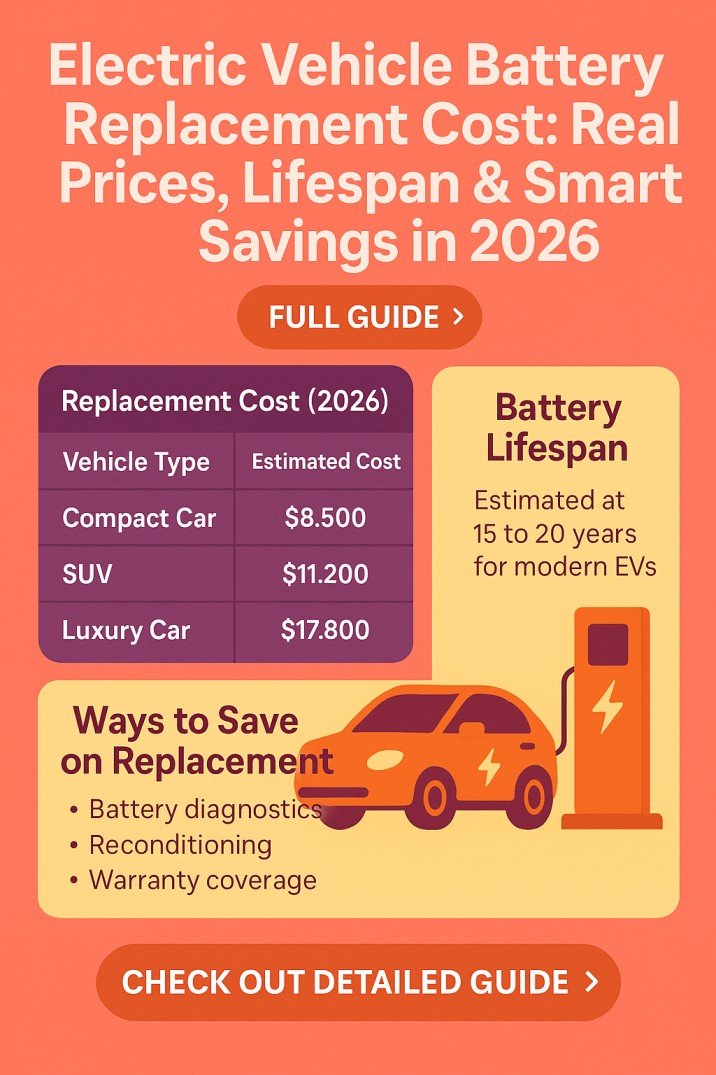
EV battery life varies according to chemistry, vehicle design, climate, mileage, charging behavior, and thermal management. Battery warranties also differ between manufacturers, so the warranty supplied with the vehicle is an important reference.
Battery capacity does not normally disappear suddenly. Instead, usable capacity gradually declines over time. An older battery may still operate normally while providing somewhat less driving range than when it was new.
For this reason, EV Battery Health should be viewed as a gradual aging process rather than a simple pass-or-fail condition.
How Can You Check EV Battery Health?
Many EVs display battery condition, estimated range, charging information, and other useful data through the dashboard or mobile application. Some vehicles provide a dedicated battery health indicator, while others require diagnostic equipment or a dealer inspection.
Range alone is not a perfect measure because driving speed, weather, tire pressure, HVAC use, and terrain can significantly affect energy consumption.
For a used EV purchase, obtaining battery diagnostic information and checking warranty coverage can provide a clearer picture of the battery’s condition.
Frequently Asked Questions
Does fast charging damage EV batteries?
Normal manufacturer-approved fast charging does not automatically damage an EV battery. However, frequent high-power charging can increase heat and may contribute to faster degradation depending on the vehicle, battery chemistry, temperature, and charging pattern.
Is it bad to charge an EV to 100%?
Charging to 100% is not inherently harmful when the vehicle is designed for it. For everyday driving, however, some manufacturers recommend a lower charging limit to reduce the time the battery spends at a very high state of charge. Always follow the manufacturer’s recommendation.
Should I charge my EV every night?
You can charge an EV every night if needed, particularly with Level 2 AC charging. However, daily charging does not mean the battery must reach 100%. Set a suitable charge limit based on your expected driving distance and the manufacturer’s guidance.
Is Level 2 charging better for battery life?
Level 2 AC charging is commonly suitable for routine charging because it generally delivers power at a lower rate than DC fast charging. It can reduce the need for frequent high-power charging while providing convenient overnight charging at home.
How can I make my EV battery last longer?
Avoid unnecessary extreme states of charge, minimize prolonged exposure to high temperatures, use fast charging when it is useful, and follow the manufacturer’s charging and storage recommendations. Battery thermal management and software also play important roles in long-term performance.
Final Takeaway
Good charging habits do not require avoiding fast chargers or obsessing over an exact percentage every day. The most practical strategy is to use AC charging for routine needs, reserve DC fast charging for situations where speed matters, avoid prolonged extreme states of charge, and follow the vehicle manufacturer’s battery recommendations.
Understanding EV Battery Health helps owners balance battery longevity with convenience. Modern EVs are equipped with sophisticated battery management systems, so normal charging within the vehicle’s specifications is generally straightforward. The goal is not to eliminate battery aging, but to avoid unnecessary conditions that can accelerate it.
Get new guides in your feed. Follow Electrical Insights on LinkedIn for new electrical standards guides, calculators and design tips from Azad Circuit Hub.
#EVBatteryHealth, #EVCharging, #ElectricVehicles, #EVBattery, #EVChargingBestPractices, #EVRange, #BatteryLife, #EVMaintenance, #EVTips, #EVTechnology