
DC Hipot Test Voltage Chart: Essential Guide for Accurate Testing
A DC Hipot Test Voltage Chart is one of the most important references used during cable and electrical insulation testing. It helps engineers and technicians apply the correct test voltage without damaging insulation or creating false test results.
In electrical systems, insulation failure can lead to equipment damage, downtime, and safety risks. That is why using a proper DC Hipot Test Voltage Chart is critical for preventive maintenance and commissioning.
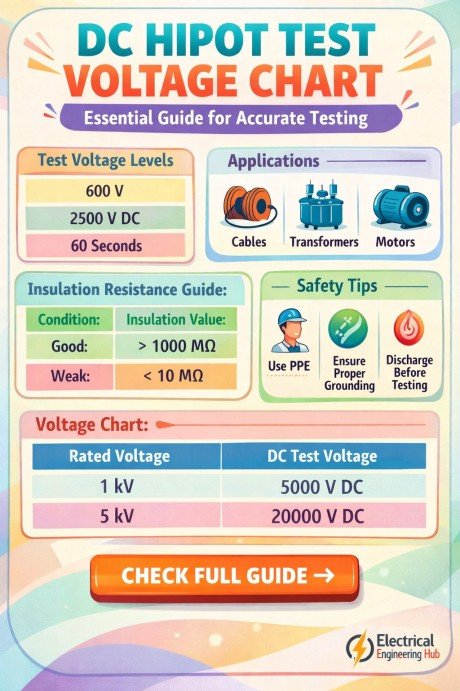
Table of Contents
Table of Contents
Whether you are testing medium-voltage cables, switchgear, motors, or transformers, understanding the right DC high potential test values ensures safe and accurate testing. This guide explains how the chart works, how to calculate test voltages, and when to use it.
Findt all about AC Hipot Test Procedure for Cables
What is a DC Hipot Test?
A DC hipot test is an insulation strength test where high DC voltage is applied between conductors and ground. The purpose is to verify insulation integrity and identify weak spots before equipment goes into service.
The term “hipot” means high potential. It checks whether insulation can withstand voltages above normal operating levels.
If you are new to insulation testing, understanding the basics of hipot test procedures can improve your testing accuracy.
Common equipment tested using DC hipot includes:
- Power cables
- Motors
- Generators
- Transformers
- Circuit breakers
- Busbars
The test usually measures leakage current while the voltage is gradually increased.
Why a DC Hipot Test Voltage Chart Matters
Using a DC Hipot Test Voltage Chart helps avoid guesswork. Applying too low voltage may fail to reveal insulation weaknesses. Applying too high voltage may damage healthy insulation.
Know more about Top 12 AC Hipot Tester Phenix Suppliers in USA
Benefits of using the chart:
- Ensures compliance with IEC and IEEE standards
- Improves test consistency
- Reduces insulation stress
- Helps identify early faults
- Increases equipment reliability
A proper chart also saves time during field testing.
DC Hipot Test Voltage Chart for Common Cable Ratings
Below is a standard DC Hipot Test Voltage Chart used for medium-voltage cable testing.
| Cable Voltage Rating | AC Equivalent Test Voltage | DC Hipot Test Voltage |
|---|---|---|
| 600 V | 1 kV | 2.4 kV |
| 1 kV | 2 kV | 4.8 kV |
| 5 kV | 15 kV | 36 kV |
| 8.7/15 kV | 27 kV | 65 kV |
| 12/20 kV | 36 kV | 86 kV |
| 18/30 kV | 54 kV | 129 kV |
These values can vary depending on insulation type, cable age, and testing standards.
Always verify manufacturer recommendations before testing.
How to Calculate DC Hipot Test Voltage
The DC Hipot Test Voltage Chart often follows this formula:
DC Test Voltage = AC Test Voltage × 1.414 × Safety Factor
Where:
- 1.414 converts RMS to peak value
- Safety factor usually ranges from 1.5 to 3
Find all about AC Hipot Tester TOS5200 Suppliers in USA
Example Calculation
For an 11 kV cable:
- AC test voltage = 28 kV
- DC test voltage = 28 × 1.414 × 2
Result:
DC test voltage ≈ 79.18 kV
This value aligns closely with standard cable test charts.
Key Takeaways
Before performing any test, remember these important points:
- Always follow the DC Hipot Test Voltage Chart for your equipment rating
- Inspect cables for visible damage before testing
- Increase voltage gradually to avoid sudden stress
- Monitor leakage current continuously
- Follow discharge procedures after testing
- Use calibrated hipot equipment
These steps improve both safety and test reliability.
DC Hipot Test Procedure
Following a standard process ensures better results.
1. Visual Inspection
Check the cable or equipment for:
- Cracks
- Moisture
- Loose terminations
- Dirt accumulation
Explore all about AC Hipot Tester Price in Canada
2. Isolation
Disconnect the cable from all connected equipment.
3. Grounding
Proper grounding protects both equipment and personnel.
4. Voltage Application
Apply DC voltage slowly according to the DC Hipot Test Voltage Chart.
5. Hold Time
Maintain the test voltage for 5 to 15 minutes based on standards.
6. Record Leakage Current
A stable reading usually indicates good insulation.
For deeper understanding of advanced hi-pot test practices, studying leakage current trends is highly recommended.
7. Discharge the Equipment
After the test, discharge completely before handling.
Know more about AC Hipot Test Acceptable Leakage Current
Interpreting DC Hipot Test Results
Reading the results correctly is as important as applying the test.
| Leakage Current Behavior | Condition |
|---|---|
| Stable and low | Good insulation |
| Gradually rising | Moisture or contamination |
| Sharp increase | Insulation breakdown |
| Fluctuating values | Surface tracking or unstable connection |
A sudden current rise often indicates insulation weakness.
Comparing results with previous tests helps identify insulation aging.
DC Hipot Testing Standards
Different standards provide guidance for test voltages and procedures.
IEC Standards
IEC 60502 covers cable insulation testing for power cables.
IEEE Standards
IEEE 400 gives field testing guidelines for shielded power cables.
NETA Standards
NETA ATS and MTS provide acceptance and maintenance testing limits.
Following these standards ensures reliable and safe testing.
Know more about VLF Testing vs Hipot
DC Hipot vs AC Hipot Testing
Many technicians compare both methods before testing.
| Factor | DC Hipot | AC Hipot |
|---|---|---|
| Equipment Size | Smaller | Larger |
| Power Requirement | Lower | Higher |
| Field Testing | Easy | More complex |
| Cable Stress | Higher on aged XLPE | More realistic |
| Cost | Lower | Higher |
For older XLPE cables, VLF testing is now preferred in many cases.
Still, the DC Hipot Test Voltage Chart remains useful for many insulation systems.
Common Mistakes During DC Hipot Testing
Avoid these errors:
- Using incorrect voltage values
- Skipping insulation resistance pre-check
- Testing wet cables
- Ignoring leakage current patterns
- Poor grounding setup
- Not discharging after testing
Even a small mistake can affect results.
Know more about Hipot Test Parameters UL 60335
Safety Tips for DC Hipot Testing
Safety must always come first.
Important precautions:
- Use insulated gloves
- Place warning barriers
- Verify isolation
- Keep unauthorized people away
- Use proper discharge sticks
- Confirm zero voltage after discharge
High voltage testing always carries serious risks.
Conclusion
A DC Hipot Test Voltage Chart is an essential tool for electrical testing professionals. It provides accurate test voltage references and improves insulation testing reliability.
By using the correct chart, following proper procedures, and understanding leakage current behavior, you can detect insulation problems early and prevent costly failures.
Know more about HT Motor Tan Delta Testing – Best Guide for High Voltage Motor Insulation Diagnostic & Preventive Maintenance
Whether you are testing power cables, motors, or switchgear, proper use of the DC Hipot Test Voltage Chart ensures safer operation and longer equipment life.
FAQs
What is the purpose of a DC Hipot Test Voltage Chart?
It helps determine the correct DC high voltage level for insulation testing based on equipment rating.
How long should a DC hipot test last?
Most tests last between 5 and 15 minutes depending on the equipment and standards.
Is DC hipot testing safe for XLPE cables?
It can be used, but repeated DC testing on aged XLPE cables is often discouraged.
What does high leakage current mean?
It usually indicates insulation deterioration, moisture ingress, or contamination.
Can DC hipot testing damage insulation?
Yes, if incorrect voltage is applied or if the insulation is already weak. That is why using a proper DC Hipot Test Voltage Chart is important.
Get new guides in your feed. Follow Electrical Insights on LinkedIn for new electrical standards guides, calculators and design tips from Azad Circuit Hub.
DCHipotTestVoltageChart,#HipotTesting,#ElectricalTesting,#HighVoltageTesting,#InsulationTesting,#CableTesting,#ElectricalSafety,#TestVoltageChart,#EngineeringGuide,#PowerSystems
