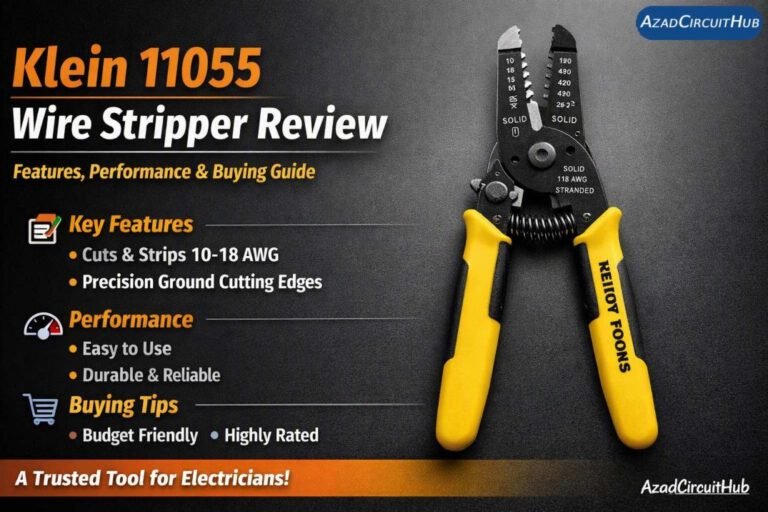
Best Wire Stripper for Stranded Wire: Klein 11055 Review & Buying Guide
As an Amazon Associate I earn from qualifying purchases. See my affiliate disclosure.
Finding the best wire stripper for stranded wire comes down to one thing: removing the insulation without cutting a single strand. In more than 15 years of panel building, control wiring and troubleshooting, I have traced hot terminations, loose connections and repeat callbacks back to nicked strands more times than I can count. This guide covers what to look for, the main types of wire strippers, how to strip stranded wire step by step, and why the Klein Tools 11055 is the tool I recommend for everyday 12-20 AWG work.
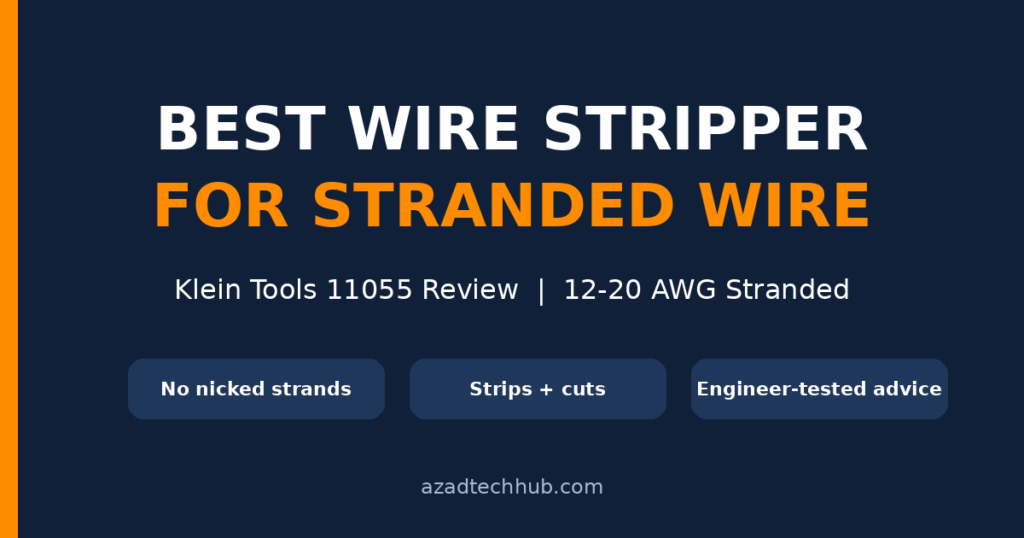
Quick Answer
- Best for everyday stranded wire (12-20 AWG): Klein Tools 11055, a manual Klein-Kurve stripper and cutter.
- Best for speed on repetitive jobs: a self-adjusting model. See my guide to the best self-adjusting wire strippers.
- Heavy stranded wire (6-12 AWG): use a heavy-gauge stripper or a cable-stripping knife, not a general-purpose stripper.

- Cuts, strips, and loops 10-18 AWG Solid and 12-20 AWG Stranded wire and cleanly shears 6-32 and 8-32 screws
- Precision ground stripping holes
- Strong-gripping serrated nose for easy bending, shaping, and pulling of wire
What Makes the Best Wire Stripper for Stranded Wire?
Solid wire is forgiving. Stranded wire is not. A stranded conductor is a bundle of fine copper strands, and every nicked strand reduces the effective cross-section at the termination. On a 20 A branch circuit that may not matter on day one, but on a control panel with vibration and thermal cycling it is exactly where intermittent faults start. If you want the background, see my guide to the different types of wires used in electrical wiring.
That is why the best wire stripper for stranded wire has four things:
- Precision-ground stripping holes sized to the conductor, so the blade cuts the insulation and stops before the copper.
- A clearly marked gauge range that includes your wire. A stripper used outside its range is the number one cause of damaged strands.
- A built-in cutter, so you can square the wire end before stripping.
- Comfortable handles and a return spring, because you will repeat the motion hundreds of times a shift.
Klein 11055: My Pick as the Best Wire Stripper for Stranded Wire
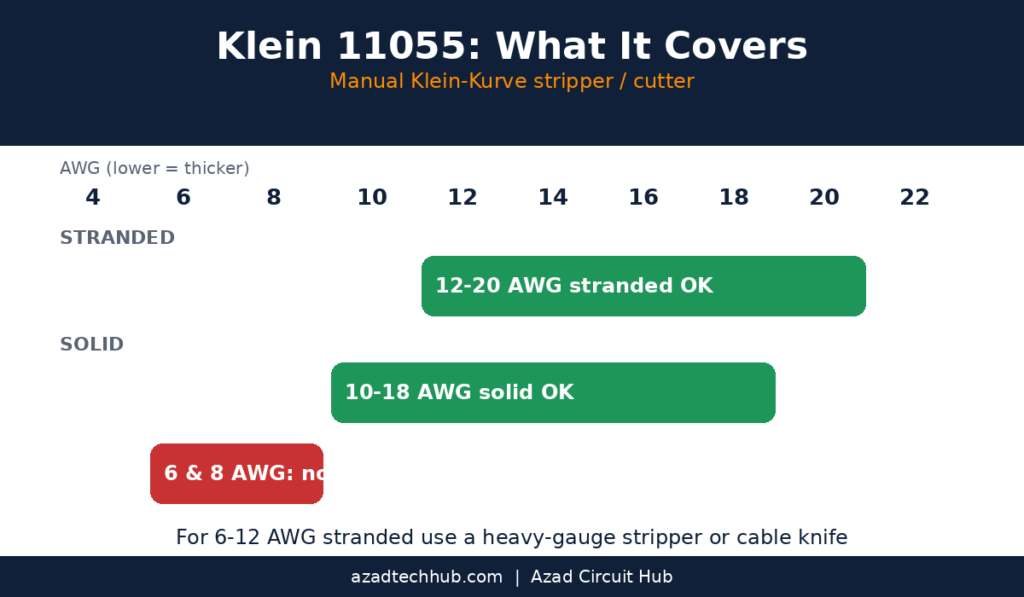
The Klein Tools 11055 is a steel Klein-Kurve stripper and cutter made in the USA. It strips and cuts 10-18 AWG solid and 12-20 AWG stranded copper wire, which covers the large majority of control wiring, lighting circuits, 12 AWG branch circuits, and hookup wire I deal with. It also has holes for looping wire, a serrated nose, and it shears 6-32 and 8-32 screws.
| Spec | Klein 11055 |
|---|---|
| Type | Manual stripper / cutter (Klein-Kurve) |
| Solid wire | 10-18 AWG |
| Stranded wire | 12-20 AWG |
| Extras | Looping holes, screw shearing (6-32 / 8-32), spring-open handles, closure lock |
| Made in | USA |
Why I rank it as the best wire stripper for stranded wire in this size range: it is predictable. You choose the hole, squeeze, and pull. There is no mechanism to go out of adjustment, and the curved handles reach into crowded panels and boxes. After years of control-panel work I trust a simple manual tool more than a complex one for fine stranded conductors, because I control the pressure myself.
READ NEXT: my detailed Klein 11055 wire stripper review, the Klein 11055 vs 11054 comparison and Klein 11055 vs Irwin Vise-Grip.
Pros: clean strip on stranded wire in range, strips and cuts in one tool, compact, durable steel, USA-made, simple to maintain.
Cons: manual (more effort than automatic tools), you must pick the correct hole, and it does not cover heavy 6-10 AWG stranded conductors.
Types of Wire Strippers (and What Electricians Actually Use)
What do electricians use to strip wire? Most carry a plier-style manual stripper like the Klein 11055 for daily work, a utility or cable knife for sheathed cable and large conductors, and sometimes a self-adjusting or automatic stripper for repetitive jobs. Here is how the common types compare.
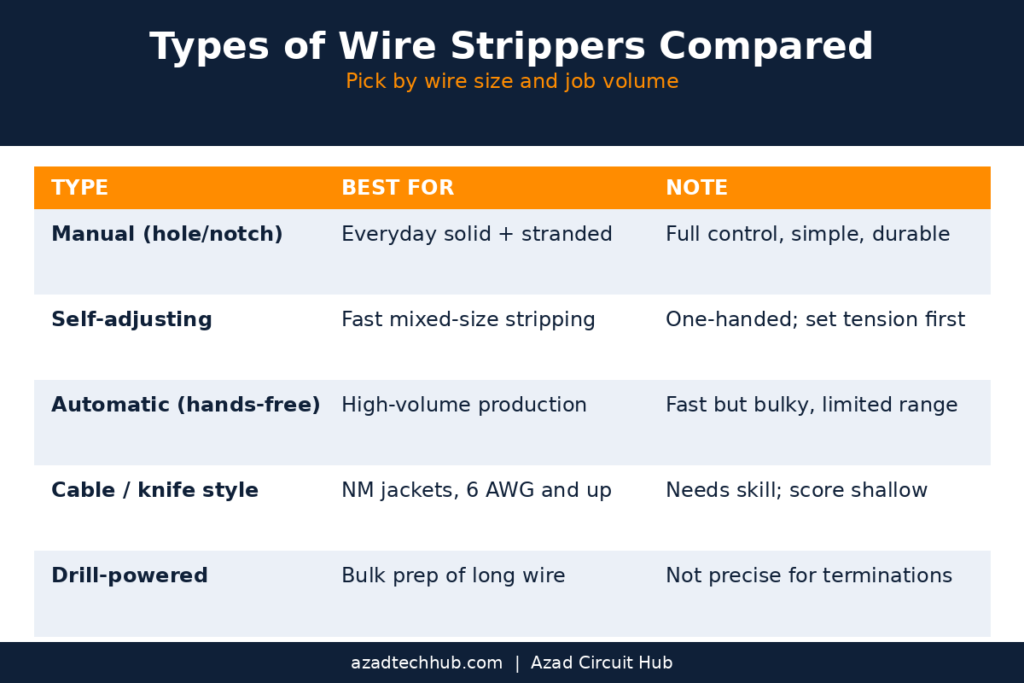
| Type | Best for | Watch out for |
|---|---|---|
| Manual (notch / hole) | Everyday solid and stranded wire, full control | You must pick the right hole |
| Self-adjusting | Fast, repetitive stripping of mixed sizes | Setting tension for fine stranded wire |
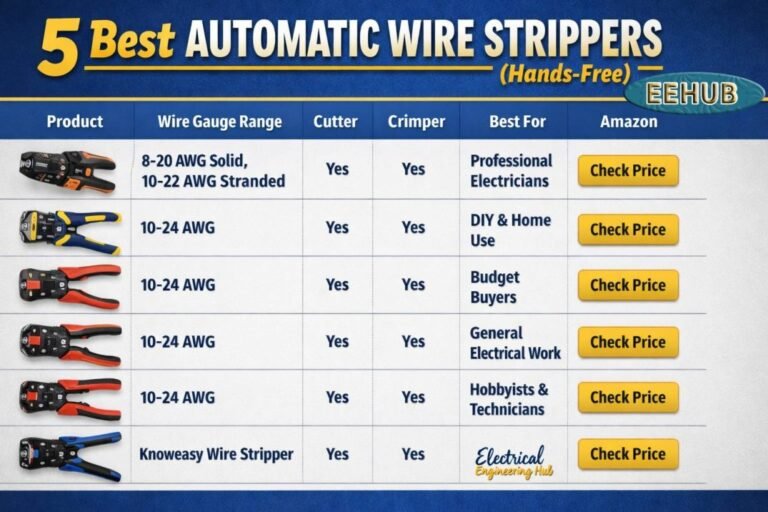
| Automatic (hands-free) | Production and high volume | Bulk, cost, limited range |
| Cable / knife style | NM cable jackets, 6 AWG and larger | Skill needed to avoid nicking copper |
| Drill-powered tools | Bulk stripping of large lengths of wire | Not precise enough for terminations |
For most people, the best wire stripper for stranded wire is still a quality manual stripper, because it gives the control that fine strands need. If you work in volume, my guide to the best automatic wire strippers covers the hands-free options, and the best wire strippers for electricians roundup compares professional picks side by side.
Self-Adjusting vs Manual: Which Suits Stranded Wire?
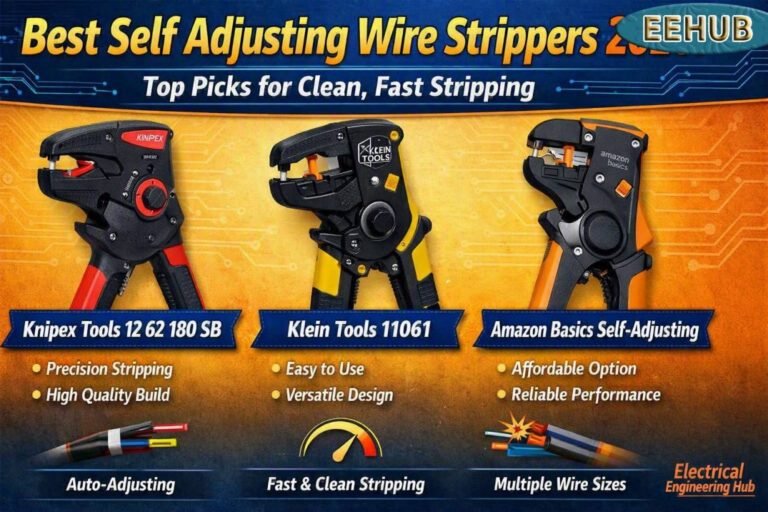
A self-adjusting wire stripper grips the conductor and strips in one squeeze. It is fast, and it is great for one-handed work. The trade-off is that it is calibrated for a range, and very fine or very soft stranded wire can sometimes get a few strands pulled out if the tension is wrong. If you are searching for the best wire stripper for stranded wire with a self-adjusting head, buy one with an adjustable tension dial and test it on scrap first. See my best self-adjusting wire strippers guide for tested-on-paper comparisons.
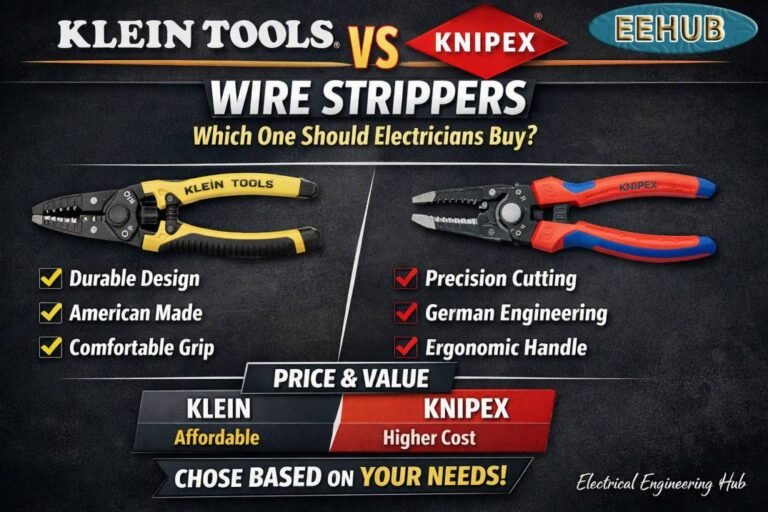
What about brands? Forum threads that rank the best wire strippers on Reddit tend to repeat the same names: Klein, Knipex, IDEAL and Wiha. Knipex forged wire strippers are a premium, precision option, and I compare them directly in Klein Tools vs Knipex wire strippers. Wiha wire strippers are worth a look if you prefer a European-style ergonomic handle. For an ideal wire stripper, match the gauge range to your wire first and the brand second.
How to Strip Stranded Wire Without Cutting Strands
Even the best wire stripper for stranded wire needs good technique. Always de-energize the circuit and verify it is dead with a tester before touching conductors. See my product reviews for voltage testers.
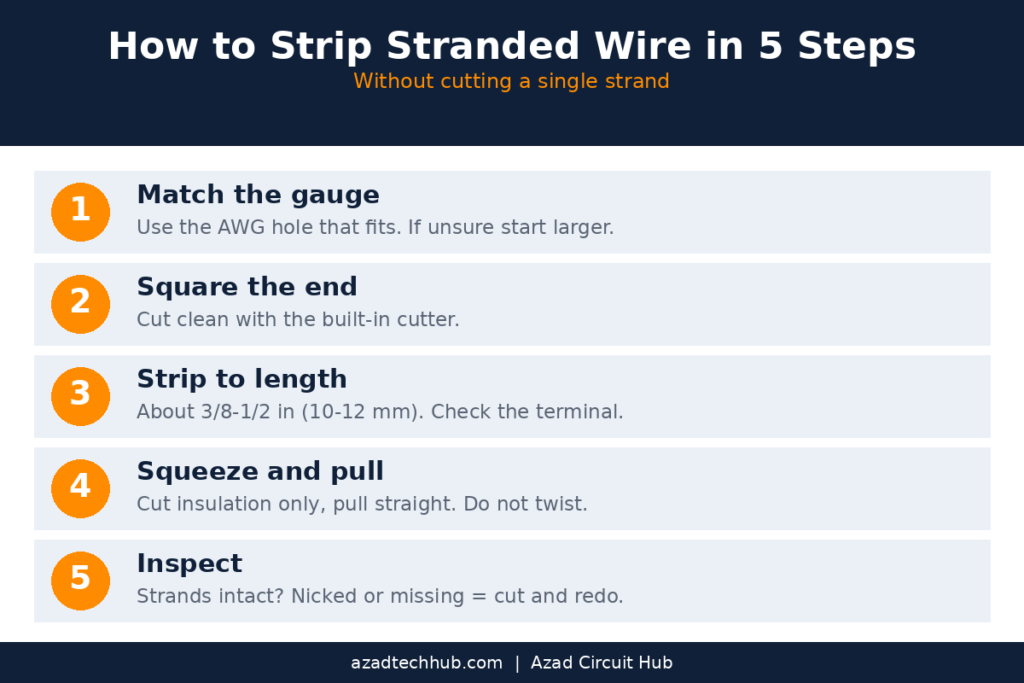
- Check the gauge. Confirm the AWG printed on the insulation, or measure it. Use the matching hole on the stripper. If unsure, start with the larger hole and step down.
- Square the end. Cut the end clean with the built-in cutter.
- Strip to length. Most terminals and lever connectors call for roughly 3/8-1/2 in (10-12 mm). Check the strip gauge printed on the terminal.
- Squeeze, then pull. Close the handles just enough to cut the insulation, then pull straight off in one motion. Do not twist the tool.
- Inspect. Strands should be intact and in a tight bundle. Twist them lightly in the lay direction. If you see nicks or missing strands, cut and re-strip.
If you are using push-in or lever connectors on stranded conductors, read can WAGO lever nuts be used on stranded wire before you terminate.
How to Strip 6 AWG and 8 AWG Stranded Wire
Heavy stranded wire is where general-purpose strippers fall short. A 12-20 AWG stripper, including the Klein 11055, does not cover 6 AWG (about 13.3 mm2) or 8 AWG (about 8.4 mm2). The best wire stripper for stranded wire at these sizes is a heavy-gauge stripper rated for 6-12 AWG (Klein makes one in the 11053 class; confirm the listing) or a sharp cable knife.
With a knife, score the insulation at a shallow angle, like sharpening a pencil, so the blade rides on the insulation and never touches the copper. Rotate the wire, slit lengthwise a short distance, then peel the jacket back and trim it. Never score straight down across the strands. Then confirm the right size for your load with my AC cable size calculator, DC cable size calculator or the full list of electrical calculators.
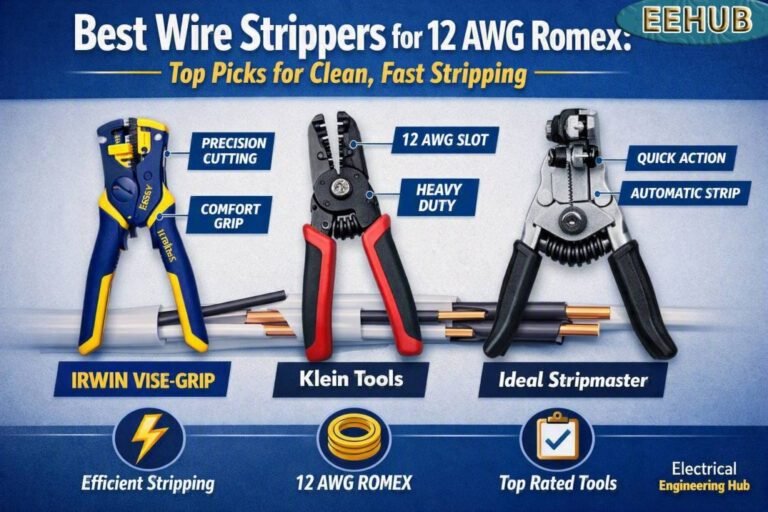
For other specific jobs, see the best wire stripper for 12 AWG Romex and the best wire stripper for solar panel cable.
Frequently Asked Questions
What is the best wire stripper for stranded wire?
For everyday 12-20 AWG stranded wire, the Klein Tools 11055 is my pick: precisely ground holes, built-in cutter, and USA-made steel. For heavy 6-12 AWG stranded wire you need a heavier-duty stripper or a cable knife.
What do electricians use to strip wire?
Most electricians carry a manual plier-style stripper for daily work, a knife for cable jackets and large conductors, and sometimes a self-adjusting stripper for repetitive jobs.
How do you strip a stranded wire?
Select the matching gauge hole, square the end, strip about 3/8-1/2 in, squeeze just enough to cut the insulation, pull straight off, and inspect for nicked strands.
Is the Klein 11055 self-adjusting?
No. The 11055 is a manual Klein-Kurve stripper/cutter. Klein’s self-adjusting model is the 11061. For automatic options, see my automatic wire strippers guide.
Can the Klein 11055 strip 6 AWG or 8 gauge stranded wire?
No. It covers 12-20 AWG stranded. Use a 6-12 AWG heavy-gauge stripper or a cable knife for larger conductors.
Is there a good wire stripping tool for a drill?
Drill-powered strippers exist for bulk work, but they are not precise enough for finished terminations. For connections, use a hand stripper and keep the drill tool for scrap or bulk preparation.
“Not sure? Check the current Klein 11055 reviews on Amazon“.
Final Verdict: Best Wire Stripper for Stranded Wire
If you wire panels, fixtures, control circuits or hookup wire in the 12-20 AWG range, the Klein 11055 is the best wire stripper for stranded wire I can recommend for the money. It is simple, it is built to last, and it strips cleanly when used in the right hole. For anything bigger than 12 AWG stranded, pair it with a heavy-gauge tool or a good knife, and for high-volume work consider an automatic model.
Browse every tested tool in my wire strippers reviews category.
Get new guides in your feed. Follow Electrical Insights on LinkedIn for new electrical standards guides, calculators and design tips from Azad Circuit Hub.