
Testing DC Electric Motor with Multimeter | Step-by-Step Guide for Accurate Motor Diagnosis
Testing DC Electric Motor with Multimeter is one of the most practical skills for technicians, engineers, and even DIY users who deal with electrical systems. A DC motor may fail due to worn brushes, winding faults, or internal short circuits, and a multimeter helps you quickly identify these problems without expensive tools. When done correctly, this method saves time, prevents unnecessary replacements, and improves overall system reliability.
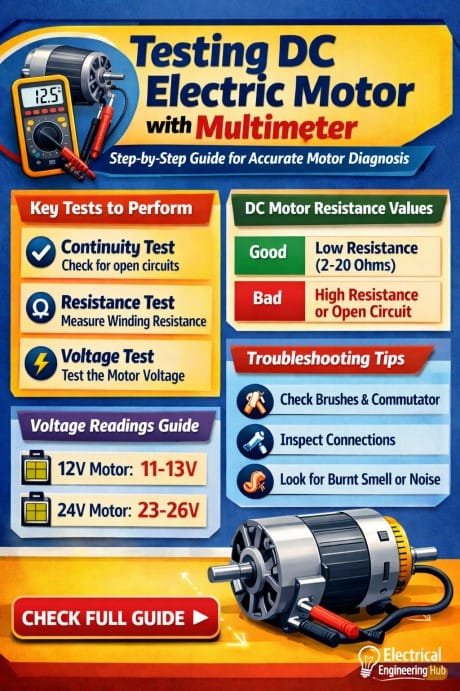
Table of Contents
In this guide, you will learn how to carry out Testing DC Electric Motor with Multimeter in a structured and accurate way. The process is simple, but attention to detail makes all the difference.
Why Testing a DC Motor is Important
DC motors are widely used in solar systems, automotive applications, industrial machines, and household equipment. Over time, these motors can develop electrical faults or mechanical wear.
Some common issues include:
- Open windings
- Short circuits
- Ground faults
- Brush wear
- Commutator damage
Testing DC Electric Motor with Multimeter helps you detect these faults early before they lead to complete motor failure.
Know everything about 3 Phase Motor Overload Relay Setting
Tools Required for Testing
Before starting, gather the following tools:
- Digital multimeter (with resistance and continuity mode)
- Insulated test probes
- Screwdriver set
- Cleaning brush (optional)
- Safety gloves
Using a reliable multimeter is essential for accurate readings during Testing DC Electric Motor with Multimeter.
Understanding Basic Motor Terminals
A typical DC motor has two main terminals:
| Terminal | Description |
|---|---|
| Positive (+) | Power input terminal |
| Negative (-) | Return path |
In some motors, especially brushed types, internal components like commutators and brushes play a key role in current flow.
Understanding these parts makes Testing DC Electric Motor with Multimeter easier and more precise.
Know more about What Are Different Types of Overcurrent Relays?
Step-by-Step Guide to Test a DC Motor
1. Visual Inspection
Start with a simple visual check before using any tools.
Look for:
- Burn marks
- Loose wires
- Broken terminals
- Dust or debris inside the motor
A damaged exterior often indicates internal problems. While this step does not involve Testing DC Electric Motor with Multimeter directly, it helps you identify obvious faults.
2. Set Multimeter to Resistance Mode
Turn your multimeter dial to the resistance (Ohms) setting.
This mode is used to measure:
- Winding resistance
- Continuity
- Internal circuit condition
Make sure the motor is disconnected from any power source before Testing DC Electric Motor with Multimeter. If you need a budget-friendly electrical testing tool, don’t miss our detailed review of the Best Multimeter Under $50 available today.
Know more about Motor Overload Protection Chart
3. Check Terminal Resistance
Place the multimeter probes on both motor terminals.
| Reading Type | Interpretation |
|---|---|
| Low resistance (few ohms) | Normal winding condition |
| Very high resistance | Open circuit or broken winding |
| Zero resistance | Possible short circuit |
This is a core step in Testing DC Electric Motor with Multimeter and gives a quick overview of motor health.
4. Test for Continuity
Switch the multimeter to continuity mode.
- Place probes on both terminals
- Listen for the beep sound
| Result | Meaning |
|---|---|
| Beep sound | Circuit is complete |
| No sound | Open circuit |
Continuity testing confirms whether current can flow properly through the motor windings.
Know more about How does the star delta starter reduce starting current?
5. Check for Ground Fault
Now test for insulation failure:
- Place one probe on the motor body
- Place the other probe on a terminal
| Result | Interpretation |
|---|---|
| No reading | Proper insulation |
| Resistance or beep | Ground fault present |
Ground faults are dangerous and can damage connected equipment. Testing DC Electric Motor with Multimeter helps detect this issue early.
6. Inspect Brushes and Commutator
If the motor is a brushed DC motor:
- Open the casing
- Check brush length and condition
- Inspect the commutator surface
| Component | Healthy Condition |
|---|---|
| Brushes | Smooth and not worn out |
| Commutator | Clean and evenly polished |
Worn brushes can cause poor electrical contact, which may show irregular readings during Testing DC Electric Motor with Multimeter.
Know more about Motor Starter Size Chart
7. Measure Armature Resistance (Advanced Check)
For deeper diagnosis:
- Rotate the motor shaft slowly
- Measure resistance across terminals at different positions
| Observation | Meaning |
|---|---|
| Stable readings | Healthy armature |
| Fluctuating readings | Damaged winding |
This step improves the accuracy of Testing DC Electric Motor with Multimeter, especially in industrial motors.
Common Faults and Their Diagnosis
Here is a quick summary of faults you may encounter:
| Fault Type | Multimeter Result | Action Required |
|---|---|---|
| Open winding | Infinite resistance | Rewinding needed |
| Short circuit | Near zero resistance | Replace motor |
| Ground fault | Continuity with body | Insulation repair |
| Brush failure | Irregular readings | Replace brushes |
Recognizing these patterns makes Testing DC Electric Motor with Multimeter more effective and reliable.
Know more about VFD vs Soft Starter
Safety Tips During Testing
Safety should always come first when working with electrical devices.
- Always disconnect power before testing
- Use insulated tools
- Avoid touching bare terminals
- Work in a dry environment
- Double-check multimeter settings
Ignoring these precautions can lead to inaccurate results or personal injury.
Practical Applications of This Method
Testing DC Electric Motor with Multimeter is widely used in:
- Solar water pump systems
- Electric vehicles
- Industrial automation
- Home appliances
- Battery-operated tools
This method is cost-effective and does not require advanced diagnostic equipment.
Learn more about difference between servo motor and induction motor
Tips for Accurate Results
To improve accuracy:
- Calibrate your multimeter regularly
- Ensure firm probe contact
- Avoid testing in humid conditions
- Repeat measurements for confirmation
Consistency is key when performing Testing DC Electric Motor with Multimeter.
Conclusion
Testing DC Electric Motor with Multimeter is a simple yet powerful technique for diagnosing motor problems. By following a structured approach, you can quickly identify faults such as open circuits, short circuits, and insulation failures. This not only saves time but also reduces maintenance costs.
Know more about low cost servomotors
With regular testing and proper maintenance, DC motors can perform efficiently for many years. Whether you are a technician or a beginner, mastering Testing DC Electric Motor with Multimeter will give you confidence in handling motor-related issues with precision.
Get new guides in your feed. Follow Electrical Insights on LinkedIn for new electrical standards guides, calculators and design tips from Azad Circuit Hub.
#testingdcmotor #motortesting #multimetertesting #electricmotorrepair #dcmotorcheck #electricaltroubleshooting #motormaintenance #continuitytest #electricalengineering #repairguide
