
Resistive Load Bank Testing for Generator | Professional Load Testing Services for Reliable Power Performance
Reliable power systems are critical for industries, hospitals, data centers, and commercial facilities. Generators act as the backbone during outages, but their performance must be verified under real operating conditions. This is where Resistive Load Bank Testing for Generator plays a vital role. It ensures that your generator can handle actual loads, maintain voltage stability, and operate efficiently when required.
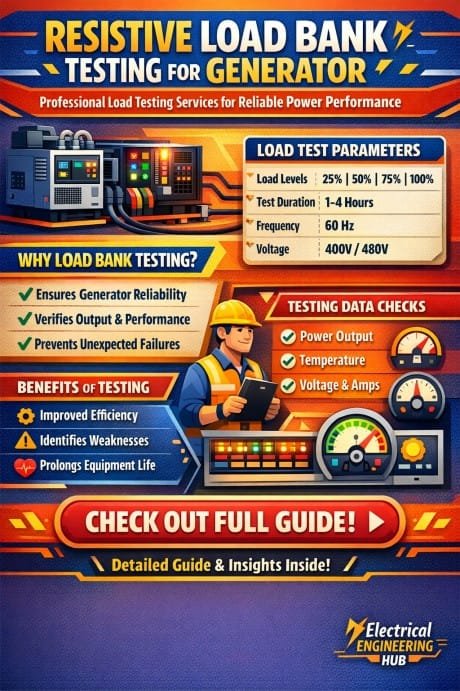
Table of Contents
Resistive Load Bank Testing for Generator is a controlled method of applying an artificial electrical load to a generator. It simulates real-world conditions without connecting to the actual facility load. This testing helps identify hidden issues such as carbon buildup, poor fuel combustion, and inadequate cooling performance. Over time, generators that are not tested under load may fail during emergencies, leading to costly downtime.
Understanding Resistive Load Bank Testing
Resistive Load Bank Testing for Generator uses resistive elements to draw power from the generator, converting electrical energy into heat. Unlike reactive load testing, which includes inductive or capacitive components, resistive testing focuses on real power (kW). This makes it simple, effective, and widely used across industries.
During the test, the generator is operated at various load levels, typically from 25% to 100% of its rated capacity. This process validates performance parameters such as voltage regulation, frequency stability, and fuel consumption.
Use our online tool Generator Power Consumption Calculator – Accurate Tool to Estimate Fuel and Load Usage
Key Components of a Load Bank System
| Component | Function |
|---|---|
| Resistive Elements | Convert electrical energy into heat |
| Control Panel | Allows adjustment of load steps |
| Cooling System | Dissipates generated heat |
| Monitoring Instruments | Track voltage, current, and frequency |
Why Resistive Load Bank Testing is Essential
Generators often run under light loads, especially in standby applications. This can lead to a condition known as wet stacking, where unburnt fuel accumulates in the exhaust system. Resistive Load Bank Testing for Generator eliminates this issue by forcing the engine to operate at optimal temperature and load.
It also ensures compliance with industry standards and regulatory requirements. Many organizations require periodic load testing as part of preventive maintenance programs.
Use our online tool Generac Generator Size Calculator – Find the Right Generator Size
Major Benefits
- Improves engine performance and efficiency
- Prevents carbon buildup and wet stacking
- Verifies generator capacity and reliability
- Enhances fuel combustion
- Identifies potential faults early
Testing Procedure and Best Practices
A structured approach is necessary for effective Resistive Load Bank Testing for Generator. The testing process should be carried out by trained professionals using calibrated equipment.
Standard Testing Steps
| Step | Description |
|---|---|
| Pre-Inspection | Check fuel, oil, and cooling systems |
| Load Application | Gradually increase load in stages |
| Monitoring | Record voltage, frequency, and temperature |
| Full Load Test | Operate at 100% capacity for a defined period |
| Cool Down | Gradually reduce load before shutdown |
Maintaining proper safety protocols is critical during testing. Adequate ventilation, proper grounding, and thermal protection systems must be in place to avoid hazards.
Use our online free tool Generator Size Calculator for Homes in KVA: Best Tool
Applications Across Industries
Resistive Load Bank Testing for Generator is widely used in multiple sectors where uninterrupted power is essential. Each industry has specific requirements, but the goal remains the same: ensuring reliable power performance.
Common Use Cases
- Hospitals and healthcare facilities
- Data centers and IT infrastructure
- Manufacturing plants
- Commercial buildings
- Oil and gas operations
These sectors rely heavily on backup power systems. Regular testing ensures that generators respond instantly during outages without failure.
Load Testing vs Real Load Conditions
Some facility managers assume that running a generator during normal operations is enough. However, actual facility loads may not reach the generator’s full capacity. Resistive Load Bank Testing for Generator provides a controlled environment where the generator can be tested at its rated output.
Use our free online tool Generator Sizing Calculator for VFD Motors
Comparison Table
| Parameter | Real Load | Load Bank Testing |
|---|---|---|
| Load Control | Limited | Precise and adjustable |
| Risk to Equipment | Higher | Minimal |
| Testing Accuracy | Variable | High |
| Fault Detection | Limited | Comprehensive |
Frequency of Testing
The frequency of Resistive Load Bank Testing for Generator depends on usage, environment, and regulatory requirements. For standby generators, testing is typically recommended annually or semi-annually.
Recommended Schedule
- Monthly: No-load inspection and startup
- Quarterly: Light load operation
- Annually: Full resistive load bank testing
Regular testing ensures long-term reliability and reduces the risk of unexpected failures.
Calculate your generator size using our free online tool Generator Sizing Calculator for Pumps
Choosing Professional Load Testing Services
Selecting the right service provider is crucial for effective testing. Professional companies offer advanced equipment, certified technicians, and detailed reporting.
What to Look For
- Experience in generator testing services
- Modern load bank equipment
- Compliance with safety standards
- Detailed performance reports
- On-site testing capability
A professional approach to Resistive Load Bank Testing for Generator ensures accurate results and actionable insights.
Key Performance Parameters Measured
During testing, several critical parameters are monitored to evaluate generator health.
| Parameter | Importance |
|---|---|
| Voltage Stability | Ensures consistent power output |
| Frequency Control | Maintains system synchronization |
| Load Capacity | Verifies maximum output capability |
| Temperature Levels | Prevents overheating |
| Fuel Efficiency | Optimizes operating cost |
Monitoring these parameters helps in diagnosing issues before they become major failures.
Uncover insights on motor generator transformer manufacturers
Cost vs Long-Term Value
Some organizations hesitate to invest in testing due to cost concerns. However, skipping Resistive Load Bank Testing for Generator can lead to severe financial losses during power failures. Equipment damage, operational downtime, and safety risks far outweigh the testing cost.
Regular testing extends generator lifespan, improves efficiency, and ensures compliance with operational standards.
Future Trends in Load Bank Testing
With advancements in technology, load bank testing is becoming more efficient and data-driven. Digital monitoring systems, remote diagnostics, and automated reporting are enhancing the effectiveness of Resistive Load Bank Testing for Generator.
Modern systems provide real-time analytics, allowing facility managers to make informed decisions about maintenance and performance optimization.
Discover our Electrical Cable Sizing Tools, a great resource for all types of cable calculations. It includes cable calculators for generators, transformers, earthing, and more.
Conclusion
Resistive Load Bank Testing for Generator is not just a maintenance task; it is a critical process for ensuring reliable power performance. It validates generator capability, improves efficiency, and prevents unexpected failures. Whether for industrial, commercial, or institutional use, regular testing is essential for uninterrupted operations.
Investing in professional load testing services ensures that your generator is always ready to perform when needed. A well-tested generator provides peace of mind, operational continuity, and long-term cost savings.
Get new guides in your feed. Follow Electrical Insights on LinkedIn for new electrical standards guides, calculators and design tips from Azad Circuit Hub.
#resistiveloadbank,#loadbanktesting,#generatortesting,#powerplantmaintenance,#dieselgenerator,#electricaltesting,#loadtest,#generatorperformance,#powertesting,#energysolutions
