Motor Control Center Upgrade vs Replace – Complete Industrial MCC Modernization Guide 2026
Industrial facilities today depend heavily on reliable power distribution and motor control systems. Aging electrical infrastructure often leads to inefficiency, unexpected downtime, and higher maintenance costs. One of the most critical decisions plant engineers face is Motor Control Center Upgrade vs Replace, especially when dealing with legacy systems that no longer meet operational demands. This decision impacts safety, productivity, and long-term operational cost planning in industries such as manufacturing, oil and gas, water treatment, and power generation.
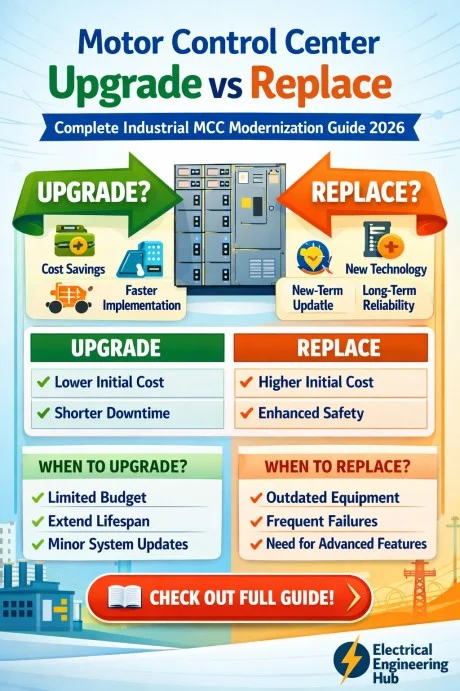
Table of Contents
In many facilities, Motor Control Center Upgrade vs Replace becomes a strategic evaluation rather than a simple maintenance choice. The wrong decision can result in recurring faults, increased arc flash risks, and inefficient energy consumption, while the right approach improves system reliability and extends equipment life significantly.
Understanding MCC Modernization in Industrial Systems
Motor Control Center Upgrade vs Replace is a key consideration in MCC modernization projects where engineers assess whether to retrofit existing MCC structures or install completely new systems. Modern MCCs integrate advanced protection relays, smart monitoring, variable frequency drives, and communication-enabled components that support Industry 4.0 requirements.
Find all about Motor Control Center Installation Cost
Upgrading typically involves replacing breakers, busbars, and control units while retaining the existing enclosure. Replacement, on the other hand, involves full system redesign with updated architecture and compliance to latest IEC or NEMA standards.
When an Upgrade is the Right Choice
Motor Control Center Upgrade vs Replace often begins with evaluating system condition and operational requirements. Upgrading is usually suitable when the MCC structure is still mechanically sound and busbars are in good condition.
Key situations where upgrade is preferred include:
- Existing enclosure meets safety standards
- Limited budget for capital investment
- Short planned shutdown window
- Partial modernization of control systems required
- Compatibility with existing plant layout is critical
Upgrading helps extend the life of electrical assets while improving performance through modern components like digital overload relays, intelligent motor starters, and communication gateways.
When Full Replacement Becomes Necessary
Motor Control Center Upgrade vs Replace decisions lean toward replacement when systems are outdated beyond safe or efficient refurbishment. In many older industrial setups, insulation degradation, corrosion, and obsolete design make upgrades less practical.
Replacement is ideal when:
- MCC is more than 25–30 years old
- Frequent tripping or overheating occurs
- Spare parts are no longer available
- Arc flash compliance cannot be achieved through retrofit
- Expansion of load capacity is required
A full replacement ensures compliance with modern electrical codes and allows integration of smart monitoring systems that improve predictive maintenance capabilities.
Know more about Motor Control Center Lifespan Expectancy
Cost and ROI Comparison Table
Motor Control Center Upgrade vs Replace also depends heavily on cost efficiency and return on investment. While upgrades appear cheaper initially, long-term savings and risk reduction must also be evaluated.
| Factor | Upgrade Approach | Replacement Approach |
|---|---|---|
| Initial Cost | Lower investment | Higher investment |
| Downtime | Shorter shutdown | Longer shutdown |
| Lifespan Extension | Moderate (10–15 years) | High (20–30 years) |
| Safety Compliance | Partial improvement | Full compliance |
| Expansion Capability | Limited | High flexibility |
| Maintenance Cost | Medium | Lower long-term |
This comparison shows that Motor Control Center Upgrade vs Replace is not only a financial decision but also a lifecycle and reliability-based evaluation.
Technical Considerations in MCC Modernization
Motor Control Center Upgrade vs Replace also requires careful technical assessment of electrical parameters, load studies, and system coordination. Engineers must evaluate short-circuit ratings, thermal performance, and control logic compatibility before finalizing the strategy.
Know more about Motor Control Center Bucket Replacement Cost
Important technical factors include:
- Busbar current carrying capacity and insulation condition
- Coordination with upstream and downstream protection devices
- Compatibility with VFDs and smart relays
- Cable termination and space availability
- Harmonic distortion levels in modern loads
In many cases, upgrades can introduce partial digitalization, while replacements offer complete system redesign with optimized electrical architecture.
Downtime and Operational Impact
Motor Control Center Upgrade vs Replace decisions significantly affect plant downtime, which is often a major concern in continuous production industries. Upgrades generally require phased shutdowns, allowing sections of the MCC to remain operational during modernization.
However, replacement projects require full system shutdown, which must be carefully planned with backup power arrangements or temporary bypass systems.
Key downtime considerations include:
- Production loss estimation during shutdown
- Availability of standby power systems
- Installation and commissioning timeline
- Testing and safety certification requirements
- Workforce scheduling and contractor coordination
Find all about How Does a Motor Control Center Work
Balancing downtime against long-term benefits is essential for selecting the right modernization path.
Decision Framework for Engineers and Plant Managers
Motor Control Center Upgrade vs Replace requires a structured decision-making approach that considers technical, financial, and operational factors together rather than in isolation.
A practical decision framework includes:
- Conducting a detailed condition assessment of MCC components
- Performing arc flash and safety compliance analysis
- Evaluating future load growth requirements
- Comparing lifecycle cost analysis for both options
- Assessing downtime tolerance of the facility
- Reviewing availability of spare parts and vendor support
By applying this structured approach, engineers can avoid short-term fixes that lead to long-term inefficiencies.
Conclusion
Motor Control Center Upgrade vs Replace remains one of the most important decisions in industrial electrical system management. While upgrades offer cost-effective improvements and reduced downtime, replacement provides long-term reliability, safety compliance, and scalability for future industrial demands. The final decision should always be based on a combination of system condition, operational priorities, and lifecycle cost evaluation.
Know more about What is a Motor Control Center (MCC)
Modern industries are moving toward smarter, more connected electrical infrastructure, making Motor Control Center Upgrade vs Replace a strategic investment decision rather than a routine maintenance choice. Facilities that carefully evaluate both options tend to achieve higher uptime, better energy efficiency, and improved operational safety over time.
Get new guides in your feed. Follow Electrical Insights on LinkedIn for new electrical standards guides, calculators and design tips from Azad Circuit Hub.
#MotorControlCenter,#MCCUpgrade,#MCCReplacement,#ElectricalEngineering,#IndustrialAutomation,#PowerDistribution,#MotorControl,#ElectricalMaintenance,#IndustrialElectrical,#MCCPanels