Electric Motor Brake Testing Guide | Professional Methods, Safety Checks & Industrial Standards
Electric motor brake testing is a critical maintenance activity in industrial environments where safety, precision, and reliability are essential. Braking systems in electric motors are widely used in cranes, conveyors, hoists, elevators, and automated machinery. A properly functioning brake ensures controlled stopping, prevents load slippage, and protects both equipment and personnel.
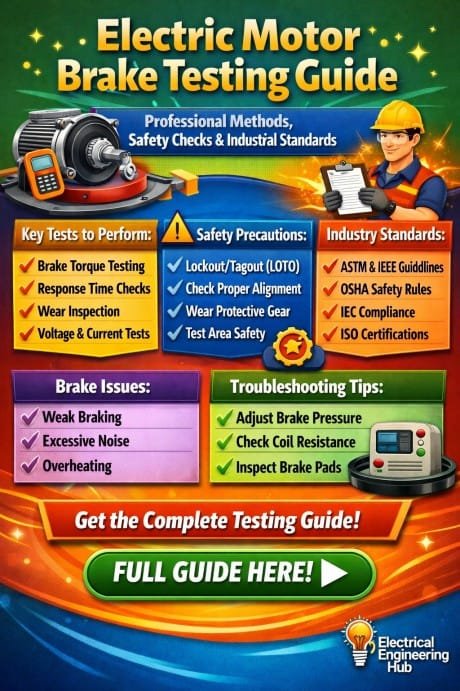
Table of Contents
This guide explains professional methods, safety checks, and industrial standards for effective electric motor brake testing. It is designed for engineers, technicians, and maintenance teams who want practical and reliable procedures.
Importance of Electric Motor Brake Testing
Electric motor brake testing helps identify performance issues before they lead to system failure. Over time, brake components wear out due to friction, heat, and environmental conditions. Without regular testing, problems like delayed stopping, overheating, or complete brake failure may occur.
Know more about How to Size a VFD for a Motor. This is an expert Guide for Accurate Selection
Key benefits include:
- Improved operational safety
- Reduced downtime and repair costs
- Compliance with industrial standards
- Extended equipment lifespan
Industries that rely heavily on lifting or motion control systems cannot afford brake failure, making testing a routine requirement.
Types of Motor Braking Systems
Understanding the type of brake installed is essential before starting electric motor brake testing.
| Brake Type | Description | Common Applications |
|---|---|---|
| Electromagnetic Brake | Uses magnetic force to release braking action | Cranes, hoists |
| Disc Brake | Friction-based system with rotating disc | Elevators, conveyors |
| Drum Brake | Uses brake shoes pressing against a drum | Heavy industrial machines |
| Dynamic Braking | Converts kinetic energy into heat | Large motors, automation |
Each type requires a slightly different testing approach, but the core principles remain the same.
Know more about Top 15 Motor Control Center Manufacturers in Malaysia – Trusted MCC Brands for Industrial Power
Pre-Testing Safety Checks
Before performing electric motor brake testing, safety must be the top priority. Skipping safety steps can result in serious accidents.
Important safety checks include:
- Disconnect power supply and apply lockout/tagout procedures
- Inspect wiring and connections for damage
- Ensure the load is secured or removed
- Wear proper personal protective equipment
- Verify emergency stop systems are functional
A controlled and safe environment ensures accurate testing results.
Visual Inspection Process
Visual inspection is the first step in electric motor brake testing. It helps detect obvious faults without complex tools.
Check the following components:
- Brake pads or linings for wear and tear
- Springs for tension and alignment
- Mounting bolts and brackets
- Signs of overheating or discoloration
- Oil or dust contamination
If any abnormality is found, corrective action should be taken before proceeding further.
Know more about low cost servomotors
Electrical Testing Methods
Electrical performance plays a major role in brake functionality. During electric motor brake testing, measuring voltage and current ensures proper operation.
Common electrical tests include:
| Test Type | Purpose | Tools Required |
|---|---|---|
| Voltage Test | Confirms correct supply voltage | Multimeter |
| Coil Resistance | Detects open or short circuits | Ohmmeter |
| Insulation Test | Ensures insulation integrity | Megger |
| Current Measurement | Verifies coil current during operation | Clamp meter |
These tests help identify issues such as coil failure or power supply irregularities.
Know more about Motor Starter Size Chart: 7 Essential Insights for Better Selection
Mechanical Testing Procedures
Mechanical performance is equally important in electric motor brake testing. The brake must engage and disengage smoothly.
Key mechanical checks:
- Measure air gap between brake components
- Check spring force and compression
- Test manual release mechanism
- Ensure smooth movement without sticking
An uneven air gap or weak spring can reduce braking efficiency and must be corrected.
Functional Testing Under Load
Functional testing simulates real operating conditions. This step confirms whether the brake performs effectively during actual use.
Steps involved:
- Run the motor under normal load conditions
- Apply braking and observe stopping time
- Measure stopping distance if applicable
- Check for noise, vibration, or delay
A properly working brake should stop the motor within the specified time without unusual noise or jerks. Know more about Motor Starter Types: A Powerful Guide with 7 Key Options You’ll Appreciate
Brake Torque Measurement
Torque measurement is a crucial part of electric motor brake testing. It determines whether the brake can hold or stop the load effectively.
| Parameter | Standard Range (Typical) | Observation Goal |
|---|---|---|
| Holding Torque | As per motor rating | Should prevent load movement |
| Braking Torque | Within manufacturer limits | Smooth and consistent stop |
| Release Time | Milliseconds to seconds | Quick disengagement |
Torque values outside the recommended range indicate adjustment or replacement is needed.
Common Issues Identified During Testing
Electric motor brake testing often reveals recurring problems that affect performance.
Some common issues include:
- Worn brake linings
- Weak or broken springs
- Coil burnout
- Excessive air gap
- Contamination from oil or dust
Know more about Motor Overload Protection Chart: Important Concepts
Early detection allows maintenance teams to fix these issues before they escalate.
Maintenance Best Practices
Regular maintenance improves the reliability of braking systems and reduces the frequency of failures.
Recommended practices:
- Clean brake components periodically
- Replace worn parts on time
- Lubricate moving parts where required
- Maintain proper alignment
- Keep detailed maintenance records
Consistent maintenance supports accurate electric motor brake testing results.
Industrial Standards and Compliance
Following industrial standards ensures that electric motor brake testing meets safety and quality benchmarks.
Common standards include:
- IEC (International Electrotechnical Commission) guidelines
- ISO safety and maintenance standards
- OSHA regulations for workplace safety
- Manufacturer-specific testing procedures
Compliance not only improves safety but also helps in audits and certifications.
Use our online tool Motor Overload Setting Calculator for Single and Three Phase Motors
Testing Frequency and Scheduling
The frequency of electric motor brake testing depends on usage and operating conditions.
| Application Type | Recommended Testing Interval |
|---|---|
| Heavy-duty industrial | Monthly |
| Medium usage | Quarterly |
| Light-duty systems | Bi-annually |
High-load environments require more frequent testing to ensure safety.
Documentation and Reporting
Proper documentation is an essential part of electric motor brake testing. It helps track performance trends and maintenance history.
Include the following in reports:
- Test date and technician details
- Measured values and observations
- Identified faults
- Corrective actions taken
Accurate records support decision-making and future maintenance planning.
Know everything about 3 Phase Motor Overload Relay Setting – Accurate Protection for Your Motor
Conclusion
Electric motor brake testing is not just a routine task but a vital process for ensuring safety, efficiency, and compliance in industrial systems. By following structured testing methods, performing thorough safety checks, and adhering to recognized standards, organizations can maintain reliable braking performance.
A combination of visual inspection, electrical and mechanical testing, and functional evaluation provides a complete picture of brake health. Regular testing, supported by proper maintenance and documentation, ensures long-term system reliability and operational safety.
Get new guides in your feed. Follow Electrical Insights on LinkedIn for new electrical standards guides, calculators and design tips from Azad Circuit Hub.
#electricmotorbraketesting,#motorbraketest,#electricmotortesting,#industrialmotortesting,#braketestprocedure,#motormaintenance,#electricaltesting,#industrialautomation,#motorperformance,#electricalengineering