Digital Multimeter vs Analog: Which to Buy?
Choosing between a digital multimeter vs analog can be confusing, especially if you are a beginner electrician, DIY enthusiast, or electrical engineering student. Both tools measure voltage, current, and resistance, but they work differently and suit different applications.
In this guide, you will learn the key differences, advantages, disadvantages, and the best situations for each type. By the end, you will know exactly which multimeter matches your needs and budget.
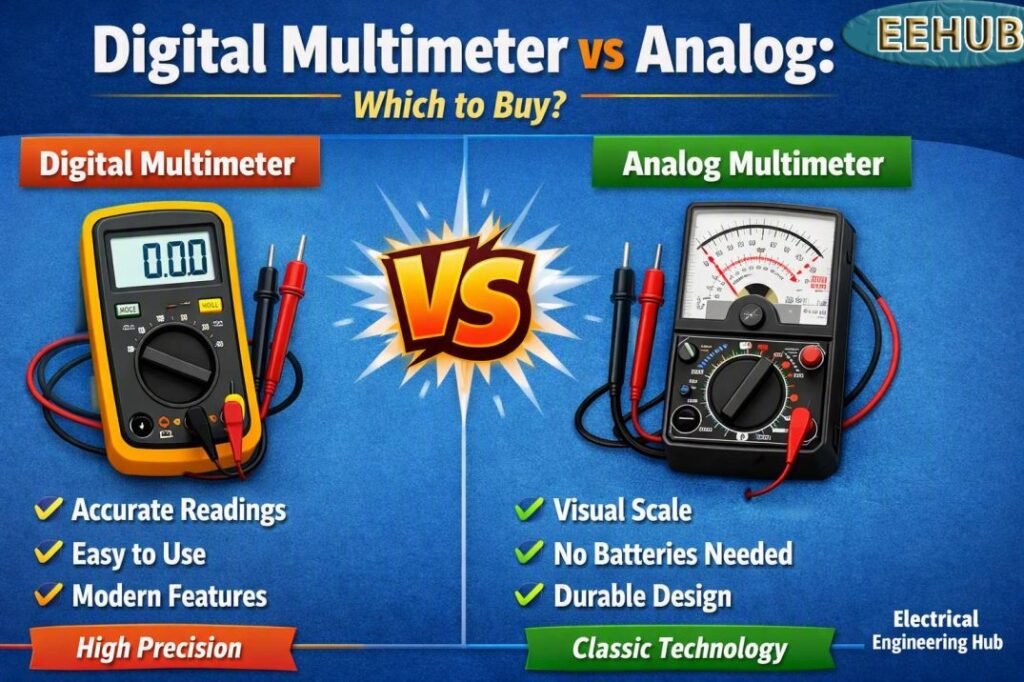
Table of Contents
Table of Contents
Digital Multimeter vs Analog Comparison Table
| Feature | Digital Multimeter | Analog Multimeter |
|---|---|---|
| Display | LCD Digital Display | Needle Scale |
| Accuracy | Very High | Moderate |
| Ease of Reading | Excellent | Requires Interpretation |
| Auto Range | Available in Many Models | Not Available |
| Battery Requirement | Yes | Yes (Resistance Only) |
| Response Speed | Fast | Continuous Needle Movement |
| Durability | High | Moderate |
| Best For | Electricians, DIY, Electronics | Trend Monitoring, Educational Use |
| Price Range | $20 – $500+ | $15 – $100 |
What Is a Digital Multimeter?
A digital multimeter (DMM) is an electronic measuring instrument that displays readings on a digital LCD screen. It combines several electrical measuring functions into one compact device.
Most modern digital multimeters can measure:
- AC Voltage
- DC Voltage
- AC Current
- DC Current
- Resistance
- Continuity
- Diode Testing
- Capacitance
- Frequency
- Temperature (selected models)
The digital display removes guesswork, making measurements easier and more accurate.
Best Digital Multimeter Recommendation
The Fluke 117 Digital Multimeter remains one of the most trusted options for electricians due to its True RMS accuracy, non-contact voltage detection, and durable construction.
Check today’s price of the Fluke 117 Digital Multimeter on Amazon before the next price update.
What Is an Analog Multimeter?
An analog multimeter uses a moving needle that points to values printed on a calibrated scale.
Instead of showing numbers digitally, the needle moves according to the measured electrical quantity.
Although analog meters are older technology, they still have advantages in certain testing situations where observing continuous changes is important.
Common measurements include:
- Voltage
- Current
- Resistance
- Continuity
Digital Multimeter vs Analog: Key Differences
| Feature | Digital Multimeter | Analog Multimeter |
|---|---|---|
| Measurement Accuracy | Excellent | Good |
| Reading Method | Digital Numbers | Needle Scale |
| Human Error | Very Low | Higher |
| Auto Polarity | Yes | Manual Observation |
| Auto Ranging | Available | No |
| Precision | High | Moderate |
| Maintenance | Low | Medium |
| Electronics Testing | Excellent | Limited |
Accuracy Comparison
One of the biggest differences in Digital Multimeter vs Analog is measurement accuracy.
- Digital multimeters commonly provide accuracy between ±0.5% and ±1%.
- Analog meters typically range between ±2% and ±5%.
For professional troubleshooting, digital models clearly provide more reliable results.
Ease of Reading
Reading a digital multimeter takes only seconds.
Simply connect the probes and read the value directly from the display.
With an analog meter, users must:
- Select the correct scale
- Avoid parallax error
- Read the needle carefully
- Convert ranges manually
Beginners usually find digital meters much easier to use.
Response Speed
Analog meters have one unique advantage.
The moving needle responds continuously, making it easier to observe:
- Slowly changing voltage
- Charging capacitors
- Signal fluctuations
- Variable resistance
Digital meters refresh rapidly, but fast-changing signals sometimes appear less smooth.
Safety Features
Modern digital multimeters include several safety improvements.
Typical features include:
- Overload protection
- Fused current inputs
- CAT III and CAT IV safety ratings
- Auto shut-off
- Input warning alerts
Many analog meters lack these advanced safety protections.
Battery Usage
- Digital multimeters require battery power for all measurements.
- Analog multimeters mainly use batteries when measuring resistance.
- Voltage and current readings often work without battery power.
Durability
Professional digital multimeters are designed for harsh job sites.
Many feature:
- Drop protection
- Rubber holsters
- Waterproof housing
- Dust resistance
Older analog meters contain delicate moving parts that can be damaged if dropped.
Which One Is Better for Beginners?
For most new electricians, a digital multimeter is the better choice.
Advantages include:
- Easy-to-read display
- Better accuracy
- Auto ranging
- More measurement functions
- Improved safety
If you are just starting your electrical career, you should also read our guide on the best multimeter for apprentice electrician before purchasing your first meter.
Which One Is Better for Professional Electricians?
Professional electricians almost always prefer digital multimeters.
Popular models include:
| Model | Best For | Rating |
|---|---|---|
| Fluke 117 | Residential Electricians | Excellent |
| Klein MM720 | Industrial Maintenance | Excellent |
| Fluke 87V | Industrial Troubleshooting | Outstanding |
| AstroAI TRMS | Home DIY | Very Good |
CTA: Compare the latest Amazon deals on these professional digital multimeters and choose the one that fits your work requirements.
When Should You Choose an Analog Multimeter?
An analog multimeter still makes sense if you:
- Need to observe changing signals
- Work on vintage electronics
- Teach electrical fundamentals
- Prefer visual needle movement
- Have a limited budget
Although less common today, analog meters remain useful in specific applications.
Pros and Cons
Digital Multimeter
| Pros | Cons |
|---|---|
| Highly Accurate | Higher Cost |
| Easy to Read | Requires Battery |
| Auto Range | LCD May Become Hard to Read in Bright Sunlight |
| Multiple Functions | More Electronics Inside |
| Better Safety | Slightly Slower for Rapid Signal Changes |
Analog Multimeter
| Pros | Cons |
|---|---|
| Continuous Needle Movement | Lower Accuracy |
| Lower Cost | Harder to Read |
| Great for Trend Observation | Parallax Error |
| Simple Design | Limited Features |
| Educational Value | Delicate Needle Mechanism |
Buying Guide
Before choosing between Digital Multimeter vs Analog, consider these factors.
| Buying Factor | Recommendation |
|---|---|
| Beginner | Digital Multimeter |
| Professional Electrician | Digital Multimeter |
| Electronics Repair | Digital Multimeter |
| Vintage Equipment | Analog Multimeter |
| Industrial Maintenance | Digital Multimeter |
| Budget Under $30 | Basic Digital Multimeter |
| Educational Use | Either Option |
Check our detailed guide on Best Multimeter Under $50
Recommended Digital Multimeters
Fluke 117
Best for professional electricians.
Key Features
- True RMS
- Non-contact voltage detection
- CAT III 600V Safety
- Compact design
Buy the Fluke 117 from Amazon today and invest in a multimeter trusted by professionals worldwide.
Klein Tools MM720
Ideal for residential and commercial electrical work.
Key Features
- True RMS
- Auto ranging
- Temperature measurement
- Durable housing
View the latest Amazon price for the Klein MM720 and see why it is a favorite among electricians.
AstroAI Digital Multimeter
A great budget-friendly option.
Key Features
- Auto ranging
- Large LCD
- Continuity buzzer
- Backlit display
Check today’s discount on the AstroAI Digital Multimeter before the offer ends.
Should You Upgrade from Analog to Digital?
If you still use an analog multimeter regularly, upgrading to a digital model provides several advantages:
- Faster troubleshooting
- Better precision
- Improved electrical safety
- More measurement functions
- Easier operation
- Better reliability
Most professionals have already switched to digital multimeters because they save time while improving measurement confidence.
If you are comparing models before making a purchase, our detailed guide on the best multimeter for apprentice electrician will help you choose a reliable meter based on your experience level and budget.
Final Verdict
When comparing Digital Multimeter vs Analog, the digital multimeter is the clear winner for most users. It offers greater accuracy, easier readings, enhanced safety, and a wider range of measurement functions. Whether you are troubleshooting household wiring, industrial equipment, or electronic circuits, a quality digital multimeter delivers reliable results.
Analog multimeters still have value for observing changing signals and educational purposes, but they are no longer the preferred choice for everyday electrical work.
Related Guides
- Best Multimeter for Solar Panels
- Best Clamp Meter Under $100
- Best Multimeter for Electricians
- Kaiweets Multimeter Review
Frequently Asked Questions
Is a digital multimeter more accurate than an analog multimeter?
Yes. A digital multimeter generally provides much higher measurement accuracy with fewer reading errors than an analog multimeter.
Why do electricians prefer digital multimeters?
Electricians prefer digital multimeters because they offer precise readings, advanced safety features, auto ranging, and multiple measurement functions in one device.
Can an analog multimeter measure AC and DC voltage?
Yes. Most analog multimeters can measure both AC and DC voltage, along with resistance and current.
Is an analog multimeter still useful today?
Yes. Analog multimeters remain useful for monitoring changing signals, teaching electrical principles, and working with vintage electronic equipment.
Which multimeter should beginners buy?
Beginners should choose a digital multimeter because it is easier to use, more accurate, safer, and offers additional testing features that simplify electrical troubleshooting.
Get new guides in your feed. Follow Electrical Insights on LinkedIn for new electrical standards guides, calculators and design tips from Azad Circuit Hub.
DigitalMultimeterVsAnalog, #DigitalMultimeter, #AnalogMultimeter, #MultimeterGuide, #ElectricalTools, #ElectronicsTesting, #DIYElectronics, #ElectricianTools, #TestAndMeasure, #MultimeterReviews