
How to Calculate Bus Size Connected to a Transformer
Choosing the correct busbar size for a transformer is one of the most important steps in electrical system design. A busbar carries large amounts of current and acts as the main conductor between the transformer and connected loads. If the size is too small, it may overheat, create voltage drops, and even fail under load.
This guide explains how to Calculate Bus Size Connected to a Transformer: Easy Guide with simple formulas, examples, and practical tables. Whether you are an electrical engineer, technician, or student, understanding busbar sizing can improve system reliability and safety.

Table of Contents
Table of Contents
A properly sized busbar ensures efficient power distribution, reduced energy losses, and compliance with electrical standards.
Busbar Sizing Chart for Transformer Ratings
Below is a quick reference table.
| Transformer Size | Voltage | Current | Recommended Copper Busbar |
|---|---|---|---|
| 100 kVA | 415V | 139A | 25 × 5 mm |
| 250 kVA | 415V | 348A | 40 × 8 mm |
| 500 kVA | 415V | 696A | 50 × 10 mm |
| 750 kVA | 415V | 1044A | 80 × 10 mm |
| 1000 kVA | 415V | 1392A | 100 × 10 mm |
This table can save time when you Calculate Bus Size Connected to a Transformer.
Why Busbar Sizing Matters in Transformer Connections
A transformer delivers electrical power to downstream circuits. The busbar connected to it must handle the full load current safely.
Incorrect sizing can lead to:
- Excessive heat generation
- Reduced equipment life
- Higher power losses
- Risk of short circuits
- Failure during peak load conditions
When you Calculate Bus Size Connected to a Transformer: Easy Guide, you are essentially matching the conductor capacity with transformer output current.
Here are the key factors:
| Factor | Importance |
|---|---|
| Transformer rating (kVA) | Determines current |
| Voltage level | Impacts current value |
| Material type | Copper or aluminum conductivity |
| Ambient temperature | Affects heat dissipation |
| Installation method | Open air or enclosed panel |
| Short circuit withstand | Determines mechanical strength |
Basic Formula for Busbar Current Calculation
The first step is calculating transformer full-load current.
For a three-phase transformer:
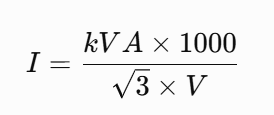
Where:
- I = Current in amperes
- kVA = Transformer rating
- V = Voltage
For single-phase transformers:
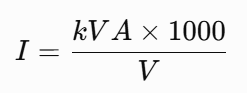
This formula is the foundation when you Calculate Bus Size Connected to a Transformer. For accurate calculation, you can use our busbar size calculation tool here.
Step-by-Step Method to Calculate Bus Size
Step 1: Identify Transformer Rating
Check the transformer nameplate.
Example:
- Rating = 500 kVA
- Voltage = 415V
- Three-phase
Step 2: Calculate Full Load Current
Using the formula:
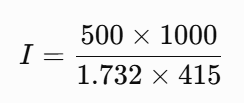
Current = 695.6 A
The transformer will deliver around 696A.
Step 3: Select Current Density
Current density depends on material.
Typical values:
| Material | Current Density |
|---|---|
| Copper | 1.2 to 1.6 A/mm² |
| Aluminum | 0.8 to 1.2 A/mm² |
For copper, use 1.5 A/mm².
Step 4: Calculate Required Area
Formula:
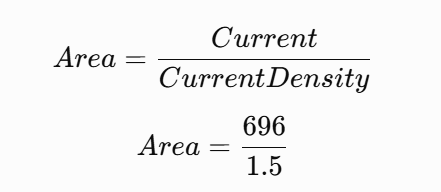
Area = 464 mm²
Step 5: Select Standard Busbar Size
Available standard copper busbars:
| Width (mm) | Thickness (mm) | Area (mm²) |
|---|---|---|
| 50 | 10 | 500 |
| 60 | 10 | 600 |
| 80 | 10 | 800 |
The suitable selection would be 50 × 10 mm.
This is the practical method to Calculate Bus Size Connected to a Transformer.
Key Takeaways
Before finalizing a busbar size, remember these points:
- Always calculate full-load current first
- Use proper current density based on material
- Add a safety margin of 20% for future expansion
- Consider ambient temperature correction
- Verify short-circuit withstand capacity
- Use standard busbar sizes for easy installation
For quicker and more accurate sizing, you can use our busbar size calculator to simplify the entire process.
Copper vs Aluminum Busbars
Material selection directly affects busbar dimensions.
Copper Busbars
Advantages:
- Higher conductivity
- Smaller size
- Better heat dissipation
- Longer life
Disadvantages:
- Higher cost
Aluminum Busbars
Advantages:
- Lower cost
- Lightweight
Disadvantages:
- Larger cross-sectional area required
- Lower conductivity
Comparison table:
| Property | Copper | Aluminum |
|---|---|---|
| Conductivity | High | Medium |
| Cost | High | Low |
| Weight | Heavy | Light |
| Corrosion Resistance | Better | Moderate |
For most transformer panels, copper is preferred.
Factors Affecting Busbar Size Selection
Even after calculating current, other factors matter.
Temperature Rise
Higher temperature means lower ampacity.
Example:
At 50°C ambient, derating may apply.
Ventilation
Poor ventilation increases heat buildup.
Short Circuit Capacity
Busbars must survive fault current.
Formula:
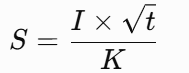
Where:
- S = Area
- I = Fault current
- t = Time
- K = Material constant
This is critical when you Calculate Bus Size Connected to a Transformer
Future Load Expansion
Add at least 15% to 25%.
Example:
Current = 696A
With 20% margin:

Now select 80 × 10 mm for flexibility.
Practical Example for Better Understanding
Suppose:
Transformer = 800 kVA
Voltage = 415V
Material = Copper
Current density = 1.4 A/mm²
Step 1:
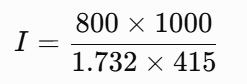
Current = 1112A
Step 2:
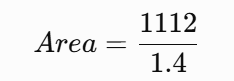
Area = 794 mm²
Step 3:
Choose standard size = 80 × 10 mm (800 mm²)
Step 4:
Add future margin:
1112 × 1.2 = 1334A
Better option:
100 × 10 mm
This practical method helps engineers Calculate Bus Size Connected to a Transformer: Easy Guide more accurately.
Common Mistakes in Busbar Calculation
Avoid these mistakes:
- Ignoring temperature correction
- Using wrong voltage values
- Forgetting future expansion
- Choosing non-standard sizes
- Ignoring fault current rating
- Selecting based on guesswork
A proper calculation prevents these errors.
Standards for Busbar Sizing
Follow these standards:
- IEC 61439 for low-voltage switchgear
- IEC 60909 for short-circuit calculations
- IEEE C37 for busbar ratings
- NEC Article 366 for busways
Following standards ensures compliance and safety.
How to Improve Accuracy in Busbar Sizing
To improve sizing accuracy:
- Measure actual load demand
- Use load diversity factor
- Check harmonic content
- Consider enclosure temperature
- Validate with software tools
Manual calculations are good, but tools can save time.
Related Guide & Tools
Conclusion
Understanding how to Calculate Bus Size Connected to a Transformer: Easy Guide is essential for safe electrical system design. The process starts with transformer current calculation, followed by selecting the right current density and busbar cross-sectional area.
Always remember that busbar sizing is not just about carrying load current. It also involves temperature, fault current, installation conditions, and future expansion.
Using proper calculations helps reduce overheating, improve efficiency, and extend equipment life. Whether you are designing a panel or checking an existing installation, accurate busbar sizing ensures long-term reliability.
Frequently Asked Questions
How do I calculate busbar size from transformer kVA?
Use the formula:
Current = kVA × 1000 ÷ (√3 × Voltage)
Then divide current by current density to get busbar area.
Which is better for transformer busbars, copper or aluminum?
Copper is usually better because it has higher conductivity and better heat resistance.
What current density should I use for copper busbars?
Normally 1.2 to 1.6 A/mm² is used depending on cooling and installation conditions.
Should I add extra margin in busbar sizing?
Yes, adding 20% extra capacity is recommended for future expansion and safety.
Can busbar size affect transformer performance?
Yes, undersized busbars can cause overheating, voltage drop, and power loss, reducing system efficiency.
Get new guides in your feed. Follow Electrical Insights on LinkedIn for new electrical standards guides, calculators and design tips from Azad Circuit Hub.
#HowToCalculateBusSize,#BusSizeCalculation,#TransformerBusbar,#ElectricalDesign,#BusbarSizing,#PowerDistribution,#TransformerInstallation,#ElectricalEngineering,#LoadCalculation,#BusbarDesign
