
Cable Trench Design Guide for Safe Electrical Projects: Step by Step
Proper cable trench design plays a critical role in ensuring safe, reliable, and long-lasting electrical distribution systems. Whether it is a power plant, industrial site, or urban infrastructure, the way underground cables are routed determines both performance and safety. A well-planned cable trench design minimizes faults, reduces maintenance costs, and improves system durability over time.
In modern electrical engineering, trench design is not just about digging and laying cables. It involves soil analysis, load considerations, thermal performance, and compliance with safety standards. Poor execution can lead to overheating, insulation damage, or even hazardous faults in high-voltage systems. That is why engineers follow structured design principles before execution.
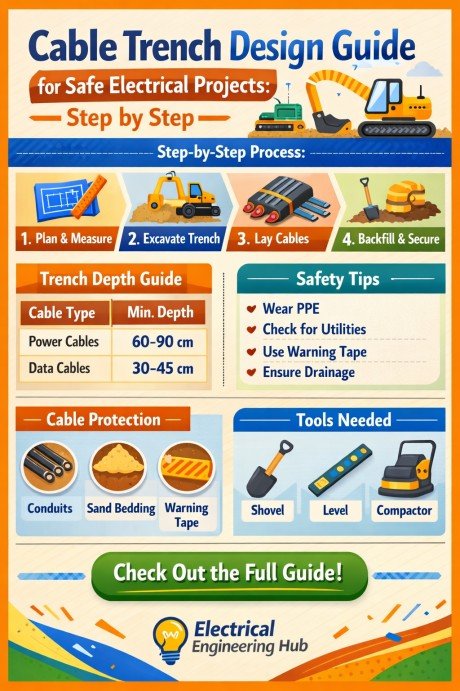
Table of Contents
A reliable cable trench design also ensures proper separation between power, control, and communication cables. This separation reduces electromagnetic interference and enhances system stability. Engineers also consider drainage, accessibility, and mechanical protection to ensure long-term functionality. Without these considerations, underground installations can quickly degrade.
Access our powerful online calculator now Conduit Fill Calculator (NEC Standard)
In addition, cable trench design must align with project-specific voltage levels, especially in transmission networks where safety margins are critical. Depth, width, and layering systems are carefully calculated to support different load conditions.
Key Takeaways
- Proper planning reduces long-term maintenance and fault risks
- Thermal management is essential for cable life extension
- Separation of cable types improves system reliability
- Drainage and soil conditions directly affect performance
- Standards compliance ensures operational safety
Understanding Cable Trench Design Basics
A strong foundation in trench design begins with understanding its basic structure. A typical trench consists of excavation depth, bedding material, protective covers, and backfilling layers. Each layer serves a specific purpose, from mechanical protection to thermal dissipation.
Engineers also evaluate soil resistivity because it affects heat dissipation from buried cables. High resistivity soils may require additional thermal backfill materials. In complex installations, ducts and conduits are used to improve cable protection and ease future maintenance. For Accurate and Easy Cable Capacity, use our online tool Cable Trench Fill Calculator
Another important aspect is alignment planning. Straight routes are preferred in cable trench design to minimize voltage drop and installation complexity. However, bends are sometimes necessary and must follow minimum bending radius standards.
Read in detail about nec 392.22
Key Factors That Influence Cable Trench Design
Several engineering factors directly impact cable trench design efficiency and safety. These include load capacity, environmental conditions, soil type, and cable rating. Ignoring any of these can lead to premature system failure.
Below is a table showing major influencing factors:
| Factor | Impact on Design | Engineering Consideration |
|---|---|---|
| Soil Type | Affects heat dissipation | Thermal backfill may be required |
| Load Current | Determines cable size | Higher load = deeper trench |
| Moisture Level | Impacts insulation safety | Drainage system required |
| Temperature | Affects cable life | Derating may be needed |
| Mechanical Load | Risk of external damage | Protective slabs used |
Proper trench design ensures these variables are balanced effectively. Engineers often perform site surveys and simulations before finalizing the layout.
Step-by-Step Cable Trench Design Process
A structured approach is essential for effective cable trench design. The following steps are commonly followed in professional projects:
- Site survey and route selection
- Load and voltage assessment
- Soil testing and thermal analysis
- Determining trench depth and width
- Selecting cable type and insulation
- Designing protective layers
- Planning drainage and earthing systems
Know more about NEC Grounding Table 250.122 Explained: Correct Equipment Grounding Conductor Size
Each step contributes to a safer and more efficient installation. For example, incorrect depth selection can expose cables to mechanical stress, while poor soil analysis can lead to overheating issues.
For engineers dealing with transmission networks, deeper technical guidelines are essential. You can explore this detailed resource on High Voltage Cable Trench Depth Standards to better understand regulatory requirements and depth calculations for high-voltage systems.
Material Selection and Trench Construction Types
Material selection is a core part of trench design because it affects durability and thermal performance. Common materials include RCC slabs, bricks, sand bedding, and polymer ducts.
Different trench types are used depending on project requirements:
| Trench Type | Application | Advantages |
|---|---|---|
| Open Trench | Urban and industrial areas | Easy maintenance |
| Duct Bank | High-density cable routes | High protection |
| Covered Trench | Indoor installations | Safety and aesthetics |
| Direct Burial | Rural areas | Cost-effective |
In modern cable trench design, duct banks are widely used in urban infrastructure due to their flexibility and safety advantages. Proper spacing between ducts ensures thermal balance and prevents cable overheating.
Understand better about nec 430.32
Installation Process in Cable Trench Design
The installation phase is where planning becomes reality. In cable trench design, precision during execution is essential to avoid future failures.
First, excavation is carried out according to approved drawings. The trench base is then leveled and prepared with a sand bedding layer. Cables are laid carefully with proper spacing to avoid thermal congestion.
After laying cables, protective covers such as RCC slabs or bricks are installed. Warning tapes are placed above the protective layer to prevent accidental digging in the future. Finally, backfilling is done using selected soil material.
A well-executed cable trench design ensures smooth installation with minimal rework and long-term stability.
Maintenance and Safety Considerations
Maintenance is often overlooked in trench design, but it is critical for system longevity. Regular inspections help detect moisture ingress, insulation degradation, or mechanical damage.
Explore everything about NEC Article 220
Safety measures include proper earthing, signage installation, and access control in industrial zones. Drainage systems must remain functional to prevent water accumulation, which can severely impact cable performance.
Thermal monitoring is also recommended in high-load systems. In advanced setups, sensors are installed to track temperature changes within the trench.
Conclusion
A well-structured cable trench design is the backbone of any underground electrical system. It ensures safe power transmission, reduces operational risks, and enhances system lifespan. From planning and material selection to installation and maintenance, every stage contributes to overall project success.
Discover all about NEC Code Practice Test
Engineering precision and compliance with standards are essential to avoid costly failures. Whether for industrial plants or transmission networks, proper execution of cable trench design ensures long-term reliability and safety.
FAQs
1. What is the importance of cable trench design in electrical projects?
Cable trench design ensures safe routing of underground cables, protecting them from mechanical damage, overheating, and environmental factors while improving system reliability.
2. How deep should a cable trench be?
The depth depends on voltage level, soil type, and load conditions. In general, higher voltage systems require deeper installation as part of proper cable trench design.
3. What materials are commonly used in cable trench design?
Common materials include sand bedding, RCC slabs, bricks, ducts, and thermal backfill materials depending on project requirements and environmental conditions.
4. Why is drainage important in cable trench design?
Drainage prevents water accumulation, which can damage insulation and reduce cable life. Effective drainage is a key part of safe cable trench design practices. Learn more about Demand Factor as Per NEC
5. Can poor cable trench design affect system performance?
Yes, incorrect cable trench design can lead to overheating, electrical faults, and premature cable failure, increasing maintenance costs and reducing system reliability.
Follow Us on Social:
Subscribe our Newsletter on Electrical Insights for latest updates from Electrical Engineering Hub
#cabletrenchedesign,#cabletrench,#cabletrenchsystem,#cabletrenchlayout,#cabletrenchconstruction,#undergroundcabletrench,#trenchdesign,#cablemanagement,#electricaldesign,#powerinfrastructure
