
Residual Current Devices Examples: How They Work and Why You Need Them
Understanding different residual current devices examples helps in choosing the right one for homes, industries, and commercial buildings.

Understanding different residual current devices examples helps in choosing the right one for homes, industries, and commercial buildings.

Introduction to IEC 60601-1 Standard The IEC 60601-1 Standard is a…

A current in parallel calculator uses Ohm’s Law and Kirchhoff’s Current Law (KCL) to determine how current divides among parallel resistors. The formula follows:

Understanding the Voltage Drop on Resistor Calculator A Voltage Drop on…

Residual current is an important concept in electrical safety. Especially in…

Introduction to IEC 61850 Standard The IEC 61850 standard is a…

The IEC 62304 standard is an international regulation defining the requirements for the lifecycle of medical device software. It provides a framework for the safe design, development, testing, and maintenance of software used in medical devices.

A load computation calculator is a essential tool for accurately determining the total electrical load required for residential, commercial, and industrial setups.

As the transition to electric vehicles (EVs) accelerates, the tax credit…

The electric vehicle (EV) revolution is accelerating, and with it comes…

What Is a Type 2 EV Charger? Learn Type 2 connector compatibility, charging speeds, AC charging, home installation, and EV charging standards.

Tethered vs Untethered EV Charger explained with pros, cons, charging cables, installation, convenience, security, and cost to help you choose.
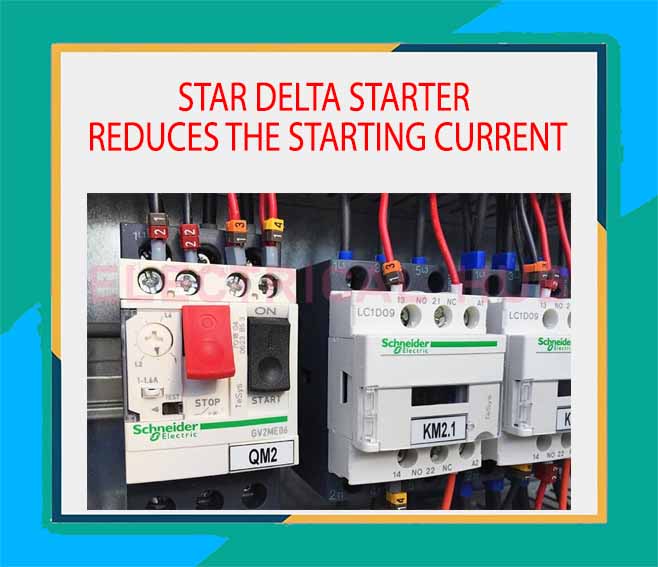
The star delta starter reduce starting current by initially connecting the motor windings in a star configuration, which reduces the voltage applied to each winding. This reduces the starting current and torque. After a set time, the starter switches the windings to a delta configuration, allowing the motor to run at full voltage and power.
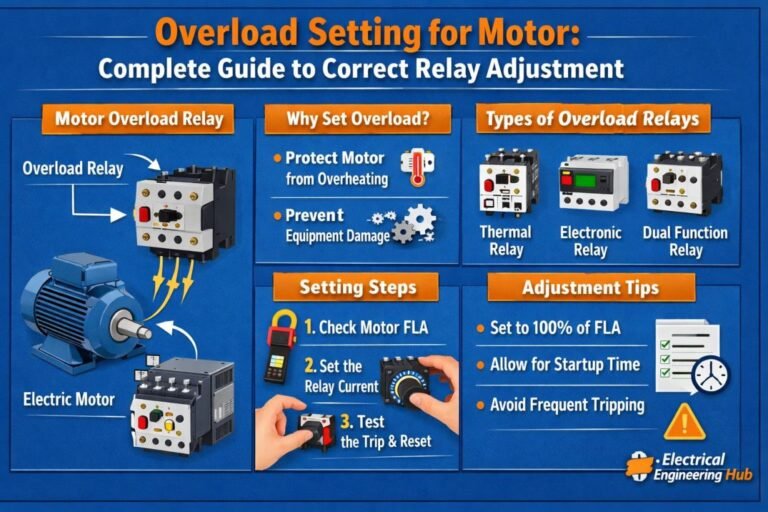
Overload Setting for Motor explained with formulas, relay adjustment methods, NEC/IEC guidelines, worked examples, and practical tips to ensure accurate motor protection and reliable operation.