
Electric Vehicle Charging Station Cost: Complete 2026 Pricing Guide for Home & Commercial EV Charging Installation Solutions
Electric Vehicle Charging Station Cost is becoming a key consideration as electric vehicles continue to grow in popularity in 2026. Homeowners, businesses, and fleet operators are increasingly evaluating installation options based on budget, charging speed, and long-term savings. The overall pricing depends on charger type, electrical infrastructure, and installation complexity.
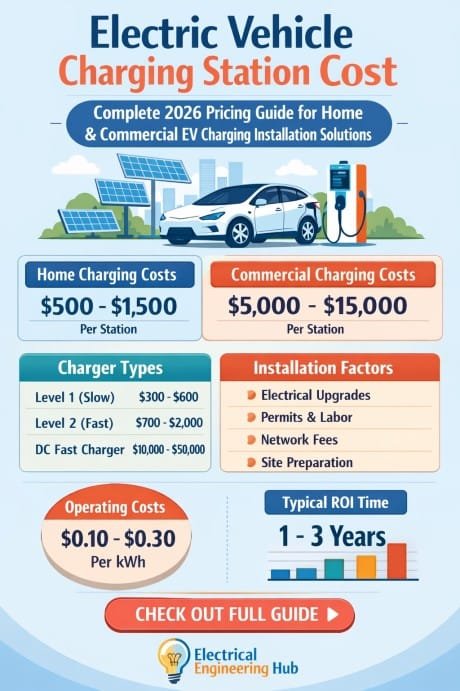
Table of Contents
In many cases, people underestimate the additional electrical upgrades required beyond just the charger unit itself. Understanding the full breakdown helps in making a practical investment decision that fits both current and future EV needs. This guide explains the complete structure of Electric Vehicle Charging Station Cost for residential and commercial setups in a simple and realistic way.
Home Charging Station Cost Breakdown
For residential users, Electric Vehicle Charging Station Cost varies depending on whether a Level 1 or Level 2 charger is installed. Level 1 chargers are usually inexpensive but slow, while Level 2 systems offer faster charging and require dedicated wiring.
Learn more about tesla insurance in florida
Typical home installation includes the charger unit, electrical panel assessment, wiring upgrades, and labor charges. Older homes may need panel upgrades, which significantly increase the total cost. On average, homeowners prefer Level 2 chargers for daily convenience and faster turnaround.
Home Installation Cost Table
| Component | Estimated Cost Range (USD) |
|---|---|
| Level 1 Charger | 150 – 500 |
| Level 2 Charger Unit | 400 – 1,200 |
| Installation Labor | 300 – 1,500 |
| Electrical Panel Upgrade | 800 – 3,000 |
| Total Estimated Cost | 1,200 – 6,000 |
In most residential cases, Electric Vehicle Charging Station Cost remains manageable if the electrical system is already up to modern standards. Smart chargers with Wi-Fi connectivity may increase upfront pricing but offer better energy management.
Commercial Charging Station Cost Overview
Commercial setups involve significantly higher investment due to multiple charging points, load balancing systems, and higher power requirements. Businesses such as shopping malls, offices, and parking facilities often install multiple Level 2 or DC fast chargers.
Find out more about home ev charging station installation
Electric Vehicle Charging Station Cost in commercial environments is influenced by site preparation, transformer capacity, and utility approvals. Fast chargers, while expensive, attract more users due to reduced charging time.
Commercial Cost Comparison Table
| Setup Type | Cost per Unit (USD) | Use Case |
|---|---|---|
| Level 2 Commercial Charger | 2,000 – 7,000 | Offices, retail parking |
| DC Fast Charger | 15,000 – 60,000 | Highways, fleet stations |
| Multi-Port Charging Hub | 10,000 – 100,000+ | Commercial complexes |
Scaling up infrastructure increases Electric Vehicle Charging Station Cost but also improves revenue potential through paid charging services and customer retention.
Key Factors Affecting Installation Pricing
Several technical and environmental factors influence Electric Vehicle Charging Station Cost across different setups. One major factor is electrical capacity. If the existing grid connection cannot handle additional load, upgrades become necessary.
Distance from the main electrical panel to the charging point also affects wiring expenses. Longer distances require more materials and labor. Permit requirements and local regulations can further add to the timeline and cost structure.
Learn more about electrify america to tesla adapter
Other important considerations include charger brand, smart features, weatherproofing for outdoor stations, and installation site conditions. Each of these elements can shift the final budget either upward or downward depending on project complexity.
Cost Comparison by Charger Level
Understanding charger levels helps simplify Electric Vehicle Charging Station Cost planning for both home and business users.
| Charger Level | Charging Speed | Average Cost Range |
|---|---|---|
| Level 1 | Slow (8–12 hrs) | 500 – 1,500 |
| Level 2 | Medium (3–6 hrs) | 1,200 – 6,000 |
| DC Fast Charging | Very Fast (30–60 min) | 15,000 – 60,000+ |
Level 2 chargers are the most commonly installed option because they balance cost and efficiency. DC fast charging systems are mainly used in commercial networks where time efficiency is critical.
ROI, Incentives, and Long-Term Value
Government incentives and tax credits can significantly reduce Electric Vehicle Charging Station Cost in many regions. Rebates for home installations and subsidies for commercial charging infrastructure are becoming more common as EV adoption grows.
Get complete information about level 2 charger home installation cost
From a business perspective, charging stations can generate steady income. Paid charging models, subscription plans, and retail partnerships improve return on investment over time. For homeowners, the value comes from convenience and reduced fuel expenses.
Energy management systems also help optimize electricity usage during off-peak hours, lowering long-term operational costs. This makes the investment more practical despite higher initial pricing.
Maintenance and Operational Expenses
Ongoing maintenance is another important part of Electric Vehicle Charging Station Cost that is often overlooked. Regular inspections, software updates, and cable replacements ensure safety and efficiency.
Home chargers usually require minimal maintenance, while commercial stations need periodic servicing due to heavy usage. Networked charging systems may also include service fees for cloud monitoring and diagnostics.
Read in detail about how to reset chargepoint home charger
Weather protection, vandal resistance, and load testing are additional considerations for outdoor commercial installations. Proper maintenance helps extend equipment lifespan and ensures consistent performance.
Final Thoughts
Electric Vehicle Charging Station Cost in 2026 depends on multiple factors including charger type, installation environment, and electrical readiness. Residential users can expect a flexible budget range, while commercial operators need to plan for scalable infrastructure investment. With rising EV adoption, charging stations are becoming a long-term utility rather than a luxury upgrade. Careful planning and understanding of cost components ensure better financial decisions and sustainable energy adoption in the future.
Explore everything about Electric Vehicle Battery Replacement Cost
Follow Us on Social:
Subscribe our Newsletter on Electrical Insights for latest updates from Electrical Engineering Hub
#ElectricVehicleChargingStationCost,#EVChargingCost,#EVChargingStation,#ElectricVehicleCharging,#EVInfrastructure,#EVChargingInstallation,#HomeEVChargerCost,#CommercialEVCharging,#EVChargingPrice,#ElectricVehicleChargingGuide
