
Electric Vehicle Charging At Home Cost | Complete 2026 Pricing Guide, Installation & Savings Breakdown
The shift toward electric mobility has made home charging one of the most discussed topics among vehicle owners. Understanding Electric Vehicle Charging At Home Cost is important for anyone planning to switch from fuel-based transport to electric driving. In 2026, rising fuel prices and improved charging technology have made home charging more practical, but expenses can still vary widely depending on equipment type, electricity rates, and installation requirements.
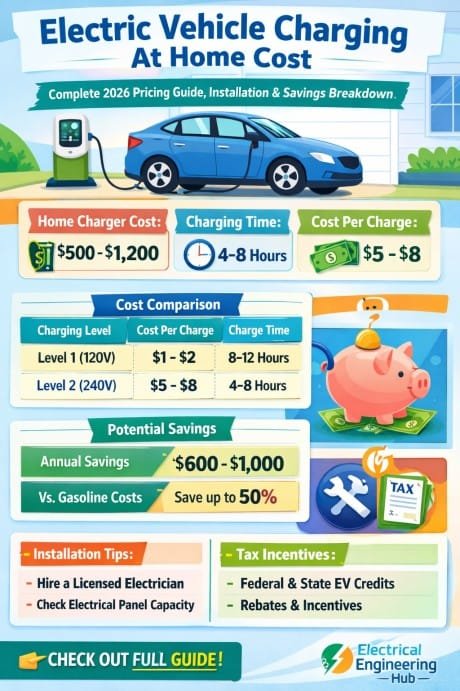
Table of Contents
Many users expect a simple setup, yet the overall budget includes multiple components such as charger hardware, electrical upgrades, and safety installations. A clear breakdown helps avoid confusion and allows better financial planning before making the switch.
Use our online tool EV Charger Load Calculation Tool
Electric Vehicle Charging At Home Cost also depends on your daily driving needs and the type of electric vehicle you own. A small city EV will require a different charging setup compared to a long-range SUV. This guide explains everything in a structured way so you can estimate real expenses and long-term savings with clarity.
Key Factors That Influence Home Charging Expenses
Several elements directly affect the Electric Vehicle Charging At Home Cost, and ignoring them can lead to underestimating your budget. The first factor is the type of charger you choose, as Level 1 chargers are cheaper but slower, while Level 2 chargers are faster but require professional installation.
Another major factor is your home’s electrical capacity. Older homes may need panel upgrades, which can significantly increase the setup cost. Electricity tariff in your region also plays a role, especially if you charge during peak hours. In addition, cable length, installation distance from the main panel, and safety devices like circuit breakers influence the final expense.
Environmental conditions such as outdoor installation or waterproof enclosures may also increase total cost, especially in regions with extreme weather.
Read in detail about how to reset chargepoint home charger
Installation Cost Breakdown for 2026
The installation phase makes up a major portion of the Electric Vehicle Charging At Home Cost. Below is a simplified breakdown of typical expenses in 2026.
| Component | Estimated Cost (USD) | Description |
|---|---|---|
| Level 2 Charger Unit | 400 – 1,200 | Basic to smart chargers with app control |
| Electrical Panel Upgrade | 300 – 2,000 | Required for older homes or high-load systems |
| Professional Installation | 200 – 800 | Certified electrician charges |
| Wiring & Accessories | 100 – 500 | Includes cables, conduits, breakers |
| Permits & Inspection | 50 – 300 | Local authority approval fees |
The total Electric Vehicle Charging At Home Cost for installation typically ranges between 1,000 and 4,500 USD depending on home conditions and charger specifications. Smart chargers with energy monitoring features may increase the initial budget but offer better long-term control over consumption.
Know more about ChargePoint Charging Station Cost
Types of Home EV Chargers and Their Cost Impact
Choosing the right charger has a direct impact on Electric Vehicle Charging At Home Cost. The three main types available in 2026 are Level 1, Level 2, and smart chargers with advanced features.
| Charger Type | Charging Speed | Average Cost | Best Use Case |
|---|---|---|---|
| Level 1 (Basic) | 8–12 hours full charge | 150 – 400 | Small EVs, low daily usage |
| Level 2 (Standard) | 3–6 hours full charge | 400 – 1,200 | Daily commuters |
| Smart Charger | 2–5 hours + app control | 700 – 1,800 | Tech users, solar integration |
Level 1 chargers are the most affordable but slow, while Level 2 systems are now considered the standard for residential use. Smart chargers are gaining popularity due to load balancing, scheduled charging, and integration with solar panels.
Know more about Best 12 Electric Vehicle Charging Stations in New York
Monthly Running Cost vs Fuel Savings
One of the biggest advantages of home charging is reduced monthly transport cost. The Electric Vehicle Charging At Home Cost becomes more meaningful when compared with petrol or diesel expenses.
On average, charging an EV at home costs between 30 to 70 USD per month depending on mileage and electricity rate. In contrast, a petrol vehicle can cost 150 to 300 USD monthly for similar usage.
If you drive 1,000 to 1,500 km per month, electricity consumption typically ranges between 250 to 400 kWh. With stable tariffs, EV owners can save up to 60–70% on fuel expenses. Over a year, this difference becomes significant and helps recover installation costs faster.
Hidden Costs, Maintenance and Incentives
While evaluating Electric Vehicle Charging At Home Cost, it is important to consider hidden expenses that are often overlooked. Maintenance costs are generally low, but periodic inspection of cables, connectors, and circuit safety is recommended.
Know more about ChargePoint Charging Station Cost
Some regions offer government incentives or tax rebates for EV charger installation, which can reduce upfront investment. In addition, solar panel integration is becoming a common option for reducing electricity bills further, although it adds initial setup cost.
Insurance adjustments and home electrical upgrades may also contribute slightly to long-term expenses. However, most of these costs are one-time and provide long-term value.
Total Cost Estimation Summary
To simplify planning, here is an overall estimate of Electric Vehicle Charging At Home Cost based on different setup levels.
| Setup Type | Initial Cost | Monthly Cost | Ideal For |
|---|---|---|---|
| Basic Setup | 600 – 1,500 | 30 – 50 | Light users |
| Standard Setup | 1,500 – 3,000 | 40 – 60 | Daily commuters |
| Advanced Smart Setup | 3,000 – 5,000 | 50 – 70 | High usage + smart home integration |
These estimates help in understanding long-term ownership costs and choosing a setup that matches both driving habits and budget.
Know more about Electric Vehicle Charging Station Cost
Final Thoughts on Home Charging Investment
The overall Electric Vehicle Charging At Home Cost may seem significant at first, but it becomes cost-effective when compared with long-term fuel savings and convenience. Home charging offers the advantage of overnight charging, lower running expenses, and reduced dependency on public charging stations.
With proper planning, most EV owners recover their installation investment within 2 to 3 years through fuel savings alone. As electricity grids become cleaner and smarter, home charging continues to be the most practical and economical solution for electric vehicle users in 2026.
Follow Us on Social:
Subscribe our Newsletter on Electrical Insights for latest updates from Electrical Engineering Hub
#ElectricVehicleChargingAtHomeCost,#EVHomeChargingCost,#HomeEVCharger,#EVChargingInstallation,#ElectricCarChargingHome,#EVChargerCost2026,#HomeChargingStation,#EVChargingSetup,#ElectricVehicleCost,#SustainableTransport
