
How to Perform Winding Resistance Test of Transformer | Complete Testing Procedure Guide
The winding resistance test of transformer is one of the most important electrical tests carried out during commissioning, maintenance, and troubleshooting of power transformers. This test helps engineers verify the integrity of transformer windings, identify loose connections, detect shorted turns, and evaluate the condition of tap changers. Accurate resistance measurements also help in assessing copper losses and ensuring reliable transformer operation.
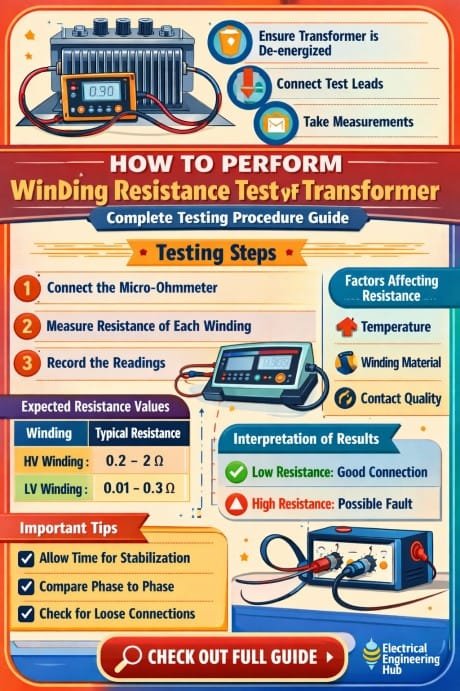
Table of Contents
In electrical substations and industrial power systems, transformers are critical assets. Even a minor winding issue can lead to overheating, efficiency loss, or unexpected failure. That is why the winding resistance test is considered a standard preventive maintenance activity for distribution and power transformers.
What is Winding Resistance Test of Transformer?
The winding resistance test of transformer is performed to measure the DC resistance of transformer windings using a specialized resistance meter or micro-ohmmeter. The measured values are compared with factory test reports or previous maintenance records to identify abnormalities.
This test is mainly used for:
- Checking winding continuity
- Detecting loose internal joints
- Identifying damaged conductors
- Verifying OLTC and tap changer operation
- Measuring resistance imbalance between phases
- Confirming manufacturing quality
Transformer winding resistance values are generally very low, so precise measuring instruments are required for accurate results.
Know more about 11kV to 415V Transformer Design & Specification – Ratings, Losses, Cooling and Practical Selection Guide
Purpose of Winding Resistance Test
Before performing the test, it is important to understand its objectives. The test is not only performed during commissioning but also after transportation, repairs, or fault conditions.
Main Objectives
| Purpose | Description |
|---|---|
| Verify winding integrity | Ensures windings are properly connected |
| Detect loose contacts | Finds poor joints and bad connections |
| Check tap changer condition | Confirms proper OLTC operation |
| Identify winding damage | Detects shorted or open turns |
| Compare phase balance | Ensures resistance values are balanced |
Regular transformer testing improves system reliability and prevents costly failures.
Equipment Required for Testing
The following tools and equipment are commonly used for the winding resistance test of transformer:
| Equipment | Function |
|---|---|
| Winding Resistance Meter | Measures low resistance values |
| Test Leads and Clamps | Connects instrument to transformer |
| Temperature Indicator | Measures oil or winding temperature |
| Safety Gloves and PPE | Protects testing personnel |
| Transformer Test Report Sheet | Records measurement values |
Modern winding resistance meters inject stable DC current and provide highly accurate readings.
Use our online tool Transformer Short Circuit Calculator – Accurate Fault Current & Transformer Protection Tool
Safety Precautions Before Testing
Transformer testing involves electrical hazards, so proper safety measures must always be followed.
Important Safety Guidelines
- Ensure transformer is completely isolated from the power supply
- Apply proper lockout and tagout procedures
- Discharge all stored charges before testing
- Confirm grounding is properly connected
- Use insulated tools and safety equipment
- Never touch exposed terminals during testing
Following standard electrical safety procedures minimizes risk during transformer maintenance.
Transformer Preparation Before Test
Proper preparation ensures accurate test results and prevents measurement errors.
Know more about Transformer Oil Testing: 9 Important Tests for Healthiness
Pre-Test Checks
- Isolate transformer from incoming and outgoing circuits
- Disconnect neutral grounding if required
- Allow transformer to stabilize at ambient temperature
- Record oil temperature and ambient temperature
- Clean terminals and bushings
- Verify transformer nameplate details
Temperature recording is important because winding resistance changes with temperature.
Step-by-Step Winding Resistance Testing Procedure
The winding resistance test of transformer should always be performed systematically to ensure consistency and accuracy.
Step 1: Transformer Isolation
Completely de-energize the transformer and isolate it from all connected equipment. Confirm absence of voltage using approved testing devices.
Step 2: Connect the Test Instrument
Connect the winding resistance meter to transformer terminals according to the transformer configuration.
For example:
| Transformer Side | Connection Method |
|---|---|
| HV Winding | Connect across HV terminals |
| LV Winding | Connect across LV terminals |
| Neutral | Connect when required |
Ensure all connections are tight and secure.
Know more about Transformer Sizing for Residential Building
Step 3: Inject DC Current
The resistance meter injects a stable DC current into the winding. The current should stabilize before recording readings.
Larger transformers require higher test current because of higher inductance.
Step 4: Wait for Stable Reading
Transformer windings are inductive, so resistance readings take time to stabilize. Wait until the instrument displays a constant value.
Do not disconnect leads during current injection.
Step 5: Record Resistance Values
Measure and record resistance for all phases and tap positions.
Typical readings include:
| Winding | Measured Resistance |
|---|---|
| Phase R | Value in milliohms |
| Phase Y | Value in milliohms |
| Phase B | Value in milliohms |
The resistance values should remain nearly balanced between phases.
Step 6: Test All Tap Positions
If the transformer has an on-load tap changer or off-circuit tap changer, repeat the test for every tap position.
This helps identify:
- Worn contacts
- Poor tap connections
- Contact resistance issues
Know more about Transformer Cooling Methods: ONAN, ONAF, OFAF & More
Step 7: Discharge Transformer Windings
After testing, safely discharge transformer windings before disconnecting the instrument.
Stored magnetic energy may remain in the winding for some time.
Interpretation of Test Results
Correct interpretation of measurements is essential for transformer condition assessment. Read in detail about transformer manufacturers in egypt
Normal Conditions
- All phase resistance values are nearly equal
- Readings match factory test reports
- No abnormal fluctuations during testing
Abnormal Conditions
| Observation | Possible Cause |
|---|---|
| High resistance | Loose connection |
| Low resistance | Shorted turns |
| Unstable readings | Bad contact or faulty tap changer |
| Large phase imbalance | Winding damage |
Generally, resistance imbalance between phases should remain within acceptable limits recommended by standards or manufacturers.
Explore all about Transformer Bond Sizing
Factors Affecting Resistance Measurements
Several factors influence the winding resistance test of transformer and must be considered during analysis.
Temperature
Copper resistance changes significantly with temperature. Measurements should be corrected to a reference temperature for proper comparison.
Test Lead Resistance
Poor quality leads or loose clamps may introduce errors.
Tap Position
Different tap positions produce different resistance values.
Transformer Size
Large transformers require more stabilization time because of higher inductance.
Temperature Correction Formula
Transformer winding resistance values are usually corrected to standard reference temperature.
Find more Transformer calculators here
For Copper Windings
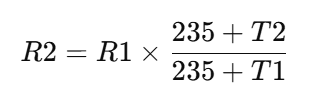
Where:
- R1 = measured resistance
- R2 = corrected resistance
- T1 = measured temperature
- T2 = reference temperature
This correction helps compare present readings with factory records.
Common Mistakes During Testing
Many testing errors occur because of improper procedures or inadequate preparation.
Know more about Top Dry Type Transformer Manufacturers in the USA
Mistakes to Avoid
- Testing without complete isolation
- Disconnecting leads before discharge
- Ignoring temperature correction
- Using loose test connections
- Recording unstable readings
- Skipping tap changer testing
Avoiding these mistakes improves measurement reliability.
Advantages of Winding Resistance Testing
The winding resistance test of transformer offers several operational and maintenance benefits.
| Advantage | Benefit |
|---|---|
| Early fault detection | Prevents transformer failure |
| Accurate diagnostics | Improves maintenance planning |
| Tap changer verification | Ensures smooth voltage regulation |
| Quality assurance | Confirms manufacturing integrity |
| Reduced downtime | Improves system reliability |
Regular testing extends transformer service life and enhances power system performance.
Find all about Transformer Disconnect Sizing
Recommended Testing Frequency
Transformer maintenance schedules vary depending on operating conditions and criticality.
Suggested Intervals
| Transformer Condition | Recommended Frequency |
|---|---|
| New transformer | During commissioning |
| Critical transformers | Annually |
| Industrial transformers | Every 2–3 years |
| After fault or repair | Immediately after maintenance |
Utilities and industries often combine this test with insulation resistance and transformer turns ratio testing.
Know all about Transformer Sizing for EV Charger
Conclusion
The winding resistance test of transformer is an essential diagnostic procedure used to evaluate transformer winding condition, connection integrity, and tap changer performance. By following the correct testing procedure, engineers can identify hidden defects before they become serious failures.
Accurate measurements, proper safety precautions, temperature correction, and systematic testing are key factors for reliable results. Whether performed during commissioning, preventive maintenance, or troubleshooting, this test plays a major role in ensuring transformer efficiency, reliability, and long service life.
Routine transformer testing not only protects expensive equipment but also improves the stability and safety of the entire electrical power system.
Follow Us on Social:
Subscribe our Newsletter on Electrical Insights for latest updates from Electrical Engineering Hub
#HowtoPerformWindingResistanceTest,#TransformerWindingResistanceTest,#TransformerTesting,#ElectricalTesting,#PowerTransformer,#WindingResistance,#TransformerMaintenance,#ElectricalEngineering,#SubstationTesting,#IndustrialTesting
