Electric Motor Testing Standards | Professional Motor Diagnostics, Inspection & Compliance Solutions
Electric motor testing standards play a critical role in ensuring reliability, safety, and efficiency across industrial and commercial operations. Motors are the backbone of manufacturing plants, water systems, HVAC setups, and energy infrastructure. Without proper testing and compliance, even a small fault can lead to downtime, increased operational costs, or serious safety risks. This is why organizations rely on structured testing protocols to maintain performance and meet international compliance requirements.
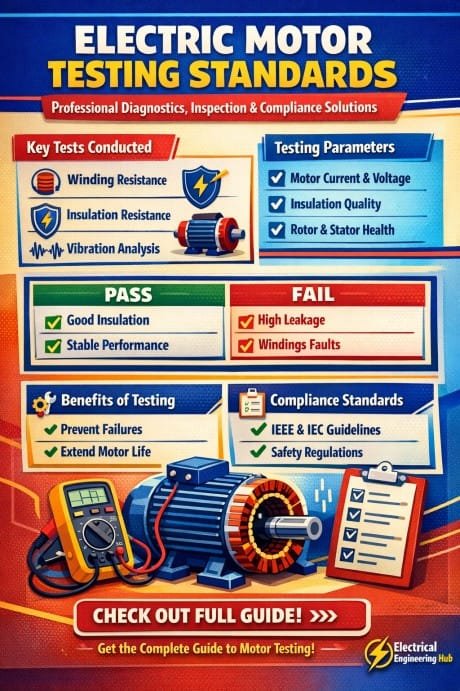
Table of Contents
Electric motor testing standards provide a framework for evaluating insulation health, electrical performance, mechanical integrity, and operational efficiency. These standards are developed by globally recognized bodies such as IEEE, IEC, and NEMA, ensuring consistency in diagnostics and benchmarking across industries. By following these guidelines, engineers can detect early faults, improve lifespan, and reduce unexpected failures.
Learn more about earthing cable size as per iec
Importance of Electric Motor Testing in Industrial Systems
Electric motors operate under varying loads, environmental conditions, and voltage fluctuations. Over time, insulation degrades, bearings wear out, and electrical imbalances occur. Electric motor testing standards ensure that these issues are identified before they escalate into costly breakdowns.
Regular testing improves predictive maintenance strategies. It allows technicians to shift from reactive repairs to planned interventions. This not only enhances system reliability but also optimizes energy consumption. Motors that are tested and maintained properly tend to operate closer to their rated efficiency.
Key benefits include improved safety, reduced downtime, extended equipment life, and compliance with regulatory requirements. Industries such as oil and gas, manufacturing, agriculture, and power generation depend heavily on standardized motor diagnostics.
Common Types of Motor Testing Methods
Electric motor testing standards define various testing techniques used during installation, operation, and maintenance phases. Each method focuses on specific performance parameters.
Explore details on iec standard for underground cable laying
Electrical Testing Methods
Electrical tests evaluate insulation resistance, winding condition, and voltage balance. These are essential for detecting faults within the motor windings.
- Insulation resistance testing
- Polarization index (PI) testing
- Dielectric withstand (hipot) testing
- Surge comparison testing
- Winding resistance measurement
Mechanical Testing Methods
Mechanical testing ensures that moving components are functioning correctly and efficiently.
- Vibration analysis
- Bearing condition monitoring
- Alignment checks
- Noise level measurement
Dive deeper into instrument earthing iec standard
Thermal and Performance Testing
Thermal analysis helps identify overheating issues that can degrade motor components.
- Infrared thermography
- Load testing
- Efficiency measurement
- Temperature rise testing
Key Standards Governing Motor Testing
Different international organizations define electric motor testing standards to ensure consistency and reliability. Below is a summary of widely accepted standards.
| Standard Body | Standard Code | Scope of Application |
|---|---|---|
| IEEE | IEEE 43 | Insulation resistance testing |
| IEEE | IEEE 112 | Motor efficiency testing |
| IEC | IEC 60034 | Rotating electrical machines |
| NEMA | MG-1 | Motor design and performance |
| ISO | ISO 10816 | Vibration monitoring |
These standards guide engineers in performing accurate diagnostics and maintaining compliance across industries. Following these benchmarks ensures that motors meet performance expectations and safety requirements.
online
Step-by-Step Motor Testing Process
Electric motor testing standards outline a structured approach for evaluating motor health. A systematic process ensures that no critical parameter is overlooked.
Visual Inspection
The first step involves checking for physical damage, contamination, or loose connections. Dust, moisture, and oil contamination can affect insulation performance.
Insulation Testing
Technicians measure insulation resistance using a megohmmeter. This helps identify degradation in winding insulation, which is a common cause of motor failure.
Electrical Parameter Measurement
Voltage, current, and resistance values are measured to detect imbalances or abnormalities. Any deviation from standard values indicates potential faults.
Know more about What is Standard Voltage in USA? All You need to Know
Performance Testing
Motors are tested under load conditions to evaluate efficiency, torque, and temperature rise. This step ensures that the motor operates within its rated capacity.
Data Analysis and Reporting
Test results are analyzed and compared against electric motor testing standards. A detailed report is prepared, highlighting issues and recommended corrective actions.
Recommended Testing Frequency
The frequency of testing depends on the operating environment and criticality of the motor. High-load or continuous operation motors require more frequent inspection.
| Motor Type | Testing Frequency |
|---|---|
| Critical industrial motors | Every 6 months |
| Standard production motors | Annually |
| Standby motors | Every 12–18 months |
| Harsh environment motors | Quarterly |
Regular adherence to electric motor testing standards ensures consistent performance and minimizes unexpected failures.
Advanced Diagnostic Technologies
Modern industries are increasingly adopting advanced tools for motor diagnostics. These technologies enhance the accuracy and efficiency of testing procedures.
Predictive maintenance tools use sensors and software to monitor motor performance in real time. Data analytics helps identify patterns and predict failures before they occur. Techniques such as motor current signature analysis (MCSA) and partial discharge testing provide deeper insights into motor health.
Wireless monitoring systems and IoT integration are also becoming common. These systems allow remote diagnostics and continuous monitoring, reducing the need for manual inspections.
Know more about Phase to Phase Clearance as per IEC 61439: Best Guide
Compliance and Safety Considerations
Electric motor testing standards are not only about performance but also about safety and compliance. Faulty motors can pose electrical hazards, fire risks, and operational disruptions.
Organizations must ensure that testing procedures align with regulatory requirements. Proper documentation, calibration of testing equipment, and trained personnel are essential for maintaining compliance.
Safety protocols should always be followed during testing. This includes proper grounding, use of personal protective equipment, and adherence to lockout-tagout procedures.
Challenges in Motor Testing
Despite the availability of electric motor testing standards, several challenges can arise during implementation. Limited access to motors in operational environments can make testing difficult. Inconsistent data recording and lack of skilled technicians can also affect accuracy.
Another common issue is neglecting minor warning signs. Small deviations in test results are often ignored, which can lead to major failures over time. Addressing these challenges requires a proactive approach and investment in training and technology.
Use our online tool Creepage Distance Calculator – Calculate Safe Insulation & Clearance for PCB and High Voltage Design
Best Practices for Effective Motor Diagnostics
To maximize the benefits of electric motor testing standards, organizations should follow best practices that enhance reliability and efficiency.
- Maintain detailed testing records for trend analysis
- Use calibrated and certified testing equipment
- Train personnel on updated testing procedures
- Implement predictive maintenance strategies
- Integrate digital monitoring systems for real-time insights
Consistency in testing and adherence to standards ensures that motors operate efficiently throughout their lifecycle. Know more about IEC Standard for Neutral to Earth Voltage – Limits, Measurement & Safety Guidelines
Future Trends in Motor Testing
The future of electric motor testing standards is evolving with advancements in technology. Artificial intelligence and machine learning are being integrated into diagnostic tools to improve fault detection accuracy.
Know more about IEC Standard for Busbar Clearance
Smart sensors and cloud-based platforms are enabling continuous monitoring and automated reporting. These innovations are transforming traditional testing methods into intelligent maintenance systems.
Energy efficiency regulations are also becoming stricter, making compliance even more important. Organizations must stay updated with evolving standards to remain competitive and sustainable.
Conclusion
Electric motor testing standards form the foundation of reliable and efficient motor operation. By following structured testing procedures, industries can ensure safety, reduce downtime, and optimize performance. From insulation testing to advanced diagnostics, every aspect of motor evaluation plays a crucial role in maintaining operational excellence.
Know more about IEC Standard for Earthing System
Adopting these standards is not just a technical requirement but a strategic investment in long-term efficiency and reliability. As industries continue to evolve, the importance of electric motor testing standards will only grow, making them an essential component of modern engineering practices.
Follow Us on Social:
Subscribe our Newsletter on Electrical Insights for latest updates from Electrical Engineering Hub
#ElectricMotorTestingStandards,#MotorTestingProcedures,#ElectricalTesting,#MotorDiagnostics,#IndustrialMaintenance,#ConditionMonitoring,#InsulationTesting,#ElectricalEngineering,#PreventiveMaintenance,#MotorPerformance
