
Electric Motor Testing Procedure | Professional Industrial Motor Diagnostics, Inspection & Best Performance Testing
Electric motors are the backbone of industrial operations, powering everything from pumps to production lines. A well-structured Electric Motor Testing Procedure ensures reliability, efficiency, and long service life. Without proper testing, motors can fail unexpectedly, causing downtime and financial loss. This article explains a complete approach to inspecting, diagnosing, and testing electric motors using professional methods followed in industrial environments.
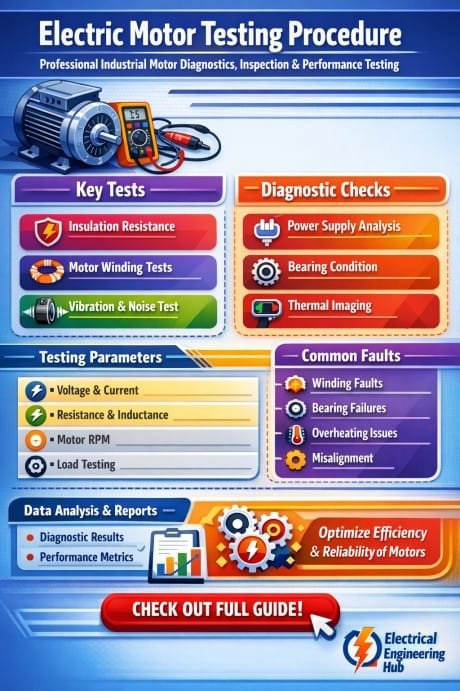
Table of Contents
Importance of Electric Motor Testing
Routine testing helps identify issues before they become critical. Motors operate under electrical, thermal, and mechanical stress, making them vulnerable to insulation failure, bearing damage, and winding faults. A proper Electric Motor Testing Procedure allows maintenance teams to detect early warning signs and maintain optimal performance.
Key benefits include:
- Reduced unplanned downtime
- Improved energy efficiency
- Extended motor lifespan
- Better safety compliance
- Accurate fault diagnosis
Types of Electric Motor Testing
Electric motor diagnostics can be divided into three main categories: offline testing, online testing, and visual inspection. Each method plays a vital role in a complete Electric Motor Testing Procedure.
Offline Testing
Performed when the motor is disconnected from power. This method ensures safe and accurate measurement of internal parameters.
Common offline tests include:
- Insulation resistance test
- Winding resistance measurement
- Polarization index test
- High voltage testing (Hipot)
Online Testing
Conducted while the motor is running. It helps analyze real-time performance and load conditions.
Typical online tests include:
- Vibration analysis
- Thermal imaging
- Current signature analysis
- Power quality assessment
Know more about Electric Motor Troubleshooting Chart
Visual Inspection
Often overlooked, visual checks are essential. They help detect external damage, contamination, or overheating signs.
Step-by-Step Electric Motor Testing Procedure
A systematic approach ensures accurate results. Below is a structured Electric Motor Testing Procedure used in industrial settings.
1. Pre-Inspection Preparation
Before testing begins, gather necessary tools and ensure safety compliance.
Checklist:
- Isolate power supply
- Lockout/tagout procedures
- Verify motor nameplate data
- Inspect cables and terminals
2. Visual and Mechanical Inspection
Start with a physical examination of the motor.
Look for:
- Dust, oil, or moisture buildup
- Loose connections
- Damaged insulation
- Bearing wear or noise
Know more about Demand Factor for Transformer Sizing
3. Insulation Resistance Testing
This is one of the most critical steps in any Electric Motor Testing Procedure. It measures the resistance between windings and ground.
| Test Voltage | Motor Rating | Acceptable Range |
|---|---|---|
| 500V | Low voltage motors | > 1 MΩ |
| 1000V | Medium motors | > 10 MΩ |
| 2500V | High voltage motors | > 100 MΩ |
Low insulation resistance indicates moisture, contamination, or insulation breakdown.
4. Winding Resistance Measurement
This test checks the uniformity of motor windings. Any imbalance may indicate short circuits or loose connections.
Key points:
- Measure phase-to-phase resistance
- Compare readings across all phases
- Variation should not exceed 5%
5. Polarization Index Test
The polarization index (PI) helps assess insulation health over time.
Know more about NEC NFPA 70 2026
Formula:
PI = 10-minute resistance / 1-minute resistance
| PI Value | Condition |
|---|---|
| < 1 | Poor |
| 1 – 2 | Marginal |
| > 2 | Good |
A stable PI value confirms reliable insulation performance.
6. High Voltage (Hipot) Testing
This test evaluates insulation strength under high voltage stress. It is a vital part of an advanced Electric Motor Testing Procedure.
Important considerations:
- Apply voltage gradually
- Monitor leakage current
- Stop immediately if breakdown occurs
7. Vibration Analysis
Excessive vibration is often linked to mechanical faults.
Common causes:
- Misalignment
- Bearing failure
- Rotor imbalance
| Vibration Level | Condition |
|---|---|
| Low | Normal |
| Moderate | Monitor |
| High | Immediate action required |
Find more about Best Megger Insulation Tester for Industrial Motors
8. Thermal Imaging
Infrared thermography detects hot spots that are invisible to the naked eye.
Benefits:
- Identifies overheating components
- Detects uneven load distribution
- Prevents insulation damage
9. Current Signature Analysis
This technique analyzes electrical signals to detect internal faults.
It helps identify:
- Rotor bar defects
- Stator winding faults
- Air gap irregularities
10. Performance Testing
The final stage of the Electric Motor Testing Procedure evaluates motor efficiency under load.
Parameters to measure:
- Voltage and current
- Power factor
- Efficiency
- Torque and speed
Know more about HT Motor Tan Delta Testing – Best Guide for High Voltage Motor Insulation Diagnostic & Preventive Maintenance
| Parameter | Ideal Condition |
|---|---|
| Voltage | Within ±5% of rating |
| Current | Balanced across phases |
| Temperature | Within safe limits |
| Efficiency | As per manufacturer |
Common Motor Faults Detected During Testing
A thorough Electric Motor Testing Procedure helps detect various issues early.
Typical faults include:
- Insulation degradation
- Bearing wear
- Phase imbalance
- Overheating
- Electrical leakage
Identifying these faults early reduces repair costs and prevents major failures.
Best Practices for Reliable Testing
To ensure accurate results, follow these industry best practices:
- Use calibrated testing equipment
- Maintain proper test records
- Perform testing at regular intervals
- Compare results with historical data
- Train personnel in diagnostic techniques
Use our online tool Short Circuit Current Calculator for Motors: Best Tool
Consistency is key. A well-documented Electric Motor Testing Procedure improves long-term reliability and maintenance planning.
Safety Considerations
Safety must always be a priority during testing.
Important precautions:
- Follow lockout/tagout procedures
- Use insulated tools
- Wear personal protective equipment
- Avoid testing in wet conditions
- Ensure proper grounding
Ignoring safety protocols can lead to serious hazards.
Know more about What is the Maximum Value for Short Circuit Protection for Multi-Motor Branch Circuits
Role of Predictive Maintenance
Modern industries are shifting towards predictive maintenance. Instead of waiting for failure, condition monitoring tools are used alongside the Electric Motor Testing Procedure to predict faults.
Technologies include:
- IoT-based monitoring systems
- Smart sensors
- Data analytics software
These tools enhance decision-making and reduce maintenance costs.
Know more about What Provides Short Circuit Protection for the Motor
Conclusion
A structured Electric Motor Testing Procedure is essential for maintaining industrial motor reliability and performance. From insulation testing to vibration analysis, each step plays a critical role in identifying potential issues. Regular testing not only prevents unexpected failures but also improves efficiency and safety.
By adopting professional diagnostic methods and maintaining consistent testing schedules, industries can ensure long-term operational stability. Electric motors are valuable assets, and proper testing is the key to maximizing their performance and lifespan.
Know more about How to Check 3 Phase Motor Winding with Multimeter
Get new guides in your feed. Follow Electrical Insights on LinkedIn for new electrical standards guides, calculators and design tips from Azad Circuit Hub.
#electricmotortestingprocedure,#motortesting,#electricmotor,#motordiagnostics,#industrialmaintenance,#windingtest,#insulationtesting,#motorefficiency,#electricaltesting,#preventivemaintenance
