
Wire Size Calculator
Selecting the right wire size is crucial for any electrical installation to ensure efficiency, safety, and compliance with standards. A Wire size calculator is a practical tool that helps electricians, engineers, and DIY enthusiasts determine the appropriate wire size for their projects. This article dives into the details of how wiring size calculators work, the importance of proper wire sizing, and related concepts such as wire gauge, ampacity, and voltage drop.
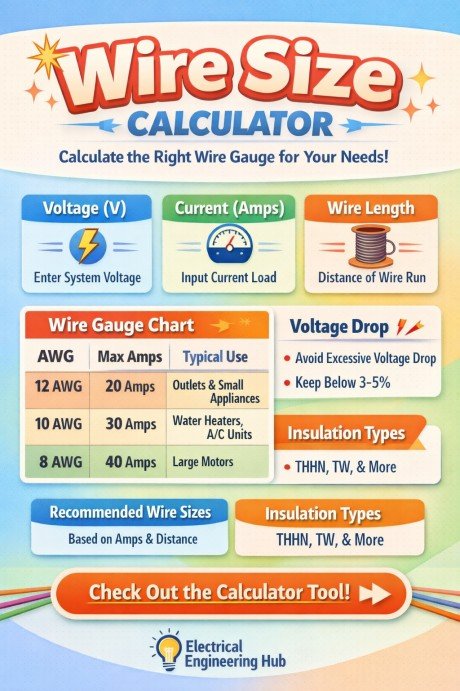
Table of Contents
Table of Contents
What Is a Wire Size Calculator?
A Wire size calculator is a digital or manual tool used to determine the optimal wire size based on several factors, including current (amps), voltage, wire length, and allowable voltage drop.
These calculators are essential for preventing overheating, minimizing energy loss, and ensuring the durability of the wiring system. Wire size calculators use industry standards such as the American Wire Gauge (AWG) system and formulas to evaluate the relationship between wire size, ampacity, and distance.
Wire Size Calculator
Wire Size Calculator
Determine the correct conductor size for any electrical circuit — residential, commercial, or industrial.
Wire sizing follows NEC Article 310 guidelines. The calculator applies all mandatory derating factors simultaneously — continuous load, ambient temperature, and conduit fill — before selecting the minimum compliant conductor.
Voltage drop is evaluated independently. If the NEC-minimum wire is insufficient for the voltage drop limit you specified, the calculator automatically upgrades the recommendation to the next larger size.
Aluminum conductors require one to two sizes larger than copper for equivalent current capacity. Never use aluminum wire smaller than AWG 8 for branch circuit wiring per NEC 310.106.
| AWG / kcmil | Cu Ampacity (A) | Al Ampacity (A) | Cu Resistance (ohm/1000ft) | Al Resistance (ohm/1000ft) | Diameter (in) | Area (kcmil) | Typical Use |
|---|
Enter the load current
Input the total amperage the circuit will carry. Check equipment nameplates or sum up all connected loads. For motors, use the full-load ampere (FLA) rating from NEC Table 430.248.
Set the system voltage
Select your supply voltage. Common values are 12 V (automotive/marine), 120 V (US residential single phase), and 240 V (US residential double pole). Enter a custom value for 208, 277, 480, or any other system.
Measure the one-way wire run
Measure from the panel or source terminal to the load. Do not double it — the calculator accounts for the return conductor automatically when computing voltage drop.
Select load type and derating conditions
Continuous loads (operating 3 hours or more) require a 125% current multiplier per NEC 210.19. Choose the insulation temperature rating matching your wire type, the number of current-carrying conductors in the raceway, and the ambient temperature of the installation environment.
Read the result
The calculator returns the smallest compliant AWG size. It checks both the NEC ampacity requirement and your specified voltage drop limit, then recommends whichever size satisfies both conditions. A warning appears if the voltage drop still exceeds limits at the selected size.
Select an existing wire gauge
Use this panel when you already have wire installed or pre-purchased and need to verify whether it meets voltage drop requirements.
Enter current, length, and voltage
Fill in the actual operating current, one-way run distance, and nominal system voltage. The tool calculates actual drop in both volts and percentage.
Interpret the result
Green indicates compliant. Red indicates the wire is undersized for the run. Use the Wire Sizing tab to find the correct gauge.
Ampacity — Maximum continuous current a conductor can carry without exceeding its insulation temperature rating.
Voltage Drop — Loss of voltage along a conductor due to its inherent resistance. Excessive drop causes equipment to run hot, malfunction, or fail to start.
Derating — Reducing the rated ampacity of a conductor to account for elevated ambient temperature, grouped conductors, or other installation factors.
NEC — National Electrical Code. The standard governing most electrical installations in the United States. Always consult the locally adopted code edition and a licensed electrician for final design decisions.
Why Is Proper Wire Sizing Important?
Proper wire sizing is critical to avoid:
- Overheating: Undersized wires may overheat, leading to fire hazards.
- Voltage Drop: A significant voltage drop can reduce efficiency and damage sensitive equipment.
- Energy Loss: Thinner wires can increase resistance, leading to unnecessary power loss.
Using a wire size calculator simplifies this process, ensuring that installations are safe and compliant.
Technical Factors in Wire Size Calculation
1. Ampacity
Ampacity refers to the maximum current a wire can carry without overheating. For example:
- A 14 AWG wire typically handles 15 amps.
- A 10 AWG wire is suitable for 30 amps.
Using a wire gauge calculator or referring to a wire gauge chart amps can help determine the ampacity of different wire sizes.
2. Voltage Drop
Voltage drop occurs when electrical resistance in the wire reduces the voltage delivered to the load. The acceptable voltage drop is typically 3% for most applications.
- For DC systems: Use a dc wire size calculator or wire size calculator DC voltage to consider long-distance installations.
- For AC systems: A wire size calculator AC or AC wire gauge calculator ensures that the wire size supports alternating current without significant loss.
3. Wire Length
The longer the wire, the larger the diameter required to maintain efficiency. Use a wire gauge length calculator to factor in wire distance and ensure proper sizing.
4. Material
The two primary materials used for wires are copper and aluminum. Copper has higher conductivity, which allows for smaller wire sizes compared to aluminum.
Check out this tool that makes the process much easier and faster MM to AWG Wire Size Calculator According to IEC and NEC
Common Tools and Resources for Wire Sizing
- Wire Gauge Calculator: Useful for determining wire size based on ampacity and length.
- Wire Gauge Chart Amps: Provides a quick reference for amp ratings of various wire sizes.
- Cable Rating Calculator: Helps evaluate cable performance for specific applications.
- AWG to mm² Calculator: Converts wire sizes between AWG and metric systems.
Wire Size Chart for Common Applications
Below is a simplified wire size amp rating chart:
| Wire Size (AWG) | Ampacity (Amps) | Maximum Length (ft) |
|---|---|---|
| 14 AWG | 15 | 50 |
| 12 AWG | 20 | 70 |
| 10 AWG | 30 | 100 |
| 8 AWG | 40 | 150 |
For detailed calculations, use a wire sizing calculator to incorporate voltage drop and environmental conditions.
Key Applications of Wire Size Calculators
1. Load Calculation for EV Charger
Calculating the wire size for EV chargers is critical due to their high power demands. A cable size for motor calculator or a solar inverter sizing calculator can also be helpful for related systems.
2. DC Circuits
In DC circuits, use a dc wire gauge calculator or wire size calculator DC to factor in higher voltage drops over long distances.
3. Solar Power Systems
For solar power setups, use a solar power load calculator to determine the wire size needed to handle inverter outputs and connect batteries.
FAQs on Wire Size Calculator
What is a Wire Size Calculator Used For?
It determines the correct wire size based on load current, distance, and voltage drop requirements.
What is the Difference Between AC and DC Wire Calculations?
DC systems require larger wires for the same current and distance compared to AC systems due to higher voltage drop. Use a wire gauge calculator DC or AC wire size calculator for precise results.
How to Calculate Wire Size for Motors?
You can use a cable size for motor calculator to determine the right wire size based on motor ratings and starting current.
Conclusion
A Wire size calculator is an indispensable tool for determining the right wire size for any electrical project. Whether it’s for residential wiring, industrial installations, or renewable energy systems, using tools like a wire gauge calculator, wire size calculator DC, or AC wire gauge calculator ensures safe and efficient designs.
Explore related calculators like the solar power load calculator, electricity load calculator in kW for home, and DC voltage loss calculator to optimize your electrical systems. With proper wire sizing, you can ensure safety, compliance, and long-term performance in all your electrical projects.
Follow Us on Social:
Subscribe our Newsletter on Electrical Insights for latest updates from Electrical Engineering Hub
#wiringSizeCalculator, #ElectricalCalculations, #WireGaugeCalculator, #CableSizeForHome, #ElectricalWireSize, #WireSelectionGuide, #WireSizingTips, #ElectricalSafety, #WireGaugeChart, #CableSizeCalculation, #WireSizeFormula, #ElectricalWiringBasics, #WireAmpacity, #ElectricLoadCalculator, #ElectricalDesign
Wire Size Calculator : Electrical Engineering Hub
Wire Size Calculator helps you quickly determine the right cable size for safe electrical wiring, voltage drop, and load efficiency.
Price Currency: USD
Operating System: Web Browser
Application Category: UtilitiesApplication

It’s hard to find knowledgeable people on this topic, but you sound like you know what you’re talking about! Thanks