
Solar Panel Insurance Premium Increase: Causes, Impact & Cost-Saving Strategies for 2026
The solar industry is expanding rapidly, but with this growth comes a rising financial concern for system owners known as Solar Panel Insurance Premium Increase. As solar installations become more common on residential, commercial, and agricultural properties, insurance companies are adjusting their pricing models to reflect new risks, higher replacement costs, and changing climate conditions. Understanding this trend is essential for anyone investing in renewable energy systems in 2026.
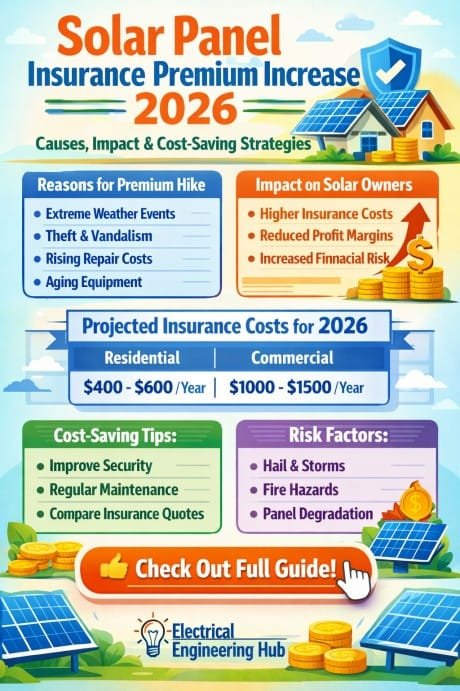
Table of Contents
This article breaks down the reasons behind rising premiums, how they affect solar owners, and practical strategies to manage costs effectively while protecting your investment.
Why Solar Insurance Costs Are Rising
One of the primary drivers behind Solar Panel Insurance Premium Increase is the rising cost of solar equipment itself. Inverters, panels, and mounting structures have all become more advanced, but also more expensive to replace. When insurance companies calculate risk, they factor in replacement value, which directly impacts premiums.
Another major reason is extreme weather events. Storms, hail, heatwaves, and dust storms are becoming more frequent in many regions, including South Asia and the Middle East. These conditions increase the likelihood of panel damage, leading insurers to revise their pricing models.
Know more about How Much Does Solar Panel Insurance Cost?
Additionally, installation risks also contribute. Poor wiring, incorrect mounting angles, or substandard equipment can lead to system failures or fire hazards. Even well-installed systems face exposure risks over time. All these factors combined intensify Solar Panel Insurance Premium Increase across both residential and industrial solar setups.
A less discussed factor is the lack of historical insurance data for solar assets. Since large-scale solar adoption is relatively new, insurers rely on predictive models, which often err on the conservative side, resulting in higher premiums.
Impact of Rising Solar Insurance Premiums on Owners
The ongoing Solar Panel Insurance Premium Increase has a direct impact on profitability, especially for commercial solar farms and agricultural users relying on solar tube wells or irrigation systems.
Higher premiums reduce overall return on investment (ROI). For homeowners, this may slightly extend the payback period of their solar system. For businesses, it can affect operational budgeting and long-term financial forecasting.
In many cases, system owners are surprised when their renewal policies show significantly higher costs compared to the previous year. This unpredictability creates financial planning challenges.
Below is a simple breakdown of how insurance costs affect different user types:
| User Type | System Size Range | Impact of Premium Increase | Financial Sensitivity |
|---|---|---|---|
| Homeowners | 3kW – 10kW | Moderate | Medium |
| Farmers | 5kW – 20kW | High | High |
| Commercial Users | 50kW – 1MW+ | Very High | Very High |
As shown, Solar Panel Insurance Premium Increase affects larger systems more significantly due to higher asset value and operational dependency. In agricultural sectors, even a small increase can influence irrigation costs and crop planning.
Use our free online tool here Solar Panel Insurance Cost Calculator
Another indirect effect is reduced adoption rate in some regions. When insurance becomes expensive, potential investors may hesitate to install solar systems, slowing down renewable energy growth.
Key Factors Driving Insurance Premium Changes
To better understand Solar Panel Insurance Premium Increase, it is important to look at the core factors insurers evaluate:
- Equipment replacement cost fluctuations
- Natural disaster risk mapping updates
- System location and environmental exposure
- Installation quality and certification standards
- Claim history in the region
- Maintenance frequency and service records
Each of these elements plays a role in determining risk exposure. For example, systems installed in dusty, high-temperature regions often face higher degradation rates, which increases the probability of claims.
Similarly, insurance providers now assess inverter quality and battery storage integration more carefully, as energy storage systems introduce additional fire and electrical risks.
Use our free online tool solar insurance premium calculator
Cost-Saving Strategies for Solar Insurance in 2026
Despite the rising trend of Solar Panel Insurance Premium Increase, there are several effective ways to control costs without compromising coverage quality.
One of the most effective strategies is regular system maintenance. Clean panels, tight electrical connections, and routine inspections significantly reduce the likelihood of claims. Insurers often offer discounts for well-maintained systems.
Another approach is choosing certified installers. Systems installed by approved professionals tend to have fewer operational issues, which can positively influence insurance pricing.
Bundling insurance policies can also help. Combining solar insurance with property insurance often results in discounted premiums.
Here are some practical cost-saving methods:
- Install surge protection devices to prevent electrical damage
- Use high-quality, certified solar components
- Schedule bi-annual maintenance checks
- Keep proper documentation of installation and servicing
- Compare multiple insurance providers before renewal
Use our online free tool Solar Panel Installation Cost Calculator
The following table highlights cost-saving impact levels:
| Strategy | Estimated Savings Impact | Effort Required |
|---|---|---|
| Regular Maintenance | High | Medium |
| Certified Installation | Medium | One-time |
| Insurance Bundling | Medium | Low |
| Equipment Upgrades | High | High |
| Risk-Based Provider Choice | High | Medium |
Adopting these practices can significantly reduce the effect of Solar Panel Insurance Premium Increase over time, especially for long-term solar investors.
Understanding Long-Term Insurance Trends
Looking ahead to 2026 and beyond, Solar Panel Insurance Premium Increase is expected to stabilize in regions with strong regulatory frameworks and mature solar markets. However, emerging markets may still experience volatility due to infrastructure gaps and environmental uncertainty.
Technological advancements such as AI-based monitoring systems and predictive maintenance tools are also helping reduce risk. These systems can detect faults early, preventing major damage and reducing insurance claims.
In addition, some insurers are beginning to offer performance-based insurance models. These adjust premiums based on system efficiency and real-time performance data rather than static assumptions.
Use our online tool for free Solar Performance Ratio Calculator – Measure Solar System Efficiency Accurately
Frequently Asked Questions
1. Why is Solar Panel Insurance Premium Increase happening every year?
It is mainly due to rising equipment costs, weather-related risks, and limited historical data for solar asset performance.
2. Does system size affect Solar Panel Insurance Premium Increase?
Yes, larger systems generally face higher premiums because their replacement and repair costs are significantly higher.
3. Can maintenance reduce insurance premiums?
Regular maintenance can help reduce claim risks, which may indirectly lower future premiums or prevent sharp increases.
4. Is solar insurance mandatory?
It is not legally mandatory in most regions, but it is highly recommended to protect against financial losses from damage or theft.
5. How can I estimate my solar insurance cost accurately?
You can use an online Solar Panel Insurance Cost Calculator to get a quick and accurate estimate based on your system size, location, and coverage needs.
Try the Solar Insurance Cost Estimator
To better understand how Solar Panel Insurance Premium Increase affects your investment, it is important to calculate your expected insurance cost before making financial decisions. A dedicated tool can help you compare different coverage options and estimate real-time premiums based on your system specifications.
You can use the Solar Panel Insurance Cost Calculator to analyze your expected premium, evaluate cost-saving opportunities, and make informed decisions for your solar investment in 2026.
Get new guides in your feed. Follow Electrical Insights on LinkedIn for new electrical standards guides, calculators and design tips from Azad Circuit Hub.
#solarpanelinsurance,#insurancepremiumincrease,#solarinvestment,#renewableenergyinsurance,#solarpanelcoverage,#greenenergycost,#solarfarminsurance,#energyriskmanagement,#solarpolicy,#cleanenergyfinance
