
Difference Between 480V & 277V
Understanding the Difference Between 480V & 277V is essential for anyone working with industrial power distribution, commercial electrical systems, or HVAC installations. These two voltage levels are commonly found in North American electrical networks and are part of a split-phase system derived from a 480V three-phase supply. At first glance, they may seem unrelated, but they are closely connected within the same electrical framework.
Know more about Coincidence Factor vs Diversity Factor: The Load Calculation Mistake Engineers Still Make
In most commercial and industrial environments, 480V is used for heavy loads like motors and large equipment, while 277V is typically used for lighting systems. The Difference Between 480V & 277V is not just about voltage numbers; it reflects how power is distributed and utilized efficiently in a facility. Understanding this relationship helps in designing safer systems, reducing energy losses, and ensuring proper equipment selection.
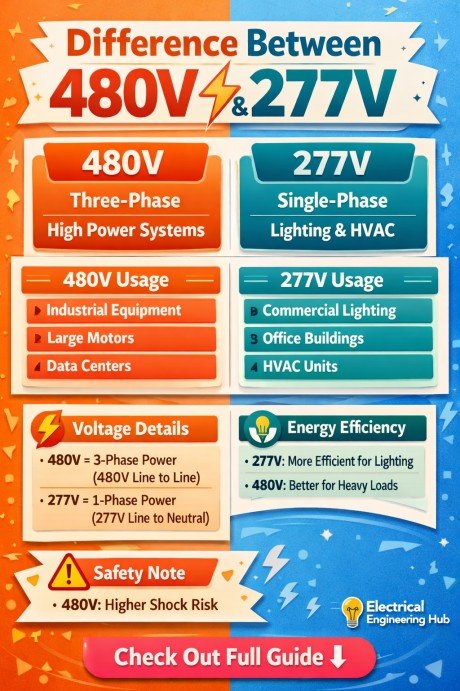
Table of Contents
Table of Contents
Many technicians and engineers encounter confusion when transitioning between distribution levels, especially when dealing with control panels, lighting circuits, and motor loads. This is where a clear understanding of the Difference Between 480V & 277V becomes highly practical in real-world applications.
Know more about How to Wire a 480/277 Lighting System: Step-By-Step Guide for Safe Commercial Installation
Electrical Relationship Between 480V and 277V Systems
To understand the Difference Between 480V & 277V, it is important to first understand how they are generated. In a typical three-phase, four-wire system, 480V refers to the line-to-line voltage, while 277V is the line-to-neutral voltage. The relationship is mathematically derived from the square root of three.
277V ≈ 480V ÷ 1.732
This relationship is commonly found in commercial buildings that use a 480V 3-phase distribution system. You can explore more about system structure through this detailed guide on 480 v 3 phase systems.
Voltage Breakdown Table
| Parameter | Value | Description |
|---|---|---|
| Line Voltage | 480V | Voltage between any two phases |
| Phase Voltage | 277V | Voltage between phase and neutral |
| System Type | 3 Phase 4 Wire | Common industrial distribution system |
| Frequency | 50/60 Hz | Depends on region |
This table highlights the core electrical structure that defines the Difference Between 480V & 277V in practical systems.
How Power Distribution Works in This System
In industrial setups, a 3 phase 4 wire system is widely used because it offers flexibility in load management. The 480V supply is typically used for heavy-duty equipment such as compressors, pumps, and large motors. Meanwhile, 277V is used for lighting circuits, especially in large commercial buildings where efficiency and reduced wiring cost are important.
The Difference Between 480V & 277V becomes more practical when designing distribution panels. Instead of stepping down voltage for lighting loads using transformers, engineers directly tap 277V from the same system. This reduces equipment cost and improves system efficiency.
Applications in Real Electrical Installations
In real-world scenarios, the Difference Between 480V & 277V plays a major role in system design decisions. Commercial buildings such as hospitals, airports, shopping malls, and manufacturing plants rely heavily on this dual-voltage arrangement.
Typical applications include:
- 480V systems for industrial motors and HVAC chillers
- 277V systems for fluorescent and LED lighting fixtures
- Control circuits powered through step-down transformers when required
- Distribution panels separating lighting and power loads
Learn more about is 277 high voltage
Understanding the Difference Between 480V & 277V ensures proper load balancing and prevents system overloads. It also helps in selecting correct protective devices like circuit breakers and fuses.
Key Technical Comparison
The Difference Between 480V & 277V can be clearly understood through the following comparison table:
| Feature | 480V | 277V |
|---|---|---|
| Type of Voltage | Line-to-line | Line-to-neutral |
| Primary Use | Heavy equipment | Lighting systems |
| System Origin | 3-phase supply | Derived from 480V system |
| Energy Load | High power demand | Low to medium demand |
| Wiring Complexity | Higher | Lower |
This comparison shows how both voltages serve different roles within the same electrical network, making the Difference Between 480V & 277V an important concept in power distribution engineering.
Discover everything about Parallel Run for 300Amp 480/277
Safety and Installation Considerations
When working with industrial voltage levels, safety is a critical factor. The Difference Between 480V & 277V also reflects different risk levels depending on exposure. 480V line-to-line systems carry higher energy potential and require stricter insulation and protective measures.
Some key safety practices include:
- Proper grounding and earthing of all equipment
- Use of insulated tools rated for high voltage
- Installation of arc flash protection systems
- Regular maintenance and thermal scanning of panels
Electrical technicians must always verify whether they are dealing with line-to-line or line-to-neutral voltage before performing any maintenance. Misunderstanding the Difference Between 480V & 277V can lead to serious electrical hazards.
Find out more about what is 277 voltage
Key Takeaways
The Difference Between 480V & 277V is fundamentally about how electrical power is distributed within a three-phase system. Both voltages originate from the same source but serve different purposes in industrial and commercial environments. While 480V handles high-power equipment, 277V is optimized for lighting and lighter loads. This dual-voltage approach improves efficiency, reduces infrastructure cost, and enhances system flexibility.
Proper understanding of this relationship is essential for electricians, engineers, and facility managers working in large-scale installations.
Know more about Coincidence Factor vs Demand Factor
Frequently Asked Questions
1. Why is 277V used instead of 120V in commercial buildings?
277V is used in large commercial buildings to reduce wiring size and energy losses over long distances, making systems more efficient compared to lower voltage options.
2. Is 480V dangerous compared to 277V?
Yes, 480V is more dangerous due to higher potential energy. However, both voltages require proper safety precautions during installation and maintenance.
3. Can 277V be converted to 120V?
Yes, transformers are used to step down 277V to 120V where necessary for specific equipment requirements.
4. What is the main benefit of a 3-phase 4-wire system?
A 3-phase 4-wire system allows both line-to-line and line-to-neutral voltages, offering flexibility for different load types within the same network.
5. Where is the Difference Between 480V & 277V most commonly applied?
It is most commonly applied in commercial buildings, industrial plants, and large facilities where both heavy machinery and lighting systems operate together.
Get new guides in your feed. Follow Electrical Insights on LinkedIn for new electrical standards guides, calculators and design tips from Azad Circuit Hub.
#DifferenceBetween480vAnd277v,#480vVs277v,#ElectricalEngineering,#VoltageDifference,#IndustrialElectrical,#PowerDistribution,#ElectricalSafety,#ElectricianTips,#VoltageSystems,#ThreePhasePower
