
Electric Motor Continuity Test | Complete Guide for Accurate Motor Testing & Fault Detection
Electric motor reliability depends heavily on proper testing and preventive maintenance. One of the most essential checks performed by technicians is the Electric Motor Continuity Test. This simple yet powerful method helps identify wiring faults, open circuits, and internal damage before they lead to costly failures. Whether you are working with industrial motors, pumps, or small workshop equipment, understanding this test can save both time and money.
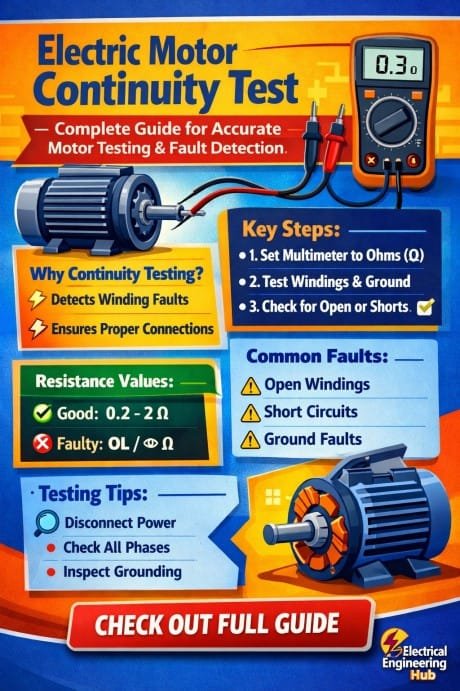
Table of Contents
What is an Electric Motor Continuity Test
An Electric Motor Continuity Test is a diagnostic procedure used to verify that electrical current can flow through the motor windings without interruption. In simple terms, it checks whether the internal circuits of the motor are complete and not broken.
When continuity is present, it means the winding path is intact. If continuity is missing, it indicates a fault such as a broken wire, burnt winding, or loose connection. This test is usually performed using a multimeter set to continuity mode or resistance measurement.
Know more about Motor Starter Size Chart
Why Continuity Testing is Important
Electric motors operate under demanding conditions, including heat, vibration, and electrical stress. Over time, these factors can damage internal components. Performing an Electric Motor Continuity Test helps in early fault detection and ensures safe operation.
Here are some key benefits:
- Detects open circuits in windings
- Identifies loose or damaged connections
- Prevents unexpected motor failure
- Reduces downtime and repair costs
- Improves maintenance efficiency
Tools Required for Continuity Testing
Before starting the process, ensure you have the right tools available. Using proper equipment improves accuracy and safety.
| Tool Name | Purpose |
|---|---|
| Digital Multimeter | Measures continuity and resistance |
| Insulated Gloves | Protects against electrical hazards |
| Screwdriver Set | Helps access motor terminals |
| Wiring Diagram | Assists in identifying motor connections |
Know more about VFD vs Soft Starter
Step by Step Procedure for Electric Motor Continuity Test
Performing the test correctly is crucial for accurate results. Follow these steps carefully.
Step 1: Disconnect Power Supply
Always ensure the motor is completely disconnected from the power source. This prevents electric shock and protects the testing equipment.
Step 2: Access Motor Terminals
Open the terminal box and identify the winding terminals. Refer to the motor wiring diagram if needed.
Step 3: Set Multimeter to Continuity Mode
Turn the multimeter dial to continuity mode. In most devices, this is indicated by a sound wave or diode symbol.
Step 4: Test Between Terminals
Place the probes on two terminals at a time. If the multimeter beeps or shows low resistance, continuity is present.
Step 5: Record Readings
Check all winding combinations and note the readings. Consistent values indicate healthy windings.
Step 6: Check for Ground Fault
Place one probe on a terminal and the other on the motor body. No continuity should be present. If there is, it indicates insulation failure.
Find everything about ultrasonic sensor and servo motor
Understanding Test Results
Interpreting the results of an Electric Motor Continuity Test is just as important as performing it.
| Result Type | Meaning | Action Required |
|---|---|---|
| Continuous Beep | Normal winding continuity | No action needed |
| No Beep | Open circuit or broken winding | Repair or rewind motor |
| Continuity to Ground | Insulation failure | Immediate maintenance |
| Uneven Readings | Partial damage in windings | Detailed inspection needed |
Common Motor Faults Detected
A properly conducted Electric Motor Continuity Test can reveal several common issues that affect performance.
- Open winding circuits due to overheating
- Burnt coils from electrical overload
- Loose terminal connections
- Internal wiring damage
- Short circuits to ground
These faults, if left unchecked, can lead to complete motor failure.
Tips for Accurate Testing
Accuracy plays a major role in motor diagnostics. Follow these practical tips to improve your testing process.
- Always calibrate your multimeter before use
- Ensure clean and tight probe contact
- Avoid testing in wet or humid conditions
- Double-check wiring diagrams for correct terminals
- Perform tests at room temperature for consistent readings
Know more about Difference Between Star Delta and DOL Starter
Difference Between Continuity Test and Insulation Test
Many technicians confuse continuity testing with insulation testing, but both serve different purposes.
| Feature | Continuity Test | Insulation Test |
|---|---|---|
| Purpose | Checks circuit completeness | Checks insulation resistance |
| Tool Used | Multimeter | Megger (Insulation Tester) |
| Voltage Level | Low | High |
| Fault Detection | Open circuits | Leakage and insulation breakdown |
Both tests are important and often used together for complete motor analysis.
Safety Precautions
Working with electrical systems requires strict safety measures. Always follow these guidelines during an Electric Motor Continuity Test.
- Ensure complete power isolation before testing
- Use insulated tools and protective gear
- Avoid touching exposed conductors
- Work in a dry and safe environment
- Follow standard electrical safety procedures
Ignoring safety can result in serious injury or equipment damage.
Know more about Motor Overload Protection Chart
Practical Applications
The Electric Motor Continuity Test is widely used across various industries and applications.
- Industrial machinery maintenance
- HVAC systems inspection
- Agricultural pump testing
- Workshop motor diagnostics
- Preventive maintenance programs
Regular testing ensures motors operate efficiently and reduces unexpected breakdowns.
Conclusion
The Electric Motor Continuity Test is a fundamental yet highly effective method for diagnosing motor health. It provides quick insights into winding integrity and helps detect faults at an early stage. By following proper procedures, using the right tools, and understanding the results, technicians can ensure reliable motor performance and extend equipment lifespan.
Incorporating this test into routine maintenance not only improves efficiency but also minimizes operational risks. Whether you are a professional electrician or a maintenance technician, mastering this technique is essential for accurate motor testing and fault detection.
Know everything about 3 Phase Motor Overload Relay Setting
Follow Us on Social:
Subscribe our Newsletter on Electrical Insights for latest updates from Electrical Engineering Hub
#electricmotorcontinuitytest,#motorcontinuitytest,#electricmotorrepair,#motortesting,#industrialmaintenance,#electricaltesting,#motordiagnostics,#electricmotorservice,#continuitytest,#electricalmaintenance
