
Electric Motor Inspection Checklist | Complete Industrial Maintenance & Safety Guide
Electric motors are the backbone of modern industrial operations, powering everything from pumps and compressors to conveyors and manufacturing systems. A well-structured Electric Motor Inspection Checklist ensures optimal performance, reduces downtime, and enhances workplace safety. Without a consistent inspection routine, even high-quality motors can suffer from efficiency loss, overheating, or unexpected failure.
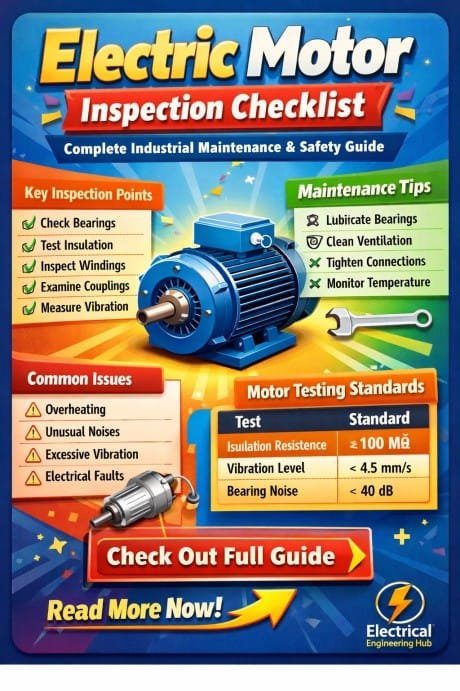
Table of Contents
This guide provides a complete and practical approach to inspecting electric motors in industrial environments. It combines preventive maintenance techniques, safety practices, and performance monitoring to help you extend motor life and maintain operational reliability.
Importance of Regular Motor Inspection
Routine inspections are essential to detect early signs of wear and prevent costly breakdowns. An effective Electric Motor Inspection Checklist allows maintenance teams to identify issues like insulation degradation, bearing wear, and electrical imbalances before they escalate.
Know everything about 3 Phase Motor Overload Relay Setting – Accurate Protection for Your Motor
Regular inspection offers several benefits:
- Improves equipment lifespan
- Reduces unplanned downtime
- Enhances energy efficiency
- Ensures compliance with safety standards
- Lowers maintenance costs over time
Industries that rely heavily on continuous operations, such as manufacturing and agriculture, benefit significantly from structured inspection procedures.
Pre-Inspection Safety Measures
Before starting any inspection, safety should always come first. Electric motors operate under high voltage and mechanical load, making them potentially hazardous.
Follow these essential precautions:
- Disconnect power supply and apply lockout/tagout procedures
- Wear appropriate personal protective equipment (PPE)
- Ensure the motor has cooled down before handling
- Verify proper grounding of equipment
- Use insulated tools for electrical checks
A safe inspection process minimizes risks and ensures accurate results.
Use our online tool Motor Overload Setting Calculator for Single and Three Phase Motors
Visual Inspection Checklist
A visual check is often the first step in any Electric Motor Inspection Checklist. It helps identify obvious issues that may affect performance.
| Inspection Area | What to Check | Possible Issues |
|---|---|---|
| Motor Housing | Cracks, dirt, corrosion | Structural damage |
| Cooling System | Blocked vents, fan condition | Overheating risk |
| Mounting Bolts | Tightness and alignment | Vibration, misalignment |
| Wiring & Connections | Loose or damaged wires | Electrical faults |
| Shaft & Coupling | Alignment and wear | Mechanical imbalance |
Keeping motors clean and properly mounted significantly improves efficiency and reduces wear.
Electrical Inspection Parameters
Electrical testing is a critical part of any Electric Motor Inspection Checklist. It ensures that the motor operates within safe voltage and current limits.
Key parameters to measure include:
- Voltage balance across phases
- Current draw compared to rated values
- Insulation resistance using a megger
- Continuity of windings
- Power factor and efficiency
Know more about Motor Overload Protection Chart: Important Concepts
| Test Type | Ideal Condition | Warning Sign |
|---|---|---|
| Voltage Balance | Within 1% variation | Phase imbalance |
| Insulation Resistance | High resistance value | Moisture or insulation wear |
| Current Consumption | Within rated limits | Overloading |
| Winding Continuity | Consistent readings | Broken or shorted windings |
Regular electrical testing helps prevent motor burnout and ensures stable operation.
Mechanical Inspection Checklist
Mechanical components play a vital role in motor performance. Ignoring them can lead to vibration, noise, and eventual failure.
Important checks include:
- Bearing condition and lubrication
- Shaft alignment with driven equipment
- Coupling integrity
- Vibration levels
- Unusual noise during operation
| Component | Inspection Method | Common Issues |
|---|---|---|
| Bearings | Listen and feel | Wear, overheating |
| Shaft | Alignment tools | Misalignment |
| Couplings | Visual and manual check | Looseness or damage |
| Mounting Base | Stability check | Vibration or shifting |
Proper lubrication and alignment are key factors in extending motor life.
Know more about Thermal Overload Relay: Working Principle, Types and Important Settings Calculation
Thermal and Performance Monitoring
Temperature control is crucial for maintaining motor efficiency. Excess heat can damage insulation and reduce lifespan.
Use tools like infrared thermometers or thermal cameras to monitor:
- Surface temperature
- Hot spots in windings
- Bearing temperature
Performance indicators to observe:
- Motor speed consistency
- Load handling capability
- Energy consumption trends
An effective Electric Motor Inspection Checklist includes regular temperature tracking to avoid overheating issues.
Lubrication and Maintenance Schedule
Lubrication reduces friction and prevents wear in moving parts. However, over-lubrication can be just as harmful as under-lubrication.
| Maintenance Task | Frequency | Notes |
|---|---|---|
| Bearing Lubrication | Monthly/Quarterly | Use manufacturer guidelines |
| Cleaning | Weekly | Remove dust and debris |
| Tightening Bolts | Monthly | Prevent vibration issues |
| Electrical Testing | Quarterly | Ensure stable performance |
| Full Inspection | Annually | Comprehensive system check |
A consistent schedule ensures that no critical component is overlooked.
Know more about How does the star delta starter reduce starting current? Important Concepts
Common Issues Detected During Inspection
Using an Electric Motor Inspection Checklist helps identify recurring problems that affect performance:
- Overheating due to blocked ventilation
- Voltage imbalance causing motor stress
- Bearing failure due to poor lubrication
- Misalignment leading to vibration
- Insulation breakdown from moisture or age
Addressing these issues early prevents costly repairs and downtime.
Best Practices for Industrial Motor Maintenance
To maximize the benefits of your Electric Motor Inspection Checklist, follow these best practices:
- Maintain detailed inspection records
- Use predictive maintenance tools like vibration analysis
- Train staff on proper inspection techniques
- Follow manufacturer recommendations
- Replace worn components promptly
Combining preventive and predictive maintenance strategies improves reliability and efficiency.
Know more about Motor Starter Types: A Powerful Guide with 7 Key Options You’ll Appreciate
Conclusion
A structured Electric Motor Inspection Checklist is essential for maintaining industrial equipment performance and safety. By combining visual checks, electrical testing, mechanical inspection, and thermal monitoring, you can detect issues early and prevent unexpected failures.
Consistent inspections not only extend motor lifespan but also improve energy efficiency and reduce operational costs. Whether managing a manufacturing plant or agricultural system, implementing a detailed inspection routine ensures smooth and reliable operations.
Adopting this comprehensive approach will help you build a proactive maintenance culture, keeping your motors running efficiently for years to come.
Know more about Motor Starter Size Chart
Follow Us on Social:
Subscribe our Newsletter on Electrical Insights for latest updates from Electrical Engineering Hub
#electricmotorinspection,#motorinspectionchecklist,#electricmotormaintenance,#industrialmaintenance,#motorinspectionguide,#preventivemaintenance,#electricalengineering,#motordiagnostics,#equipmentinspection,#maintenancechecklist
