
Electrician Insurance Cost in the United States: 2026
Electrician Insurance Cost in the United States varies based on business size, annual revenue, number of employees, claims history, state regulations, and the type of electrical work performed. Whether you are an independent electrician, an electrical contractor, or a growing electrical company, having the right insurance protects your business from lawsuits, property damage, injuries, and expensive financial losses.
Insurance is more than just a legal or contractual requirement. Many commercial clients, government projects, and general contractors require proof of insurance before awarding electrical contracts. Understanding how premiums are calculated helps electricians compare policies and avoid paying more than necessary.
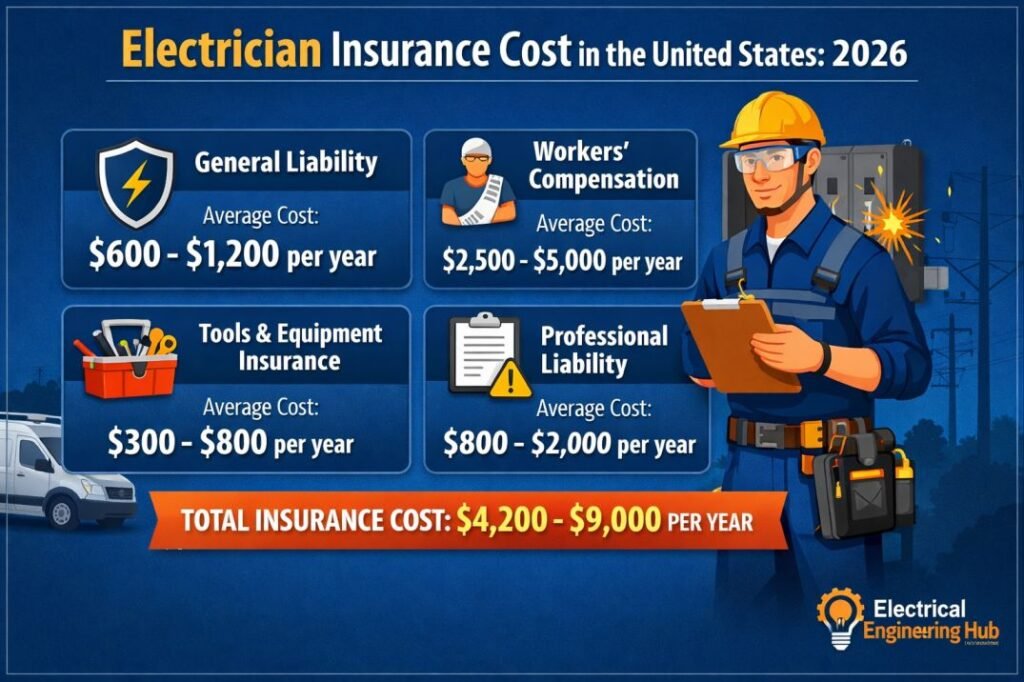
Table of Contents
Table of Contents
For a broader comparison of pricing across multiple countries, see our complete guide on Electrician Insurance Cost, which covers global cost factors and insurance trends.
Average Electrician Insurance Cost in the United States (2026)
Insurance premiums differ between providers, but the table below shows the average costs most electricians can expect in 2026.
| Insurance Type | Average Monthly Cost | Average Annual Cost |
|---|---|---|
| General Liability Insurance | $45–$125 | $540–$1,500 |
| Professional Liability (Errors & Omissions) | $50–$140 | $600–$1,680 |
| Workers’ Compensation | $80–$350 per employee | Varies by payroll |
| Commercial Auto Insurance | $120–$300 | $1,440–$3,600 |
| Tools & Equipment Coverage | $20–$60 | $240–$720 |
| Inland Marine Insurance | $25–$75 | $300–$900 |
| Business Owner’s Policy (BOP) | $90–$220 | $1,080–$2,640 |
| Umbrella Liability Insurance | $40–$130 | $480–$1,560 |
Most self-employed electricians pay between $700 and $2,000 annually for basic insurance. Larger electrical contracting companies usually spend several thousand dollars each year because they need broader coverage and higher policy limits.
What Insurance Does an Electrician Need in USA?
Electrical work involves high-risk activities. A single incident can result in significant repair costs or legal claims.
The following insurance policies are commonly recommended.
General Liability Insurance
General liability insurance covers third-party bodily injury, property damage, and legal defense costs. It is often the minimum requirement for obtaining commercial electrical contracts.
Professional Liability Insurance
This policy protects electricians against claims involving design errors, incorrect advice, or professional negligence that leads to financial loss.
Workers’ Compensation
If you employ electricians or apprentices, workers’ compensation is mandatory in most states. It covers medical expenses, rehabilitation, and lost wages after workplace injuries.
Commercial Auto Insurance
Business vehicles carrying electrical tools, cable reels, ladders, and equipment require commercial auto insurance rather than personal vehicle coverage.
Tools and Equipment Insurance
Electricians depend on expensive testing instruments, power tools, meters, and specialized equipment. This policy helps replace stolen, damaged, or lost tools.
Business Owner’s Policy (BOP)
A Business Owner’s Policy combines general liability with commercial property insurance, often providing better value than buying separate policies.
Electrician Insurance Cost in the United States by Business Size
Business size has a direct impact on insurance premiums.
| Business Type | Estimated Annual Cost |
|---|---|
| Independent Electrician | $700–$1,500 |
| Small Electrical Contractor | $1,500–$3,500 |
| Medium Electrical Company | $3,500–$8,000 |
| Large Electrical Contractor | $8,000–$25,000+ |
Companies with more employees, vehicles, and equipment generally require higher coverage limits, increasing total insurance costs.
Electrical Contractor Insurance Cost in Texas
Electrical contractor insurance cost in Texas depends on factors such as business size, project type, coverage limits, number of employees, and claims history. Texas electricians and electrical contractors usually need general liability insurance, workers’ compensation (if required), commercial auto coverage, and tools or equipment protection.
| Coverage Type | Typical Cost Range in Texas |
|---|---|
| General Liability Insurance | $500–$1,500 per year |
| Workers’ Compensation | Varies by payroll and risk classification |
| Commercial Auto Insurance | $1,200–$3,000 per year |
| Tools & Equipment Coverage | $300–$1,000 per year |
Contractors handling commercial, industrial, or high-voltage projects may pay higher premiums due to increased risk exposure. For a detailed breakdown of policy requirements, average premiums, and cost factors specific to Texas, read our guide on electrical contractor insurance cost in Texas.
Factors That Affect Electrician Insurance Cost in the United States
Insurance companies evaluate several risk factors before determining premiums.
Business Revenue
Higher annual revenue usually increases insurance costs because insurers assume greater exposure to liability claims.
Number of Employees
More workers increase payroll and workplace risk, leading to higher workers’ compensation premiums.
Type of Electrical Work
Residential electricians often pay lower premiums than contractors working in industrial plants, high-rise buildings, substations, or utility infrastructure.
State Regulations
Insurance costs vary by state due to legal requirements, labor costs, litigation rates, and local claim history.
Claims History
Businesses with multiple previous insurance claims are considered higher risk and generally pay higher premiums.
Coverage Limits
Choosing higher policy limits increases protection but also raises the insurance premium.
Deductible Amount
Selecting a higher deductible can reduce monthly premiums, although it increases out-of-pocket costs when filing a claim.
Average Electrician Insurance Cost by State
Insurance rates differ significantly across the United States.
| State | Typical Annual Premium |
|---|---|
| California | $1,200–$2,500 |
| Texas | $900–$2,000 |
| Florida | $1,100–$2,300 |
| New York | $1,300–$2,700 |
| Illinois | $850–$1,900 |
| Pennsylvania | $850–$1,800 |
| Ohio | $800–$1,700 |
| Georgia | $850–$1,900 |
| North Carolina | $800–$1,700 |
| Arizona | $850–$1,800 |
Urban areas with higher construction activity and greater legal exposure typically have higher insurance premiums.
How to Reduce Electrician Insurance Cost in the United States
Reducing insurance costs does not mean sacrificing protection. Many insurers offer discounts for businesses with strong risk management practices.
Some effective ways to lower premiums include:
- Maintain a clean claims history.
- Bundle multiple policies with one insurer.
- Train employees in workplace safety.
- Install vehicle GPS tracking and security systems.
- Secure tools in locked storage.
- Increase deductibles where financially appropriate.
- Compare quotes from multiple insurance providers annually.
- Maintain proper licensing and certifications.
These practices demonstrate lower risk and often qualify contractors for premium discounts.
Cost Comparison by Coverage Type in USA
The level of coverage you choose has a major impact on overall insurance costs.
| Coverage Level | Suitable For | Average Annual Cost |
|---|---|---|
| Basic Coverage | Independent electricians | $700–$1,500 |
| Standard Coverage | Small contractors | $1,500–$3,500 |
| Comprehensive Coverage | Medium businesses | $3,500–$8,000 |
| Enterprise Coverage | Large contractors | $8,000–$25,000+ |
Choosing the right balance between coverage and affordability is essential for long-term financial protection.
For a detailed overview of coverage options, pricing factors, and international comparisons, explore our complete Electrician Insurance Cost resource.
Best Insurance Providers for Electricians in the United States
Several insurers specialize in construction and contractor insurance.
| Insurance Company | Known For |
|---|---|
| NEXT Insurance | Affordable policies for small businesses |
| The Hartford | Comprehensive contractor coverage |
| Progressive Commercial | Commercial vehicle insurance |
| Travelers | Large contractor insurance solutions |
| Nationwide | Business Owner’s Policies |
| Hiscox | Professional liability insurance |
| CNA Insurance | Commercial construction businesses |
| Liberty Mutual | Custom contractor insurance |
Always compare policy exclusions, coverage limits, deductibles, customer service ratings, and claim settlement history before selecting an insurer.
Is Electrician Insurance Required in the United States?
Requirements depend on state laws and the type of work performed.
General liability insurance is commonly required by clients, property managers, and government agencies before work begins. Workers’ compensation is mandatory in most states once employees are hired. Commercial auto insurance is legally required for business-owned vehicles.
Many licensing boards also require proof of insurance before issuing or renewing contractor licenses.
How to Get the Best Insurance Quote in USA
Before requesting quotes, gather information about:
- Annual business revenue
- Number of employees
- Payroll records
- Years in business
- Claims history
- Types of electrical services offered
- Number of vehicles
- Value of tools and equipment
Providing accurate information helps insurers calculate more competitive premiums and prevents delays during policy approval.
If you are comparing insurance pricing globally, our complete Electrician Insurance Cost guide provides country-by-country insights along with the factors that influence insurance premiums worldwide.
Related Guides & Tools
- Electrical Liability Insurance Calculator
- Electrician Insurance Cost
- Cheapest Electrician Insurance
- Professional Indemnity Insurance for Electricians
- Public Liability Insurance for Electrician
Frequently Asked Questions
How much does electrician insurance cost in the United States?
Most independent electricians pay between $700 and $2,000 per year, while larger electrical contractors can pay several thousand dollars depending on coverage needs.
Is general liability insurance enough for electricians?
No. Most electricians also need workers’ compensation, commercial auto insurance, and tools and equipment coverage depending on their business operations.
Why do insurance rates differ between states?
State regulations, labor costs, legal environments, weather risks, and local claim history all influence insurance premiums.
Can self-employed electricians get affordable insurance?
Yes. Many insurers offer low-cost policies designed specifically for sole proprietors and independent electrical contractors.
Does insurance cover stolen electrical tools?
Yes, if the policy includes tools and equipment coverage or inland marine insurance, stolen or damaged tools are generally covered according to policy terms.
Conclusion
Electrician Insurance Cost in the United States depends on many variables, including business size, coverage limits, work performed, employee count, and location. While basic insurance may cost less than $1,500 annually for a sole proprietor, larger contractors should expect significantly higher premiums due to increased operational risk.
Comparing multiple insurance providers, selecting appropriate coverage, and implementing strong safety practices can help reduce costs without compromising protection. Investing in the right insurance ensures compliance with client requirements while protecting your business, employees, equipment, and financial future.
Get new guides in your feed. Follow Electrical Insights on LinkedIn for new electrical standards guides, calculators and design tips from Azad Circuit Hub.
ElectricianInsuranceCostUSA, #ElectricianInsurance, #BusinessInsurance, #GeneralLiabilityInsurance, #ContractorInsurance, #WorkersCompInsurance, #CommercialInsurance, #USElectricians, #SmallBusinessInsurance, #InsuranceGuide
