
Electrician Insurance Cost in Canada: 2026 Coverage Rates, Premium Factors & Money-Saving Guide
Canada’s electrical industry continues to grow across residential, commercial, industrial, and renewable energy projects. With higher project values and stricter safety regulations, insurance has become an essential operating expense for licensed electricians and electrical contractors.
Understanding Electrician Insurance Cost in Canada helps business owners estimate annual operating costs, compare policies, and choose the right level of protection without paying for unnecessary coverage. Premiums vary depending on the province, company size, annual revenue, claims history, and the type of electrical work performed.
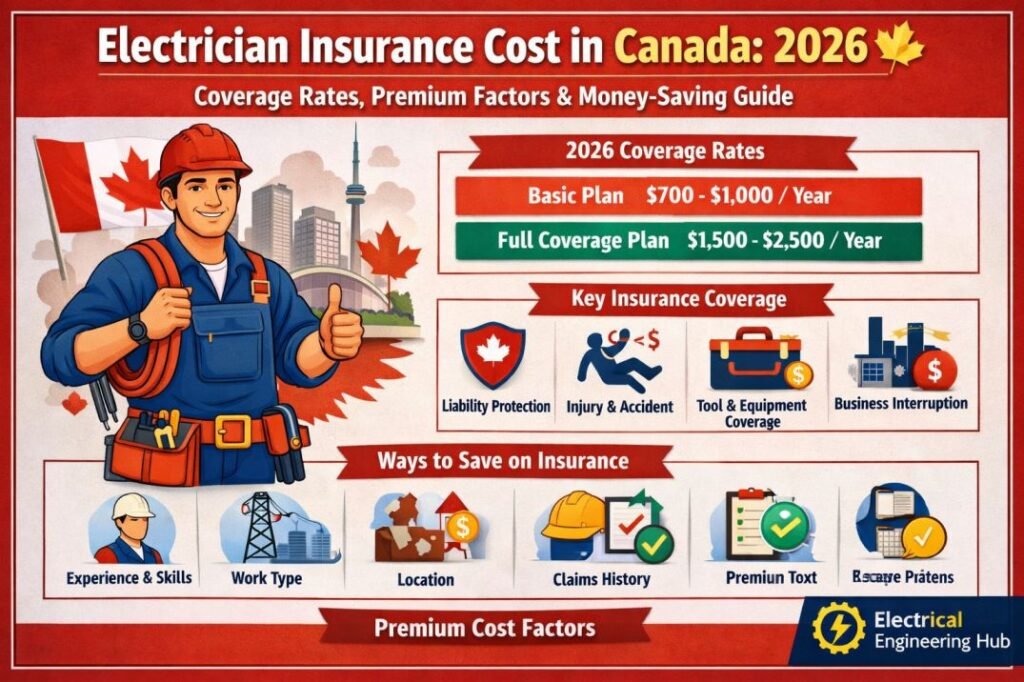
Table of Contents
Table of Contents
If you are comparing pricing worldwide, our comprehensive guide on Electrician Insurance Cost explains coverage options, average premiums, and insurance factors across different countries.
Why Electricians in Canada Need Insurance
Electrical work carries significant financial and legal risks. A single wiring mistake, accidental property damage, or workplace injury can result in expensive claims.
Most Canadian clients, municipalities, builders, and commercial project owners require proof of insurance before awarding contracts.
Insurance also helps electricians comply with licensing requirements, protect business assets, and maintain credibility when bidding for larger projects.
Common risks include:
- Property damage during installations
- Customer injury claims
- Fire caused by electrical faults
- Theft of tools and equipment
- Vehicle accidents
- Employee injuries
- Legal defense costs
Average Electrician Insurance Cost in Canada (2026)
The table below provides estimated annual premiums for common electrician insurance policies in Canada.
| Coverage Type | Average Annual Cost (CAD) | Monthly Cost (CAD) |
|---|---|---|
| General Liability Insurance | $650–$2,400 | $55–$200 |
| Professional Liability Insurance | $450–$1,600 | $38–$135 |
| Commercial Property Insurance | $350–$1,500 | $30–$125 |
| Tools and Equipment Insurance | $200–$900 | $17–$75 |
| Commercial Auto Insurance | $1,600–$4,200 | $135–$350 |
| Workers’ Compensation | Varies by province | Varies |
| Business Owner’s Policy (BOP) | $900–$3,200 | $75–$270 |
A self-employed electrician usually pays less than a contractor managing multiple crews or handling industrial electrical installations.
Electrician Insurance Cost in Canada by Business Size
Business size has a major impact on insurance premiums.
| Business Type | Estimated Annual Premium (CAD) |
|---|---|
| Sole Proprietor | $700–$1,500 |
| Small Electrical Contractor | $1,400–$3,000 |
| Medium Electrical Company | $3,000–$7,000 |
| Large Electrical Contractor | $7,000–$18,000+ |
Companies with higher payrolls, more vehicles, and larger contract values generally pay higher premiums.
Factors That Affect Electrician Insurance Cost in Canada
Insurance providers evaluate several risk factors before calculating premiums.
Province
Insurance pricing varies across provinces because of differences in legal environments, workers’ compensation systems, and claim frequency.
Premiums may differ between:
- Ontario
- British Columbia
- Alberta
- Quebec
- Saskatchewan
- Manitoba
- Nova Scotia
- New Brunswick
- Newfoundland and Labrador
- Prince Edward Island
Type of Electrical Work
Residential electricians generally pay lower premiums than contractors working in:
- Industrial facilities
- Oil and gas projects
- High-rise buildings
- Renewable energy projects
- Mining operations
- Utility infrastructure
Higher-risk work increases insurance costs.
Annual Revenue
Businesses generating higher annual revenue often require larger liability limits.
Greater project values increase the insurer’s financial exposure.
Number of Employees
Hiring more electricians increases payroll, workers’ compensation costs, and overall business risk.
Claims History
A business with no previous insurance claims usually receives lower premiums.
Multiple past claims often result in higher renewal rates.
Coverage Limits
Higher liability limits provide greater financial protection but increase annual premiums.
Electrician Liability Insurance in Canada
Electrician liability insurance in Canada protects electrical professionals from third-party claims related to property damage, injuries, or accidental mistakes during electrical work. It is an important part of an electrician’s risk management plan, especially for contractors working on residential, commercial, and industrial projects.
| Coverage Type | What It Protects Against |
|---|---|
| General Liability Insurance | Third-party injuries, property damage, and legal claims |
| Professional Liability Insurance | Errors, design mistakes, or faulty advice |
| Completed Operations Coverage | Claims arising after project completion |
The cost of liability coverage depends on factors such as business size, location, project type, claims history, and policy limits. Understanding these factors can help contractors choose suitable protection while managing their overall Electrician Insurance Cost in Canada.
For a detailed breakdown of coverage options, limits, and requirements, read our guide on Electrician Liability Insurance in Canada to understand how liability policies protect electrical businesses.
Master Electrician Insurance in Canada
Master electricians typically face higher liability exposure because they supervise projects, certify installations, manage apprentices, and sign off on electrical work. As a result, their insurance needs often extend beyond basic contractor coverage.
When comparing Electrician Insurance Cost in Canada, master electricians should consider higher liability limits, commercial auto coverage, tools and equipment insurance, and professional liability if they provide consulting or design services. Premiums vary based on province, annual revenue, claims history, and the size of the electrical business.
| Coverage | Why It Matters for Master Electricians |
|---|---|
| Commercial General Liability | Protects against third-party injury and property damage claims. |
| Tools & Equipment | Covers theft, loss, or damage to expensive electrical tools. |
| Commercial Auto | Protects work vehicles used for service calls and projects. |
| Professional Liability | Covers errors in design, inspection, or consulting services. |
For a detailed breakdown of coverage options, licensing considerations, and policy recommendations, read our Master Electrician Insurance Guide for Canadian Contractors, which explains how insurance requirements differ from those of general electrical contractors.
Journeyman Electrician Insurance in Canada
Journeyman electricians often work independently, supervise apprentices, or take on higher-value electrical projects, making adequate insurance essential. While Electrician Insurance Cost in Canada varies by province, experience, claims history, and annual revenue, journeyman electricians typically require broader protection than entry-level tradespeople. If you want a detailed breakdown of coverage options, licensing considerations, and policy recommendations, read our complete guide to insurance for Canadian journeyman electricians.
| Coverage Type | Why It Matters for Journeyman Electricians |
|---|---|
| Commercial General Liability | Covers third-party property damage and bodily injury claims. |
| Tools & Equipment Insurance | Protects expensive hand tools and testing equipment from theft or damage. |
| Commercial Auto Insurance | Covers work vehicles used to transport tools and materials. |
| Professional Liability | Helps protect against claims related to professional errors or omissions. |
Choosing the right policy helps reduce financial risks while meeting client or contractor insurance requirements. Comparing multiple insurers is one of the most effective ways to secure competitive rates without sacrificing essential coverage.
Typical Insurance Coverage for Canadian Electricians
A comprehensive insurance package often combines multiple policies.
| Insurance Coverage | What It Protects |
|---|---|
| General Liability | Property damage and third-party injury |
| Professional Liability | Errors, omissions, and negligence claims |
| Commercial Property | Offices, inventory, and business assets |
| Inland Marine Insurance | Mobile tools and equipment |
| Commercial Auto | Business vehicles and fleet |
| Cyber Insurance | Digital records and cyber incidents |
| Workers’ Compensation | Employee workplace injuries |
Selecting the right combination depends on business operations and customer requirements.
Electrician Insurance Cost in Canada by Coverage Limit
Higher coverage limits increase premiums but provide stronger financial protection.
| Liability Limit | Estimated Annual Cost (CAD) |
|---|---|
| $1 Million | $650–$1,400 |
| $2 Million | $900–$2,000 |
| $5 Million | $1,800–$3,800 |
| $10 Million | Custom Quote |
Many commercial projects require at least $2 million in general liability coverage.
How Canadian Electricians Can Reduce Insurance Costs
Lower insurance premiums do not always mean reducing coverage. Instead, reducing business risk often leads to better pricing.
Consider these strategies:
- Bundle multiple insurance policies.
- Maintain a clean claims history.
- Train employees regularly.
- Follow Canadian Electrical Code requirements.
- Secure tools and equipment.
- Increase deductibles if financially practical.
- Compare quotes from multiple insurers every year.
- Keep business vehicles well maintained.
- Document all completed work.
- Maintain strong workplace safety procedures.
These measures may help reduce long-term insurance expenses while improving overall business operations.
Choosing the Right Insurance Provider in Canada
Price should not be the only deciding factor.
When comparing insurers, evaluate:
| Comparison Factor | Why It Matters |
|---|---|
| Financial Stability | Ability to pay claims |
| Industry Experience | Better understanding of electrical risks |
| Claims Process | Faster settlements |
| Customer Reviews | Real-world service quality |
| Coverage Options | Flexible policy customization |
| Discounts | Multi-policy savings |
A slightly higher premium may provide significantly better protection when a claim occurs.
Is Electrician Insurance Mandatory in Canada?
Insurance requirements depend on the province and type of work performed.
While general liability insurance is not always legally mandatory, many customers, municipalities, and commercial developers require proof of insurance before work begins.
Workers’ compensation requirements vary by province and generally apply when businesses employ workers.
Commercial vehicle insurance is mandatory for business-owned vehicles operating on Canadian roads.
How to Compare Insurance Quotes
Before purchasing a policy, request quotes from several insurance companies.
Compare:
- Liability limits
- Coverage exclusions
- Deductibles
- Policy endorsements
- Equipment protection
- Vehicle coverage
- Claims support
- Renewal pricing
Reviewing more than one quotation often reveals better value rather than simply the lowest premium.
For a broader understanding of pricing trends and coverage options worldwide, visit our complete Electrician Insurance Cost guide before making a final decision. It provides useful comparisons that can help you evaluate policies more effectively.
Related Guides & Tools
- Electrical Liability Insurance Calculator
- Electrician Insurance Cost
- Cheapest Electrician Insurance
- Professional Indemnity Insurance for Electricians
- Public Liability Insurance for Electrician
Frequently Asked Questions
How much does Electrician Insurance Cost in Canada?
Most self-employed electricians pay between CAD $700 and $1,500 annually, while larger electrical contractors may pay several thousand dollars depending on business size, coverage, and risk profile.
Is general liability insurance enough?
General liability insurance covers third-party injury and property damage, but many electricians also need professional liability, tool coverage, commercial auto insurance, and workers’ compensation.
Which province has the lowest insurance premiums?
Premiums vary by insurer, business operations, claims history, and provincial regulations. There is no single province that consistently offers the lowest rates.
Can new electricians get affordable insurance?
Yes. New electricians with limited operations, low annual revenue, and no claims history often qualify for competitive entry-level insurance packages.
Does renewable energy work increase premiums?
It can. Contractors working on solar farms, battery energy storage systems, wind projects, or utility infrastructure may pay higher premiums because of increased project complexity and contract values.
Conclusion
Electrician Insurance Cost in Canada depends on several factors, including business size, province, revenue, claims history, and the type of electrical services offered. While annual premiums vary widely, selecting appropriate coverage is essential for protecting your business, meeting client requirements, and reducing financial risk.
Before purchasing a policy, compare multiple insurers, review policy limits carefully, and choose coverage that matches your business operations. For additional country comparisons, coverage explanations, and insurance insights, explore our complete Electrician Insurance Cost resource to make a well-informed decision.
Get new guides in your feed. Follow Electrical Insights on LinkedIn for new electrical standards guides, calculators and design tips from Azad Circuit Hub.
ElectricianInsuranceCostInCanada, #ElectricianInsuranceCanada, #ContractorInsuranceCanada, #BusinessInsuranceCanada, #LiabilityInsurance, #ElectricalContractor, #CommercialInsurance, #InsuranceCosts, #CanadianElectricians, #SmallBusinessInsurance
