
Self-Employed & Sole Trader Electrician Insurance: Compare Affordable Cover & Save
Working as an independent electrician gives you the freedom to choose your projects and build your own business. However, it also means taking full responsibility for the risks that come with electrical work. A single accident, damaged property, or customer claim can result in significant financial losses if you are uninsured.
Self-Employed & Sole Trader Electrician Insurance helps protect your business against unexpected events while improving your professional credibility. Whether you install wiring, perform maintenance, or carry out commercial electrical work, having the right insurance policy can safeguard your income and reputation.
If you’re also comparing electrician insurance costs across different providers and coverage levels, our detailed Electrician Insurance Cost guide explains average premiums, pricing factors, and practical ways to reduce your insurance expenses.
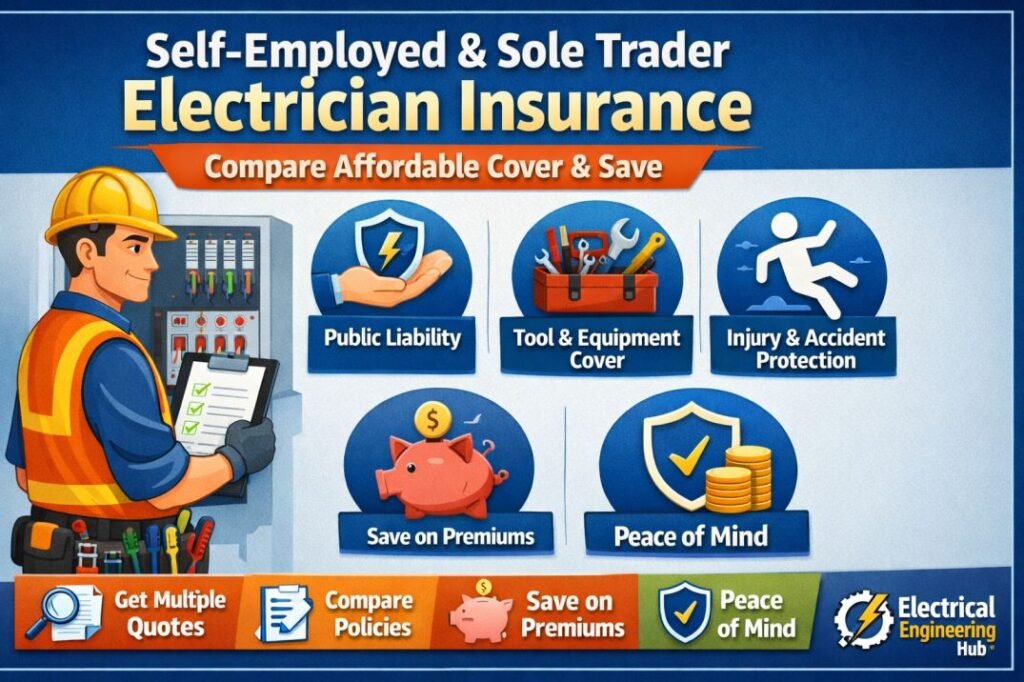
Table of Contents
Table of Contents
Why Self-Employed Electricians Need Insurance
Unlike electricians employed by larger companies, sole traders are personally responsible for the work they perform. If something goes wrong, you may have to cover legal fees, compensation, repair costs, or equipment replacement from your own pocket.
Insurance provides financial protection against these risks while helping you meet client and contractor requirements.
Common situations where insurance proves valuable include:
- Accidental damage to a customer’s property
- Third-party injury claims
- Lost or stolen electrical tools
- Fire damage caused during installation
- Legal disputes with clients
- Cyber incidents involving customer records
- Vehicle accidents involving business equipment
Many commercial clients also require proof of insurance before awarding contracts.
Types of Insurance Every Sole Trader Electrician Should Consider
Different electrical businesses face different risks. Choosing the right combination of policies provides broader protection without paying for unnecessary coverage.
| Insurance Type | What It Covers | Recommended For |
|---|---|---|
| Public Liability Insurance | Injury or property damage to third parties | All electricians |
| Professional Indemnity Insurance | Advice, design, or specification errors | Consultants and designers |
| Tool Insurance | Theft, damage, or loss of tools | Mobile electricians |
| Employers’ Liability Insurance | Employee injuries | Electricians with staff |
| Commercial Vehicle Insurance | Business vehicles and equipment | Electricians using vans |
| Personal Accident Insurance | Income protection after injury | Sole traders |
| Cyber Insurance | Data breaches and cyber risks | Businesses storing customer information |
Most independent electricians begin with public liability insurance and expand coverage as their business grows.
What Does Public Liability Insurance Cover?
Public liability insurance is often considered the foundation of electrician insurance.
It protects you if your work accidentally causes injury or property damage to another person.
Examples include:
- A customer trips over your extension lead.
- Drilling damages hidden plumbing.
- Faulty installation causes property damage.
- Equipment falls and damages expensive flooring.
- A visitor is injured at your worksite.
Without insurance, you could face legal expenses and compensation costs that exceed your annual income.
Tool Insurance Can Save Thousands
Electrical tools represent a major investment for most sole traders.
Power tools, testing instruments, cable locators, thermal cameras, and specialist diagnostic equipment can cost thousands to replace.
Tool insurance typically covers:
- Theft from locked vehicles
- Burglary
- Accidental damage
- Fire damage
- Vandalism
Before purchasing a policy, check whether there are security requirements such as approved vehicle locks or overnight storage conditions.
Personal Accident Cover Protects Your Income
As a self-employed electrician, your income depends on your ability to work.
An injury may prevent you from earning for several weeks or even months.
Personal accident insurance can provide:
- Weekly income replacement
- Lump-sum payments for serious injuries
- Hospital benefits
- Rehabilitation support
- Financial assistance during recovery
For many sole traders, this coverage is just as important as liability insurance.
How Much Coverage Do You Need?
Choosing the right level of insurance depends on the type of projects you undertake.
| Type of Work | Suggested Public Liability Limit |
|---|---|
| Domestic Electrical Work | $1M–$2M |
| Residential Renovations | $2M–$5M |
| Commercial Projects | $5M–$10M |
| Industrial Installations | $10M or more (depending on contracts) |
Some clients specify minimum coverage limits before allowing contractors on-site.
Selecting a higher limit may slightly increase premiums but can provide significantly better protection.
Factors That Affect Insurance Premiums
Insurance companies calculate premiums using several risk factors.
Common pricing considerations include:
- Years of electrical experience
- Business location
- Annual turnover
- Claims history
- Types of electrical work performed
- Number of employees
- Coverage limits selected
- Value of insured tools
- Vehicle usage
- Additional policy options
Understanding these factors can help you compare quotes more effectively.
If you want a complete breakdown of electrician insurance costs and the variables that influence premiums, see our comprehensive Electrician Insurance Cost resource before purchasing a policy.
Ways to Save Money on Electrician Insurance
Affordable insurance does not necessarily mean choosing the cheapest policy.
Instead, focus on getting the best value for your level of risk.
Compare Multiple Quotes
Always request quotes from several insurers rather than accepting the first offer.
Coverage can vary significantly between providers even when prices appear similar.
Bundle Different Policies
Many insurers provide discounts when you combine public liability, tools, vehicle, and personal accident insurance.
Increase Your Excess
A higher deductible usually reduces your annual premium.
Only choose an excess you can comfortably afford if you need to make a claim.
Maintain a Good Claims Record
Safe working practices reduce accidents and improve your claims history.
Many insurers reward low-risk businesses with lower renewal premiums.
Review Your Policy Every Year
Your business may have changed since you first purchased insurance.
Updating your coverage prevents paying for protection you no longer need.
Comparing Insurance Providers
When comparing insurance companies, avoid focusing only on price.
Look at the overall value of each policy.
| Comparison Factor | Why It Matters |
|---|---|
| Coverage Limits | Determines maximum payout |
| Policy Exclusions | Shows what is not covered |
| Claims Process | Faster claims reduce downtime |
| Customer Reviews | Indicates service quality |
| Optional Add-ons | Provides flexibility |
| Renewal Pricing | Helps control long-term costs |
Reading the policy wording carefully can prevent unexpected surprises during a claim.
Common Policy Exclusions
Most electrician insurance policies include exclusions.
These often include:
- Intentional damage
- Criminal activities
- Poor workmanship guarantees
- Existing damage before the policy started
- Contractual liabilities beyond standard legal responsibility
- Normal wear and tear
- Unapproved modifications
Understanding exclusions helps avoid disputes during claims.
Documents You May Need When Applying
Insurance applications are usually straightforward.
You may be asked to provide:
- Business details
- Electrical qualifications
- Annual turnover
- Claims history
- Description of work performed
- Employee information
- Tool inventory
- Vehicle details
Keeping accurate records speeds up the application process.
When Should You Buy Insurance?
The ideal time to arrange insurance is before starting work with your first client.
Waiting until after a project begins could expose you to unnecessary financial risk.
Many contractors request insurance certificates before awarding work.
Having active coverage demonstrates professionalism and helps build client confidence.
Choosing the Right Policy
No two electrical businesses are identical.
A domestic installer may need different protection than a commercial contractor working on industrial facilities.
Before selecting a policy, consider:
- The size of your business
- Typical project values
- Client requirements
- Equipment value
- Business vehicles
- Potential legal risks
- Future business growth
Choosing flexible coverage allows your insurance to grow alongside your business.
Mistakes to Avoid
Many sole traders unintentionally leave themselves underinsured.
Avoid these common mistakes:
- Buying insurance based only on price
- Underestimating the value of tools
- Ignoring policy exclusions
- Choosing inadequate liability limits
- Forgetting to update business information
- Not comparing insurers before renewal
- Failing to keep proof of qualifications and equipment
Taking a little extra time during policy selection can prevent expensive problems later.
Related Guides & Tools
- Electrical Liability Insurance Calculator
- Electrician Insurance Cost
- Cheapest Electrician Insurance
- Professional Indemnity Insurance for Electricians
- Public Liability Insurance for Electrician
Frequently Asked Questions
Is electrician insurance legally required?
Requirements vary by country and business structure. While public liability insurance may not always be mandatory, many clients and contractors require it before work begins.
Can I insure my electrical tools separately?
Yes. Many insurers offer standalone tool insurance or allow it to be added to a broader business insurance policy.
Does insurance cover faulty workmanship?
Generally, insurance covers accidental damage resulting from your work but not the cost of correcting poor workmanship itself. Always review the policy wording for specific exclusions.
Can I change my coverage later?
Most insurers allow policy adjustments if your business expands, you purchase new equipment, or begin working on larger projects.
Final Thoughts
Running an independent electrical business involves more than technical expertise. It also requires protecting yourself against financial risks that could threaten your livelihood.
The right insurance policy provides peace of mind, supports professional credibility, and helps you recover quickly from unexpected events. Comparing coverage, understanding exclusions, and reviewing your policy annually are simple steps that can lead to better protection and long-term savings.
Before making a final decision, it’s worth comparing electrician insurance costs from multiple providers. Our complete Electrician Insurance Cost guide explains pricing, coverage options, and practical tips to help you find the right policy at a competitive price.
Follow Us on Social:
Subscribe our Newsletter on Electrical Insights for latest updates from Electrical Engineering Hub
SelfEmployedElectricianInsurance, #SoleTraderElectrician, #ElectricianInsurance, #PublicLiabilityInsurance, #TradesmanInsurance, #BusinessInsurance, #ToolInsurance, #ElectricalContractor, #IndependentElectrician, #SmallBusinessInsurance
