IEC 60364-5-24: Complete Guide to Electrical Installations and Protective Measures
Electrical safety standards play a major role in designing reliable and safe electrical systems. Among the important parts of the IEC 60364 series, iec 60364-5-24 is a key standard that focuses on selection and erection of electrical equipment, especially related to protective conductors and earthing arrangements.
For engineers, electricians, and inspectors, understanding iec 60364-5-24 is essential. It helps ensure compliance, improve installation quality, and reduce electrical hazards. Whether you are working on industrial plants, commercial buildings, or residential projects, this standard gives clear guidance for safe installations.
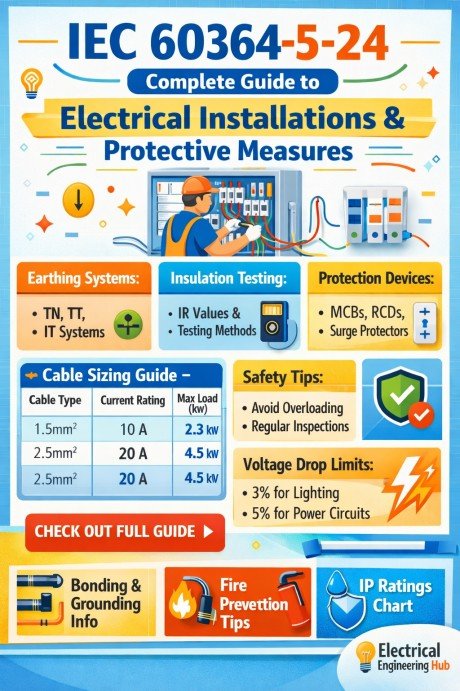
Table of Contents
Table of Contents
In this article, we will explain the scope, requirements, applications, and practical implementation of iec 60364-5-24 in simple terms.
Know more about Earth Fault Relay Sensitivity Setting
What is IEC 60364-5-24?
iec 60364-5-24 is part of the IEC 60364 series, which deals with low-voltage electrical installations. This section mainly covers protective measures related to earthing systems, bonding conductors, and electrical continuity.
The purpose of this standard is to provide rules for selecting and installing conductors that protect people and equipment from electric shock, fault current, and overvoltage conditions.
It works together with other parts of the IEC 60364 framework to build a complete electrical safety structure.
Main Objective of the Standard
The standard aims to:
- Ensure proper protective conductor sizing
- Maintain effective fault current paths
- Improve electrical continuity
- Reduce touch voltage risks
- Strengthen equipotential bonding
These requirements are critical for modern electrical infrastructure.
Know more about How Does Earth Fault Relay Protect Electrical Circuits? Complete Guide to Ground Fault Protection
Why IEC 60364-5-24 is Important
Electrical faults can cause fires, electric shocks, and equipment failure. Proper implementation of iec 60364-5-24 minimizes these risks.
Here are some major benefits:
| Benefit | Description |
|---|---|
| Safety improvement | Protects people from electric shock |
| Fault management | Ensures fast fault clearing |
| Equipment protection | Reduces damage from fault currents |
| Compliance | Meets international electrical standards |
| Reliability | Improves system performance |
Without proper protective conductor installation, even advanced systems can fail.
Scope of IEC 60364-5-24
iec 60364-5-24 applies to low-voltage installations including:
- Residential buildings
- Commercial complexes
- Industrial facilities
- Renewable energy systems
- Battery energy storage systems
- Data centers
The standard focuses on:
- Protective conductors (PE)
- PEN conductors
- Protective bonding conductors
- Functional earthing conductors
This wide scope makes it useful in almost every electrical installation.
Get instant results with our online tool earth cable size calculator
Key Requirements in IEC 60364-5-24
Understanding the major requirements helps in practical implementation.
1. Protective Conductors
Protective conductors are the backbone of electrical safety. They create a low-resistance path for fault current.
The standard requires:
- Mechanical strength
- Electrical continuity
- Corrosion resistance
- Proper sizing
The conductor must remain effective throughout the system’s life.
2. Protective Bonding
Bonding connects conductive parts to maintain equal potential.
Examples include:
- Water pipes
- Structural steel
- Cable trays
- HVAC ducts
Proper bonding reduces dangerous voltage differences.
For a complete understanding of grounding and bonding principles, check our detailed guide on iec 60364 earthing.
Know more about Ground Fault Protection vs Earth Leakage Protection
3. Conductor Sizing Rules
Sizing depends on fault current and disconnection time.
A simplified table:
| Phase Conductor Size (mm²) | Minimum PE Size (mm²) |
|---|---|
| Up to 16 | Same as phase conductor |
| 16 to 35 | 16 |
| Above 35 | Half of phase conductor |
Correct sizing prevents overheating during faults.
4. Continuity Verification
Testing continuity is mandatory.
Common methods include:
- Low resistance testing
- Visual inspection
- Loop impedance testing
This confirms the protective path is intact.
Key Takeaways
Before applying iec 60364-5-24 in any project, remember these points:
- Protective conductors must be properly sized.
- Bonding is essential for reducing touch voltage.
- Continuity testing is mandatory after installation.
- Corrosion-resistant connections improve long-term reliability.
- The standard supports safe fault current flow.
- It works closely with overall earthing design.
Following these basics improves both safety and compliance. Know more about IEC Standard for Neutral to Earth Voltage
Types of Conductors Covered
iec 60364-5-24 identifies different conductor types.
Protective Earth (PE)
Used for fault protection.
Functions:
- Carries fault current
- Supports automatic disconnection
- Reduces electric shock risk
Protective Earth Neutral (PEN)
Combines neutral and protective functions.
Common in TN-C systems.
Important note:
PEN conductors require special precautions due to combined functionality. Know more about European Earthing System TN-S TN-C-S TT Explained: Key Differences, Safety, and Standards
Know more about IEC Standard for Earthing System
Functional Earthing Conductors
Used for operational purposes rather than safety.
Examples:
- Electronic equipment
- Communication systems
- Sensitive control panels
Installation Best Practices
To comply with iec 60364-5-24, follow these practical steps.
Use Proper Connection Methods
Poor joints increase resistance.
Dive deeper into instrument earthing iec standard
Recommended methods:
| Method | Reliability |
|---|---|
| Compression lugs | High |
| Exothermic welding | Very High |
| Mechanical clamps | Medium |
| Bolted joints | High |
Always ensure tight and clean connections.
Avoid Corrosion
Corrosion weakens conductors.
Prevention tips:
- Use tinned copper
- Apply anti-corrosion paste
- Protect outdoor connections
Keep Conductors Accessible
Inspection and testing become easier when conductors are visible and accessible.
Hidden joints should be minimized.
Testing Requirements Under IEC 60364-5-24
Testing is one of the most important parts of compliance.
Continuity Test
Confirms the protective conductor path.
Acceptable values depend on conductor length and size.
Learn more about earthing cable size as per iec
Earth Resistance Test
Measures connection quality to ground.
Typical values:
| Installation Type | Recommended Earth Resistance |
|---|---|
| Residential | Less than 5 ohms |
| Industrial | Less than 2 ohms |
| Sensitive equipment | Less than 1 ohm |
These values may vary based on project requirements.
Loop Impedance Test
Ensures fault current can operate protective devices quickly.
This test verifies breaker performance.
Common Mistakes to Avoid
Many installations fail because of small errors.
Avoid these mistakes:
- Undersized PE conductors
- Loose bonding connections
- Missing equipotential bonding
- Using unsuitable conductor material
- Ignoring continuity testing
Even one mistake can compromise safety.
Know more about Earth Cable Size for Lightning Protection
IEC 60364-5-24 in Renewable Energy Systems
Modern energy systems rely heavily on this standard.
Applications include:
- Solar PV systems
- Battery storage cabinets
- EV charging stations
- Wind energy installations
These systems have high fault energy and require reliable protective paths.
In battery systems, proper bonding and earthing are critical for fire prevention and operational safety.
Relationship with Other IEC 60364 Standards
iec 60364-5-24 does not work alone.
It connects with:
| Standard | Purpose |
|---|---|
| IEC 60364-4-41 | Protection against electric shock |
| IEC 60364-5-54 | Earthing arrangements |
| IEC 60364-6 | Verification |
| IEC 60364-7 | Special installations |
Using them together creates a complete compliance framework.
Get instant results with our online tool earth cable size calculator
Conclusion
iec 60364-5-24 is an essential part of safe electrical design. It defines how protective conductors and bonding systems should be selected and installed. By following its rules, engineers can improve safety, ensure compliance, and protect both people and equipment.
From conductor sizing to testing and bonding, every requirement has a practical purpose. In modern installations like solar systems, industrial plants, and BESS cabinets, these principles are more important than ever.
A strong understanding of iec 60364-5-24 helps build safer and more reliable electrical systems.
Find more about IEEE Standard for Neutral to Earth Voltage
FAQs
What does iec 60364-5-24 cover?
It covers protective conductors, bonding conductors, PEN conductors, and their installation requirements in low-voltage systems.
Is iec 60364-5-24 mandatory?
It depends on local regulations. Many countries adopt IEC standards directly or with modifications.
How is protective conductor size calculated?
It is based on phase conductor size, fault current level, and disconnection time.
Why is continuity testing important?
It ensures fault current has a safe path, allowing protective devices to trip quickly.
Can iec 60364-5-24 be used for solar installations?
Yes, it applies to solar systems, battery storage, and other renewable energy installations where protective conductors are required.
Follow Us on Social:
Subscribe our Newsletter on Electrical Insights for latest updates from Electrical Engineering Hub
#IEC60364524,#IEC60364,#ElectricalStandards,#CableInstallation,#EarthingSystems,#VoltageDrop,#WiringRegulations,#ElectricalSafety,#PowerDistribution,#IECStandards