IEC 60364-5: Essential Guide for Safe Electrical Installations
Electrical installations must be designed and installed according to recognized international standards to ensure safety, reliability, and long-term performance. IEC 60364-5 is one of the most important parts of the IEC 60364 series because it focuses on the selection and erection of electrical equipment used in low-voltage electrical systems.
Whether you are an electrical engineer, contractor, maintenance professional, or facility owner, understanding IEC 60364 5 helps ensure compliance with international best practices. The standard provides guidance on choosing electrical equipment, installing wiring systems, protecting conductors, and maintaining safe operating conditions.
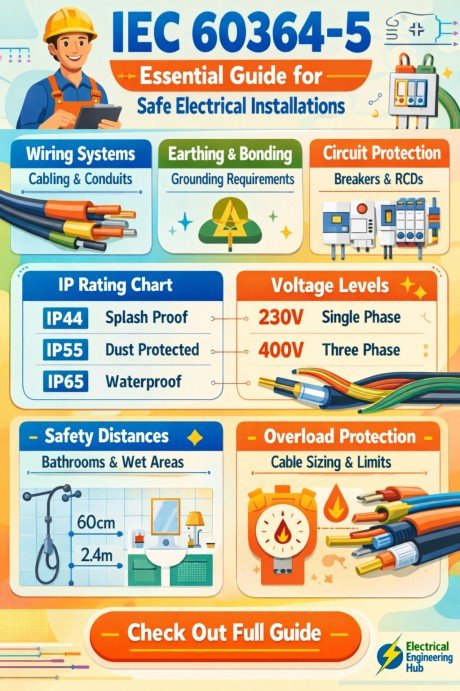
Table of Contents
As electrical networks become more complex, following IEC 60364-5 is essential for reducing electrical hazards, preventing equipment damage, and ensuring operational efficiency.
What is IEC 60364-5?
IEC 60364 5 is a section of the International Electrotechnical Commission (IEC) standard series that deals with the selection and erection of electrical equipment. It establishes requirements for designing and installing electrical systems in residential, commercial, and industrial facilities.
Know more about IEC 60364-1
The primary objective of IEC 60364-5 is to ensure that electrical installations are safe, reliable, and suitable for their intended operating environment. It covers factors such as conductor sizing, wiring methods, equipment selection, voltage drop limitations, and environmental conditions.
The standard works together with other parts of the IEC 60364 series to create a complete framework for electrical installation safety.
Key Objectives of IEC 60364-5
The standard is designed to achieve several important goals:
| Objective | Purpose |
|---|---|
| Safety | Protect people from electric shock and fire |
| Reliability | Ensure continuous system operation |
| Performance | Improve electrical efficiency |
| Compliance | Meet international installation requirements |
| Protection | Prevent equipment damage |
| Sustainability | Support long-term system durability |
These objectives make IEC 60364 5 an essential reference for modern electrical projects.
Find all about IEC 60364-6
Scope of IEC 60364-5
IEC 60364-5 covers various aspects of electrical equipment selection and installation.
The scope includes:
- Conductors and cables
- Wiring systems
- Protective devices
- Switchgear
- Isolation equipment
- Earthing arrangements
- Electrical accessories
- Environmental considerations
- Voltage drop calculations
The standard applies to low-voltage electrical installations commonly found in buildings, factories, commercial centers, and infrastructure projects.
Importance of Equipment Selection
One of the central themes of IEC 60364-5 is selecting equipment that is suitable for the intended application.
Electrical equipment must be chosen based on:
- Current-carrying capacity
- Operating voltage
- Environmental conditions
- Mechanical strength
- Degree of protection
- Thermal characteristics
- Installation method
Improper equipment selection can result in overheating, insulation failure, electrical fires, and costly downtime.
Explore all about IEC 60364 5 52
Selection of Conductors According to IEC 60364-5
Conductors are among the most critical components in any electrical installation. The standard provides detailed guidance on selecting conductor sizes based on electrical and environmental factors.
Factors Affecting Conductor Selection
| Factor | Impact on Cable Size |
|---|---|
| Load current | Determines minimum conductor size |
| Ambient temperature | Affects current-carrying capacity |
| Installation method | Influences heat dissipation |
| Voltage drop | May require larger conductors |
| Short-circuit current | Impacts thermal withstand capability |
| Grouping of cables | Requires derating factors |
Correct conductor sizing improves efficiency and prevents excessive heating.
Current-Carrying Capacity
The selected conductor must be capable of carrying the design current without exceeding temperature limits. The standard provides correction factors for different installation conditions.
These calculations help engineers choose conductors that maintain safe operating temperatures throughout their service life.
Know more about insulation resistance test standard
Wiring Systems Covered by IEC 60364 5
The standard outlines acceptable wiring methods for different applications.
Common wiring systems include:
- Conduit systems
- Cable trays
- Cable ladders
- Underground cables
- Surface-mounted wiring
- Trunking systems
- Flexible cable installations
The chosen wiring method should provide adequate mechanical protection while allowing easy maintenance and future expansion.
Voltage Drop Requirements
Voltage drop is an important consideration addressed in IEC 60364-5.
Excessive voltage drop can lead to:
- Reduced equipment performance
- Motor starting problems
- Increased energy losses
- Overheating of electrical devices
Engineers must calculate voltage drop during system design and select conductor sizes accordingly.
Know more about IS 14255 Explained
Typical Voltage Drop Considerations
| Installation Type | Recommended Voltage Drop |
|---|---|
| Lighting circuits | Typically up to 3% |
| Power circuits | Typically up to 5% |
| Sensitive equipment | Lower limits may apply |
Maintaining acceptable voltage levels improves equipment reliability and energy efficiency.
Protection Against External Influences
Electrical installations are often exposed to environmental conditions that can affect safety and performance.
IEC 60364-5 requires consideration of:
- Moisture
- Dust
- Corrosive substances
- High temperatures
- Mechanical impact
- Vibration
- Ultraviolet radiation
Equipment should be selected with appropriate protection ratings to withstand these conditions.
Know more about Wire Sizing for Motors
For example, outdoor installations may require weatherproof enclosures with higher ingress protection (IP) ratings.
Earthing and Protective Conductors
Proper earthing is fundamental to electrical safety.
IEC 60364 5 provides requirements for:
- Protective conductors
- Earthing conductors
- Bonding conductors
- Connection methods
- Conductor sizing
A properly designed earthing system minimizes shock hazards and ensures protective devices operate correctly during fault conditions.
For a deeper understanding of grounding requirements and practical earthing methods, refer to our detailed guide on IEC 60364 earthing.
Isolation and Switching Requirements
Electrical installations require safe means of isolation and switching.
The standard specifies requirements for:
- Main switches
- Disconnecting devices
- Emergency switching
- Maintenance isolation
- Functional switching
These provisions allow equipment to be safely disconnected for maintenance, repairs, and emergency situations.
Proper isolation procedures significantly reduce the risk of electrical accidents.
Use our online tool HV Cable Bending Radius Calculator
Accessibility and Maintainability
A well-designed electrical installation should remain accessible throughout its operational life.
IEC 60364-5 emphasizes:
- Easy access to equipment
- Adequate working space
- Safe maintenance procedures
- Clear identification of circuits
- Proper labeling of equipment
These requirements help maintenance personnel perform inspections and repairs safely and efficiently.
Explore details on table 250.122 nec
Fire Safety Considerations
Electrical faults are a major cause of building fires. The standard includes measures to reduce fire risks associated with electrical installations.
Important fire prevention practices include:
- Proper conductor sizing
- Correct overcurrent protection
- Fire-resistant cable selection
- Suitable installation methods
- Prevention of overheating
By following IEC 60364-5, designers can significantly improve fire safety within electrical systems.
Mechanical Protection of Electrical Equipment
Electrical equipment may be exposed to physical damage during operation.
The standard requires adequate protection against:
- Impact
- Crushing
- Abrasion
- Vibration
- Accidental contact
Know all the basics about earth conductor size calculation
Mechanical protection can be achieved using conduits, armored cables, enclosures, barriers, and protective covers.
Compliance Benefits of IEC 60364-5
Organizations that implement IEC 60364-5 gain several advantages.
Major Benefits
| Benefit | Description |
|---|---|
| Improved safety | Reduces electrical hazards |
| Better reliability | Minimizes outages and failures |
| Regulatory compliance | Supports international standards |
| Reduced maintenance | Lowers repair costs |
| Energy efficiency | Improves system performance |
| Longer equipment life | Reduces premature failures |
These benefits contribute to safer and more cost-effective electrical installations.
Dive deeper into instrument earthing iec standard
Common Mistakes to Avoid
Many electrical problems arise because installation practices do not follow standard requirements.
Common mistakes include:
- Undersized conductors
- Incorrect cable routing
- Poor earthing arrangements
- Excessive voltage drop
- Inadequate environmental protection
- Improper equipment selection
- Insufficient mechanical protection
Avoiding these issues improves safety and reduces operational risks.
Practical Applications of IEC 60364-5
The standard is widely used in many sectors.
Examples include:
- Residential buildings
- Commercial offices
- Hospitals
- Shopping centers
- Industrial plants
- Data centers
- Educational facilities
- Renewable energy installations
Find more about iec grounding standards
Its flexibility makes it suitable for virtually all low-voltage electrical systems.
Conclusion
IEC 60364-5 plays a critical role in ensuring the safety, reliability, and efficiency of low-voltage electrical installations. The standard provides comprehensive guidance for selecting and erecting electrical equipment, sizing conductors, protecting against environmental influences, and maintaining safe operating conditions. Explore all about methods of earthing
By following IEC 60364-5, engineers and installers can reduce electrical hazards, improve system performance, and comply with internationally recognized best practices. Whether working on residential, commercial, or industrial projects, understanding the requirements of this standard is essential for delivering high-quality electrical installations that perform safely throughout their service life.
Know more about Earth Cable Size for Lightning Protection
Frequently Asked Questions (FAQs)
What is IEC 60364-5?
IEC 60364-5 is a part of the IEC 60364 series that provides requirements for the selection and erection of electrical equipment in low-voltage electrical installations.
Why is IEC 60364-5 important?
It helps ensure electrical installations are safe, reliable, energy-efficient, and compliant with international standards.
Does IEC 60364-5 cover conductor sizing?
Yes. The standard provides guidance for selecting conductor sizes based on current-carrying capacity, voltage drop, short-circuit withstand capability, and environmental conditions.
How does IEC 60364-5 improve electrical safety?
It establishes requirements for equipment selection, earthing systems, protective conductors, wiring methods, and isolation devices to reduce electrical hazards.
Is IEC 60364-5 applicable to industrial installations?
Yes. The standard applies to residential, commercial, and industrial low-voltage electrical installations and is widely used across multiple industries worldwide.
Follow Us on Social:
Subscribe our Newsletter on Electrical Insights for latest updates from Electrical Engineering Hub
#IEC603645,#IECStandards,#ElectricalInstallation,#WiringRegulations,#ElectricalEngineering,#PowerSystems,#ElectricalSafety,#LowVoltageInstallations,#EngineeringStandards,#ElectricalDesign