UK Electrical Inspection Certificate: How to Obtain & Maintain Certification Legally (Complete Compliance Guide)
Electrical safety is a legal responsibility in the United Kingdom. Property owners, landlords, businesses, and facility managers must ensure that electrical installations remain safe for use at all times. One of the most important documents that confirms this compliance is the UK electrical inspection certificate.
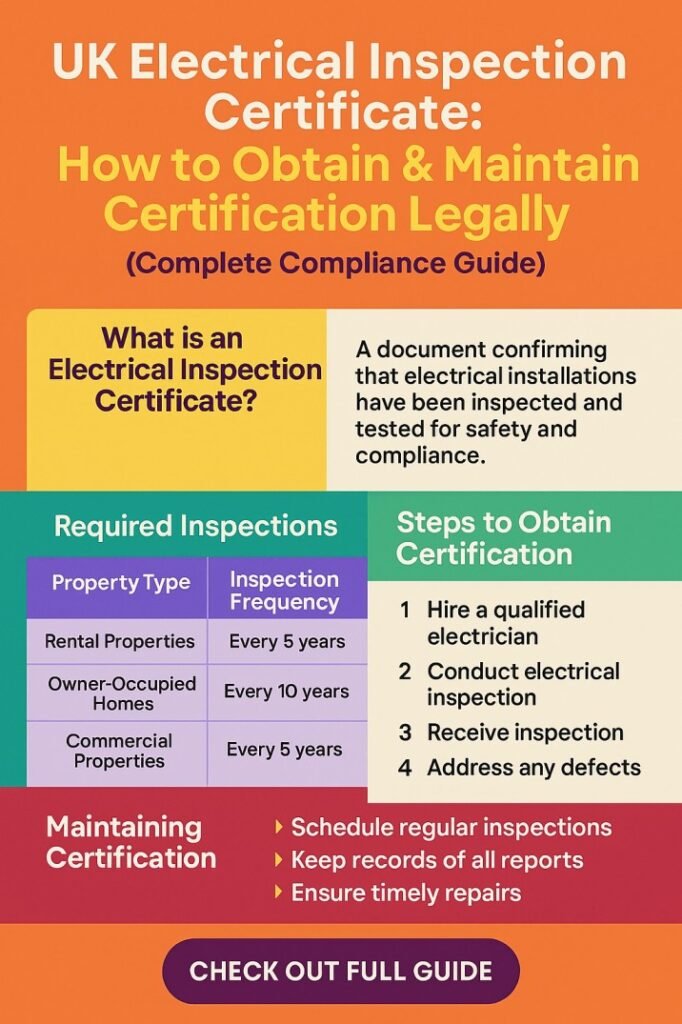
Table of Contents
This certificate verifies that an electrical installation has been inspected and tested according to national safety standards. It protects occupants, prevents electrical hazards, and helps property owners meet legal obligations under UK regulations. Understanding how to obtain and maintain a UK electrical inspection certificate is essential for anyone responsible for electrical systems in residential or commercial buildings.
This guide explains the certification process, legal requirements, inspection intervals, and practical steps to remain compliant.
Know more about NEC NFPA 70 2026 — Complete Guide to Code Updates, Compliance Requirements, and Electrical Safety Standards
What is a UK Electrical Inspection Certificate?
A UK electrical inspection certificate is an official document issued after a qualified electrician inspects and tests an electrical installation. The inspection confirms whether the system complies with the BS 7671 Wiring Regulations and other applicable safety standards.
The certificate provides detailed information about the condition of wiring, distribution boards, earthing systems, protective devices, and overall installation safety.
Electrical inspections help identify potential hazards such as:
- Damaged or deteriorated wiring
- Overloaded circuits
- Improper earthing or bonding
- Faulty circuit protection
- Fire risks from electrical installations
Once the inspection is completed, the electrician records the findings and issues the certificate if the system meets safety requirements.
Why the UK Electrical Inspection Certificate is Important
Electrical faults are one of the leading causes of fires in buildings. Regular inspections reduce these risks and ensure compliance with UK safety legislation.
A UK electrical inspection certificate serves several important purposes:
- Confirms that electrical installations meet safety standards
- Protects occupants and property from electrical hazards
- Demonstrates legal compliance for landlords and businesses
- Helps insurance companies verify electrical safety
- Identifies issues before they become dangerous
Landlords, in particular, must maintain proper electrical certification to avoid penalties and legal action.
Know more about Top 50 NICET Practice Exams Questions and Answers
Legal Requirements for Electrical Inspection in the UK
Electrical safety in the UK is governed by several regulations. These laws require regular inspections and proper documentation.
The most relevant regulations include:
| Regulation | Purpose |
|---|---|
| Electrical Safety Standards in the Private Rented Sector (England) Regulations 2020 | Requires landlords to have electrical installations inspected every 5 years |
| BS 7671 Wiring Regulations | National standard for electrical installation safety |
| Electricity at Work Regulations 1989 | Ensures electrical systems are safe in workplaces |
| Building Regulations Part P | Covers electrical safety in residential properties |
Under these rules, landlords must provide tenants with a valid UK electrical inspection certificate and address any issues identified during inspection. Find all about Best Universities for Electrical Engineering in London
Failure to comply may result in fines or enforcement actions from local authorities.
Types of Electrical Certificates Used in the UK
Several types of electrical certificates are issued depending on the work performed. Understanding the difference helps property owners maintain proper documentation.
| Certificate Type | When It Is Issued |
|---|---|
| Electrical Installation Certificate (EIC) | For new installations or major electrical work |
| Electrical Installation Condition Report (EICR) | Periodic inspection of existing installations |
| Minor Electrical Installation Works Certificate | For small electrical modifications |
In many cases, when people refer to a UK electrical inspection certificate, they are referring to the Electrical Installation Condition Report (EICR).
Know more about NEC Grounding Table 250.122 Explained: Correct Equipment Grounding Conductor Size
The EICR assesses the safety and condition of existing electrical installations.
Who Can Issue a UK Electrical Inspection Certificate?
Only qualified and competent electricians are authorized to perform electrical inspections and issue certification.
Typically, inspectors are registered with recognized bodies such as:
- NICEIC (National Inspection Council for Electrical Installation Contracting)
- NAPIT (National Association of Professional Inspectors and Testers)
- ELECSA
- ECA (Electrical Contractors’ Association)
Hiring a certified electrician ensures the inspection meets legal and technical requirements. Many insurance companies and regulatory bodies only accept certificates issued by accredited professionals.
Step-by-Step Process to Obtain the Certificate
Obtaining a UK electrical inspection certificate involves a structured inspection and testing process. The electrician carefully examines the electrical system to ensure it complies with safety standards.
Step 1: Hire a Qualified Electrician
Choose an electrician registered with an approved UK electrical certification body. Verify their credentials and experience before scheduling the inspection. Find details on Best Electrical Engineering Schools in California – Top Accredited EE Programs for High-Quality Education
Step 2: Electrical Inspection
The electrician visually checks the installation for visible defects such as damaged sockets, exposed wiring, or incorrect installations.
Step 3: Electrical Testing
Specialized instruments are used to perform electrical tests, including:
- Insulation resistance testing
- Earth fault loop impedance testing
- Continuity testing
- RCD testing
- Polarity verification
These tests confirm that the system operates safely under normal and fault conditions.
Know more about EMT Conduit Fill Calculator: Your Ultimate Guide for Accurate Electrical Wiring
Step 4: Report Preparation
The electrician records the inspection results in an official report. If the installation meets standards, the UK electrical inspection certificate is issued.
Step 5: Address Any Observations
If defects are found, the report will include recommendations for corrective actions. These issues must be resolved to maintain compliance.
Understanding Electrical Inspection Codes
Inspection reports usually include classification codes that indicate the severity of issues discovered during testing.
| Code | Meaning | Action Required |
|---|---|---|
| C1 | Danger present | Immediate action required |
| C2 | Potentially dangerous | Urgent corrective work needed |
| C3 | Improvement recommended | Not dangerous but should be improved |
| FI | Further investigation required | Additional inspection needed |
A property cannot be considered safe if it contains C1 or C2 observations. These problems must be fixed before the system is considered compliant. Know more about Journeyman Electrician Practice Test: Important Question to Prepare
Inspection Frequency and Validity Period
The validity of a UK electrical inspection certificate depends on the type of property and its usage.
| Property Type | Recommended Inspection Interval |
|---|---|
| Private rented properties | Every 5 years |
| Owner occupied homes | Every 10 years |
| Commercial buildings | Every 5 years or as recommended |
| Industrial installations | Every 3 to 5 years |
High-risk environments such as construction sites or industrial facilities may require more frequent inspections.
Maintaining proper inspection intervals ensures electrical installations remain safe over time.
Know more about OSHA Certification Cost: 7 Proven Ways to Save Big on Your Training
Cost of Electrical Inspection in the UK
The cost of obtaining a UK electrical inspection certificate depends on the property size and complexity of the electrical installation.
Typical inspection costs are shown below.
| Property Size | Average Inspection Cost |
|---|---|
| Small apartment | £100 – £180 |
| 3-bedroom house | £150 – £250 |
| Large residential property | £250 – £400 |
| Commercial premises | £300 – £800 |
Additional repair work may increase the total cost if electrical faults are discovered during the inspection. Know more about Electrical Safety Officer Certification in USA: Cost, Duration & Job Scope
How to Maintain Compliance After Certification
Receiving a UK electrical inspection certificate is only the first step. Ongoing maintenance ensures continued compliance and safety.
Property owners should follow these best practices:
- Keep electrical certificates and inspection reports safely stored
- Schedule inspections before the certificate expires
- Address electrical faults immediately
- Avoid unqualified electrical modifications
- Maintain proper documentation for tenants and regulatory authorities
Regular electrical maintenance also extends the lifespan of wiring systems and reduces the likelihood of costly repairs.
Know more about Top 12 Switchgear Training Courses in USA: Professional Certification & Career Advancement
Common Mistakes That Lead to Compliance Issues
Many property owners unintentionally violate electrical safety rules due to lack of awareness.
Common mistakes include:
- Failing to schedule periodic inspections
- Using unregistered electricians
- Ignoring recommended electrical upgrades
- Not providing inspection reports to tenants
- Performing unauthorized electrical work
Avoiding these mistakes helps maintain a valid UK electrical inspection certificate and ensures legal compliance.
Know more about DEWA Electrical License Guide for Solar Projects in Dubai
Final Thoughts
Electrical safety is a critical responsibility for property owners and landlords across the United Kingdom. A UK electrical inspection certificate confirms that electrical installations meet national safety standards and remain safe for occupants.
Obtaining the certificate involves hiring a qualified electrician, conducting detailed inspection and testing, and resolving any safety concerns identified in the report. Regular inspections, proper maintenance, and accurate documentation are essential to stay compliant with UK regulations.
By understanding the process and maintaining certification properly, property owners can reduce electrical risks, meet legal obligations, and ensure the long-term safety of their buildings. Know more about Electrical Safety Officer Roles & Responsibilities
Follow Us on Social:
Subscribe our Newsletter on Electrical Insights for latest updates from Electrical Engineering Hub
#UKElectricalInspectionCertificate, #ElectricalSafetyUK, #ElectricalCompliance, #ElectricalCertification, #UKElectricians, #ElectricalInspection, #EICR, #ElectricalRegulationsUK, #ElectricalTesting, #UKPropertySafety


Your blog has become my go-to source for positive and uplifting content Thank you for consistently delivering high-quality posts