
Cable Size Chart Australia: 7 Essential Tips for Smooth & Reliable Electrical Planning
Choosing the right cable size is one of the most important steps in any electrical installation. A well-selected cable reduces voltage drop, improves system safety, and ensures long-term reliability. When people search for Cable Size Chart Australia, they usually want quick guidance that is accurate, easy to follow, and suitable for local conditions. The Australian environment brings its own challenges, such as higher temperatures, long cable runs, and strict safety standards. That is why proper planning matters.
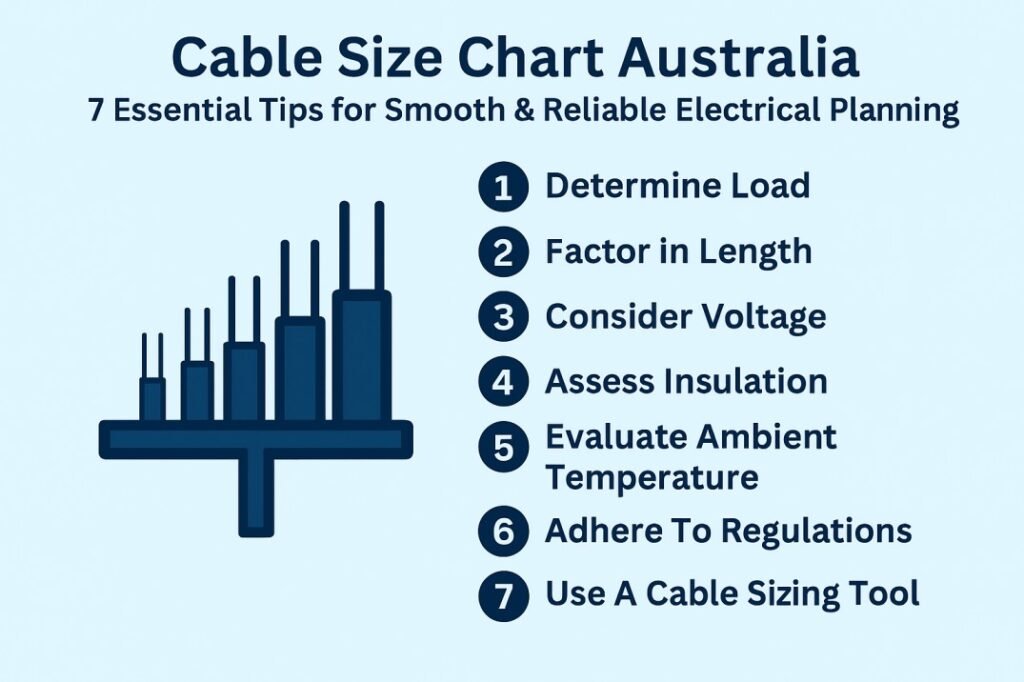
Table of Contents
This guide explains the essentials in simple language and highlights seven practical tips to help you choose the right cable size every time. Whether you are working on residential wiring, solar installations, or industrial setups, the right cable choice keeps your system efficient and protects your equipment.
Use our online tool Conduit Fill Calculator for Multi Conductor Cable: Accurate NEC-Based Cable Sizing Tool
Understanding Cable Size Chart Australia
Cable size charts provide recommended conductor sizes based on current rating, voltage drop, insulation type, and installation method. In Australia, cable selection usually follows AS/NZS 3008, which outlines the guidelines for current capacity and environmental factors. These charts help you match a cable to the load and ensure that the conductor can handle the expected current without overheating.
Use our online tool 3 phase cable size calculator
Electricians often refer to these charts when calculating the correct size for copper or aluminium conductors in single-phase or three-phase circuits. The goal is simple: safe operation with minimal losses.
Sample Cable Size Chart Australia for Common Applications
| Load (Amps) | Recommended Cable Size (Copper) | Typical Application |
|---|---|---|
| 10A | 1.5 mm² | Lighting circuits |
| 20A | 2.5 mm² | Power outlets |
| 32A | 4.0 mm² | Air-conditioners |
| 40A | 6.0 mm² | Electric ovens |
| 63A | 10 mm² | Sub-mains |
| 80A | 16 mm² | Small workshops |
This table gives a general idea, but the final choice must consider installation environment and allowable voltage drop.
Try our free online tool today ev charger cable size calculator
Tip 1: Always Consider the Current Rating
The first and most important factor is the current rating. Every cable must be able to handle the maximum load of the connected equipment. If the current exceeds the cable capacity, insulation damage, overheating, or faults may occur. Using the correct cable size chart improves safety and ensures stable performance.
When planning a circuit, calculate the full-load current and choose a cable with a higher rating. This provides a safety margin, especially in hot Australian conditions where cable temperature rises faster.
Use our online tool MM to AWG Wire Size Calculator According to IEC and NEC
Tip 2: Check Voltage Drop to Avoid Performance Loss
Voltage drop is a common issue in long cable runs. Even a small drop can affect motors, lighting, and electronic equipment. Australian standards typically recommend less than 5% voltage drop for most installations.
Thicker cables reduce voltage drop and maintain efficiency. When planning a long-distance connection, always compare the expected voltage drop with the allowable limit. This step is essential for solar systems, electric pumps, and rural sites.
Access our powerful online calculator now star delta motor cable size calculator
Tip 3: Consider the Installation Environment
The environment plays a major role in cable selection. Cables installed in conduits, underground, or in roof spaces may heat up more than those in open air. Heat reduces the current-carrying capacity, which means you may need a larger cable size than expected.
Outdoor installations also face UV exposure and temperature extremes. Choosing the correct insulation type ensures long-lasting reliability.
Tip 4: Choose the Correct Material: Copper or Aluminium
Copper is the most common conductor due to its high conductivity, durability, and compact size. Aluminium is lighter and less expensive but requires larger sizes for the same current rating.
Both materials have advantages. For domestic wiring, copper is usually the preferred choice. For long sub-mains or industrial feeders, aluminium is often selected for cost efficiency. A proper cable size chart helps compare the two options easily.
Get instant results with our online tool earth cable size calculator
Tip 5: Plan for Future Expansion
Electrical loads change over time. New appliances, EV chargers, or upgraded equipment can increase demand. When reviewing a Cable Size Chart Australia, always think about future expansion. Choosing a slightly larger cable now can help you avoid costly upgrades later.
Future planning is especially important in solar installations, where system expansions are common. Oversized cables also reduce resistance and improve overall efficiency.
Tip 6: Follow Australian Standards and Local Regulations
Compliance is essential. Cable sizing in Australia must follow AS/NZS 3000 and AS/NZS 3008 guidelines. These standards define current-carrying capacity, voltage drop requirements, and safe installation practices.
Using the correct standards ensures your installation passes inspections and performs reliably for years. It also reduces the risk of electrical hazards and ensures better system protection.
Start using our easy-to-use online tool earthing cable size calculator
Tip 7: Use Accurate Cable Size Charts and Professional Tools
Finally, always rely on updated, Australia-specific cable charts and calculation tools. Using outdated or generalised charts may lead to incorrect cable selection. Tools such as voltage drop calculators or online cable sizing guides can improve accuracy and reduce guesswork.
For large or complex installations, consulting a licensed electrician or electrical engineer ensures the right decisions are made.
Use our online tool Cable Bending Radius Calculator – Accurate Minimum Bend Radius for Electrical Cables
Final Thoughts
Cable sizing plays a crucial role in electrical planning. By understanding Cable Size Chart Australia and applying the seven tips above, you can achieve a safe, efficient, and long-lasting installation. Good cable planning prevents breakdowns, reduces energy losses, and keeps your entire system running smoothly. Whether you are working on a small home project or a large industrial setup, the right cable size is the foundation of reliable electrical performance.
Calculate instantly with our smart online tool cable size calculator australia
Follow Us on Social:
Subscribe our Newsletter on Electrical Insights for latest updates from Electrical Engineering Hub
#cablesizechartaustralia, #australiancablesizes, #electricalcablesizes, #cablesizingguide, #australiaelectricalstandards, #cableselection, #wiringsizechart, #electricalengineeringau, #cablecapacitychart, #voltagedropaustralia