Solar Insurance Premium Calculator: Easy & Accurate Cost Estimate
Solar systems are a long-term investment, and protecting them is just as important as installing them. Whether you own a residential solar setup or a commercial solar plant, understanding your insurance cost is necessary for financial planning. This is where a Solar Insurance Premium Calculator becomes useful.
A Solar Insurance Premium Calculator helps you estimate the monthly or yearly insurance premium for your solar system based on multiple factors like system size, location, equipment value, and coverage type. Instead of guessing costs, you get a clear estimate that helps in budgeting and risk management.
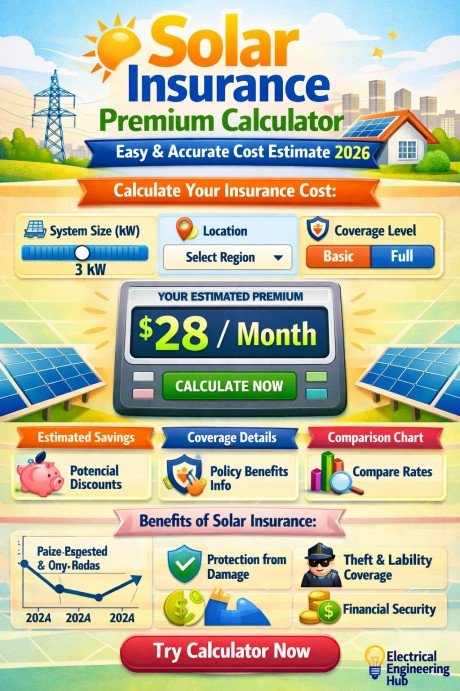
Table of Contents
Table of Contents
With the growing use of rooftop solar panels, inverters, and battery storage systems, insurance has become a key part of system ownership. Weather damage, theft, fire, and electrical faults can result in major losses. Having the right insurance coverage can save you from unexpected expenses.
In this guide, you will learn how a Solar Insurance Premium Calculator works, what affects the premium, and how you can reduce your insurance cost.
What Is a Solar Insurance Premium Calculator?
A Solar Insurance Premium Calculator is a digital tool designed to calculate the estimated insurance premium for solar energy systems. It considers the insured value of your solar plant and calculates the premium based on the selected risk coverage.
Solar Insurance Premium Calculator
Solar Panel Insurance Premium Calculator
Estimate a realistic annual and monthly insurance cost range for your residential or commercial solar installation, based on system size, equipment value, mounting type, regional risk, and coverage preferences.
System Details
Risk and Coverage
Premium Breakdown
How to Use This Calculator
- Enter system size and equipment value. Use the total installed cost of panels, inverter, racking, and wiring, not just panel cost.
- Set the system age. Newer systems typically carry lower risk loading than aging installations nearing the end of warranty coverage.
- Choose the mounting type. Ground mounts and large commercial arrays carry different exposure profiles than standard rooftop installs.
- Select inverter configuration and battery storage. Adding battery storage increases insurable value and may require a separate rider.
- Pick your regional risk zone. This reflects exposure to hail, wildfire, hurricane, or seismic activity common in your area.
- Choose coverage basis and deductible. Replacement Cost Value generally costs more than Actual Cash Value but pays out at current replacement prices rather than depreciated value.
- Click Calculate. Review the breakdown to see which factors are driving your estimate, then adjust inputs to compare scenarios side by side.
Technical Notes
Solar insurance premiums are typically influenced by the insurable value of the equipment, the physical risk profile of the installation location, the age and condition of components, and the scope of coverage selected. Insurers generally price rooftop residential systems differently from ground-mounted or commercial arrays due to differences in wind loading, accessibility for repairs, and theft exposure.
Replacement Cost Value coverage tends to carry a higher premium than Actual Cash Value because it removes depreciation from the payout calculation, which matters more as a system ages. Adding battery storage or production guarantee riders increases the insurable scope and is reflected as a separate line item rather than folded into the base rate.
Many homeowner policies bundle solar coverage into existing dwelling insurance, while larger or ground-mounted systems often require a standalone equipment policy. This tool produces a planning-level estimate to help you compare scenarios; actual quotes depend on insurer underwriting guidelines, local building codes, and site-specific inspection results.
Use our free online tool here Solar Panel Insurance Cost Calculator
It gives users a rough estimate before purchasing insurance. This is useful for homeowners, businesses, and solar project developers.
The calculator typically includes:
- Solar system value
- Installation location
- Type of solar panels
- Inverter value
- Battery storage cost
- Coverage type
- Risk factors
This helps you compare different insurance plans and choose the best one.
Why Solar Insurance Is Important
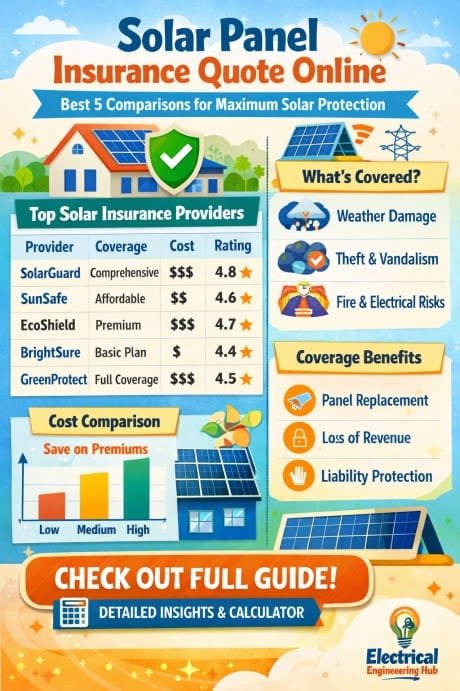
Solar panels are exposed to outdoor conditions every day. They face risks from:
- Hailstorms
- Lightning strikes
- Heavy rain
- Fire incidents
- Theft
- Vandalism
- Power surges
Without insurance, repairing or replacing damaged equipment can be expensive.
Know more about How Much Does Solar Panel Insurance Cost?
Here is a quick look at common risks and losses.
| Risk Type | Possible Damage | Estimated Cost Impact |
|---|---|---|
| Fire | Panel and inverter damage | High |
| Theft | Missing panels or cables | Medium |
| Storm Damage | Broken glass and mounts | High |
| Electrical Fault | Inverter burnout | Medium |
| Flood | Complete system damage | Very High |
Using a Solar Insurance Premium Calculator allows you to understand these risks in financial terms.
How Does a Solar Insurance Premium Calculator Work?
The Solar Insurance Premium Calculator uses standard insurance formulas to estimate premiums.
The basic formula is:
Premium = Insured Value × Premium Rate
For example:
If your solar system is worth $15,000 and the insurance company offers a premium rate of 0.8%.
Annual Premium = 15,000 × 0.8%
Annual Premium = $120
Monthly Premium = $10
Use our online free tool Solar Panel Installation Cost Calculator
Here is a sample calculation table.
| System Value | Premium Rate | Annual Premium | Monthly Premium |
|---|---|---|---|
| $10,000 | 0.7% | $70 | $5.83 |
| $15,000 | 0.8% | $120 | $10 |
| $20,000 | 1.0% | $200 | $16.67 |
| $30,000 | 1.2% | $360 | $30 |
This shows how system value directly impacts insurance cost.
Factors That Affect Solar Insurance Premium
Several factors influence your solar insurance premium.
System Size
Larger systems cost more to insure because they have higher replacement costs.
A 10kW system will have a lower premium compared to a 50kW installation.
Equipment Quality
Premium solar panels and branded inverters often have higher insured values.
Higher quality equipment can increase the premium but may reduce risk.
Know more about Solar EPC Companies in USA
Installation Location
Areas with high storm activity or theft rates may have higher premiums.
Location risk is one of the most important factors in premium calculation.
Type of Coverage
Basic plans cover fire and theft. Comprehensive plans include weather damage, electrical faults, and business interruption.
More coverage means a higher premium.
Deductible Amount
A higher deductible can reduce your premium.
For example:
| Deductible | Premium Reduction |
|---|---|
| $100 | Low |
| $500 | Medium |
| $1000 | High |
Choosing the right deductible can balance cost and protection.
Know more about Solar EPC Companies South Africa
Types of Solar Insurance Coverage
Before using a Solar Insurance Premium Calculator, it helps to know the available coverage options.
Property Damage Coverage
Protects against fire, storms, and accidents.
Theft Protection
Covers stolen solar panels, inverters, or wiring.
Liability Coverage
Protects if your system causes damage to another property.
Business Interruption Insurance
Important for commercial solar systems. Covers income loss during downtime.
Equipment Breakdown Coverage
Covers internal faults in inverters and battery storage.
Choosing the right mix affects your final premium estimate.
Benefits of Using a Solar Insurance Premium Calculator
Using a Solar Insurance Premium Calculator offers several benefits.
Better Budget Planning
You know your expected insurance cost in advance.
Compare Insurance Plans
You can compare rates from different providers.
Know more about DEWA Electrical License Guide for Solar Projects in Dubai
Risk Assessment
It helps you understand how location and equipment affect premium.
Saves Time
No need for multiple manual quotations.
Improves Decision Making
You can decide whether additional coverage is worth the cost.
This makes it a valuable financial tool for solar owners.
Tips to Reduce Solar Insurance Premium
Insurance costs can be managed with smart planning.
Follow these practical tips:
- Install anti-theft systems
- Use surge protection devices
- Perform regular maintenance
- Choose certified installers
- Increase deductibles
- Bundle insurance with home insurance
- Install fire safety systems
These steps can improve safety and lower premiums.
Here is a quick guide where you can find Best Batteries for Solar Panels
Residential vs Commercial Solar Insurance Cost
Insurance premiums vary based on system type.
| System Type | Average System Value | Estimated Annual Premium |
|---|---|---|
| Residential 5kW | $6,000–$8,000 | $50–$100 |
| Residential 10kW | $10,000–$15,000 | $80–$150 |
| Commercial 50kW | $40,000–$60,000 | $400–$700 |
| Industrial 100kW+ | $80,000+ | $800+ |
Commercial systems usually need wider coverage.
This is why a Solar Insurance Premium Calculator is more important for large projects.
How to Choose the Right Insurance Provider
When selecting a provider, check these points:
- Claim settlement speed
- Coverage details
- Exclusions
- Premium rates
- Customer reviews
- Renewable energy expertise
A lower premium is not always better if the coverage is weak.
Always read the policy terms carefully.
Find all about Top 10 Transformer Manufacturers for Solar Farms in Pakistan
Final Thoughts
A Solar Insurance Premium Calculator is an essential tool for anyone investing in solar energy. It provides a quick and reliable estimate of insurance costs, helping you make better financial decisions.
Whether you own a small rooftop solar system or a large commercial solar plant, insurance protects your investment from unexpected losses. By understanding how premiums are calculated and what factors affect them, you can choose the right policy with confidence.
Using a Solar Insurance Premium Calculator before buying a policy saves time, improves budgeting, and helps you avoid overpaying.
As solar technology continues to grow, smart insurance planning will remain a key part of energy security.
Frequently Asked Questions
How accurate is a Solar Insurance Premium Calculator?
A Solar Insurance Premium Calculator gives an estimated cost based on entered data. Actual premiums may vary depending on the insurer.
Is solar panel insurance mandatory?
It depends on local regulations and financing terms. Some lenders require insurance.
Can I add solar panels to my home insurance?
Yes, many homeowners can include solar systems in their existing home insurance policy.
Does solar insurance cover inverter damage?
Most comprehensive policies cover inverter failure caused by electrical faults or accidents.
How can I lower my solar insurance premium?
You can reduce premiums by improving system safety, increasing deductibles, and maintaining equipment regularly.
Follow Us on Social:
Subscribe our Newsletter on Electrical Insights for latest updates from Electrical Engineering Hub
#SolarInsurancePremiumCalculator,#SolarPanelInsurance,#SolarInsuranceCost,#SolarCoverage,#RenewableEnergyInsurance,#SolarSavings,#SolarProtection,#SolarInvestment,#GreenEnergyFinance,#SolarPolicyCalculator