Best Non Contact Voltage Testers to Buy | Top 12 Picks for Accurate Detection, Safety & Professional Use
Working with electricity demands accuracy, speed, and above all, safety. Non Contact Voltage Testers have become an essential tool for electricians, technicians, and even homeowners who want to detect live wires without direct contact. These devices help reduce the risk of electrical shocks while improving efficiency during troubleshooting, maintenance, and installations.
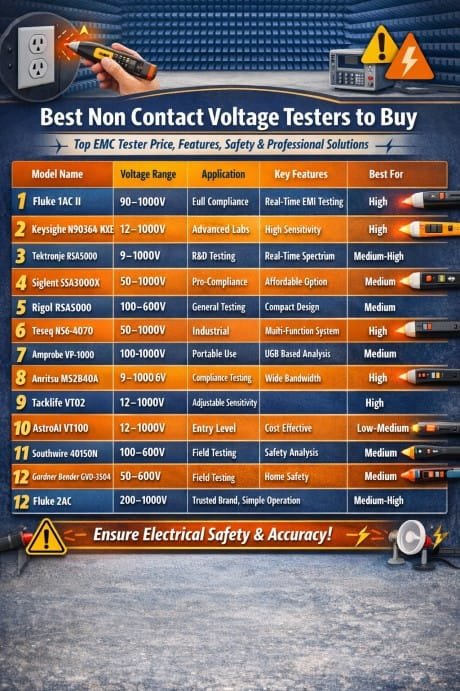
Table of Contents
Modern Non Contact Voltage Testers are designed with advanced sensing technology, audible and visual alerts, and ergonomic builds. Whether you are checking outlets, circuit breakers, or wiring systems, choosing the right tester can make a real difference in your workflow.
Why Non Contact Voltage Testers Matter
Non Contact Voltage Testers allow users to detect voltage presence without touching exposed wires. This reduces the risk of accidents and ensures safer working conditions. These tools are widely used in electrical testing, fault detection, and preventive maintenance.
Know more about AC Hipot Test Acceptable Leakage Current
Key benefits include:
- Quick voltage detection without physical contact
- Enhanced safety for professionals and beginners
- Portable and easy to use
- Suitable for residential and industrial applications
They are especially useful for identifying live circuits before repair work or installation tasks.
Features to Look for Before Buying
Before selecting from the best Non Contact Voltage Testers, it is important to understand the features that impact performance and usability.
Sensitivity Range
A good tester should detect a wide voltage range, typically from 12V to 1000V AC. Adjustable sensitivity is a bonus for precise readings.
Visual and Audible Indicators
LED lights and buzzer alarms help confirm voltage presence clearly, even in noisy environments.
Build Quality
Durable construction ensures long-term reliability, especially for field professionals.
Battery Life
Efficient battery usage is essential for extended work sessions.
Explore all about AC Hipot Tester Price in Canada
Safety Certifications
Look for tools that meet international safety standards such as CAT III or CAT IV ratings.
Top 12 Non Contact Voltage Testers Comparison
Below is a carefully selected list of top-performing models based on accuracy, safety, and professional use.
| Model Name | Voltage Range | Key Features | Best For |
|---|---|---|---|
| Fluke 1AC II | 90–1000V | Reliable sensing, compact design | Professional electricians |
| Klein Tools NCVT-2 | 12–1000V | Dual range detection, bright LED | Versatile use |
| Sperry Instruments STK001 | 50–1000V | Affordable, durable build | Home users |
| Milwaukee 2202-20 | 50–1000V | LED work light, rugged design | Field work |
| Extech DV25 | 100–600V | Built-in flashlight | Maintenance tasks |
| Greenlee GT-16 | 50–1000V | Non-contact detection, audible alert | Industrial use |
| Amprobe VP-1000 | 100–1000V | High sensitivity | Electrical testing |
| Tacklife VT02 | 12–1000V | Adjustable sensitivity | DIY users |
| AstroAI VT100 | 12–1000V | LCD display, auto shut-off | Beginners |
| Southwire 40150N | 100–600V | Compact and reliable | Quick checks |
| Gardner Bender GVD-3504 | 50–600V | Affordable and easy to use | Home safety |
| Fluke 2AC | 200–1000V | Trusted brand, simple operation | Professional use |
Know more about Top 20 Electrical Testing Tools Which You Must Have
Detailed Overview of Top Picks
Fluke 1AC II stands out due to its reliability and consistent performance. It is widely used in professional environments where precision is critical. Klein Tools NCVT-2 offers dual range detection, making it suitable for both low and high voltage applications.
Milwaukee 2202-20 combines durability with a built-in LED light, which is useful in low-light conditions. Tacklife VT02 and AstroAI VT100 are excellent choices for beginners due to their user-friendly design and adjustable sensitivity.
Applications in Real Work Environments
Non Contact Voltage Testers are used across various industries. Electricians rely on them for checking live wires before repairs. Maintenance teams use them for quick diagnostics in buildings and factories. Homeowners benefit from these tools when installing switches, fans, or appliances.
Common use cases include:
- Detecting live outlets and switches
- Checking circuit breakers
- Identifying faulty wiring
- Verifying power shutdown before repairs
These tools are also essential for safety inspections and compliance checks.
Know more about Best Megger Testers for Industrial Use
Safety Tips While Using Voltage Testers
Even though Non Contact Voltage Testers are designed for safety, proper usage is still important.
- Always test the device on a known live source before use
- Keep the tester clean and dry
- Replace batteries regularly
- Avoid using in extreme conditions
Following these practices ensures accurate readings and reduces risks.
How to Choose the Right Model
Selecting the right tester depends on your needs. Professionals should invest in high-end models with wide voltage ranges and advanced features. DIY users can opt for budget-friendly options with basic functionality.
Consider the following before buying:
- Frequency of use
- Type of electrical work
- Budget constraints
- Required safety level
A well-chosen tester improves both safety and efficiency.
Know more about Insulation Resistance Testing: Step-by-Step Process
Future Trends in Voltage Detection Tools
Technology continues to improve in this category. New models now include digital displays, smart sensors, and enhanced accuracy. Some advanced testers even offer vibration alerts and multi-mode detection.
As electrical systems become more complex, the demand for reliable Non Contact Voltage Testers will continue to grow.
Final Thoughts
Non Contact Voltage Testers are a must-have tool for anyone working with electrical systems. They provide a safe and efficient way to detect voltage without direct contact. With a wide range of models available, choosing the right one depends on your specific needs and level of expertise.
From professional-grade tools like Fluke and Klein to budget-friendly options for home use, there is something for everyone. Investing in a high-quality tester not only improves your work efficiency but also ensures safety in every task.
Find all about Partial Discharge vs Tan Delta Cable Testing: Important Key Differences Every Engineer Must Know
Follow Us on Social:
Subscribe our Newsletter on Electrical Insights for latest updates from Electrical Engineering Hub
#BestNonContactVoltageTester,#VoltageTester,#ElectricalTools,#SafetyTester,#ElectricianTools,#VoltageDetection,#IndustrialSafety,#TestingEquipment,#NonContactTester,#ElectricalSafety