IEC Standards for Oil Filled Transformers – Complete Compliance Guide for Design, Testing and Safety
Oil-filled transformers remain the backbone of modern power systems. They are widely used in transmission networks, distribution substations, and industrial power systems because of their reliability, thermal performance, and long service life. To ensure safe design, consistent manufacturing, and reliable operation worldwide, the International Electrotechnical Commission (IEC) has developed a comprehensive framework of regulations known as IEC standards for oil filled transformers.

Table of Contents
These standards define everything from transformer design parameters to testing procedures, insulation coordination, and safety requirements. For manufacturers, utilities, and engineers, understanding and applying these standards is essential for regulatory compliance and operational reliability.
This guide explains the most important IEC standards for oil filled transformers, including design rules, testing procedures, insulation systems, safety requirements, and practical compliance considerations.
Dive deeper into instrument earthing iec standard
Overview of IEC Standards for Oil Filled Transformers
The IEC publishes a series of international standards that govern the construction, testing, and performance of power transformers. These standards ensure that transformers manufactured in different countries meet the same technical and safety benchmarks.
The most important standards fall under the IEC 60076 series, which specifically focuses on power transformers. Each part addresses a particular aspect of transformer performance or testing.
| IEC Standard | Title | Purpose |
|---|---|---|
| IEC 60076-1 | Power Transformers – General | Basic design rules and rating requirements |
| IEC 60076-2 | Temperature Rise | Thermal performance and limits |
| IEC 60076-3 | Insulation Levels and Dielectric Tests | Electrical insulation verification |
| IEC 60076-5 | Ability to Withstand Short Circuit | Mechanical strength requirements |
| IEC 60076-7 | Loading Guide | Thermal loading recommendations |
| IEC 60076-10 | Determination of Sound Levels | Noise limits and measurement |
| IEC 60296 | Insulating Oils for Transformers | Specifications for transformer oil |
These documents collectively form the core IEC standards for oil filled transformers, providing a structured framework for design engineers, manufacturers, and testing laboratories.
Know more about Transformer Oil Testing: 9 Important Tests for Healthiness
Design Requirements According to IEC Standards
Transformer design must satisfy electrical, mechanical, and thermal constraints. The IEC standards for oil filled transformers specify several critical design parameters to ensure safe operation throughout the equipment life cycle.
Rated Power and Voltage
Transformers must be designed according to standard voltage levels and rated power capacities defined in IEC documentation. Ratings must consider the intended application, whether transmission, distribution, or industrial service.
Typical design ratings include:
| Parameter | Typical Range |
|---|---|
| Rated Power | 10 kVA to 1000 MVA |
| Primary Voltage | Up to 800 kV |
| Secondary Voltage | Depends on system requirements |
| Frequency | 50 Hz or 60 Hz |
Explore details on largest transformer manufacturer in usa
Insulation System Design
Insulation is one of the most critical aspects of transformer reliability. Oil-filled transformers use a combination of solid insulation (paper or pressboard) and liquid insulation (transformer oil).
The IEC standards for oil filled transformers define insulation levels based on system voltage and expected overvoltage conditions. Designers must ensure proper clearances, insulation thickness, and oil dielectric strength.
Cooling System Requirements
Oil serves both as insulation and as a cooling medium. Various cooling methods are standardized in IEC documentation.
| Cooling Method | Description |
|---|---|
| ONAN | Oil Natural Air Natural |
| ONAF | Oil Natural Air Forced |
| OFAF | Oil Forced Air Forced |
| OFWF | Oil Forced Water Forced |
These cooling classifications help engineers select appropriate thermal designs for different transformer ratings.
Learn more about best power transformer manufacturer in south africa
Transformer Oil Requirements According to IEC
Transformer oil plays a vital role in electrical insulation and heat dissipation. The quality of oil directly affects transformer life expectancy.
The IEC standards for oil filled transformers reference IEC 60296, which specifies properties for unused mineral insulating oils.
Key oil properties include:
| Property | Typical IEC Limit |
|---|---|
| Dielectric Strength | > 30 kV |
| Moisture Content | < 30 ppm |
| Flash Point | > 135°C |
| Acidity | < 0.03 mg KOH/g |
High-quality insulating oil prevents internal discharges, improves cooling efficiency, and protects insulation materials from degradation. Read in detail about transformer manufacturers in egypt
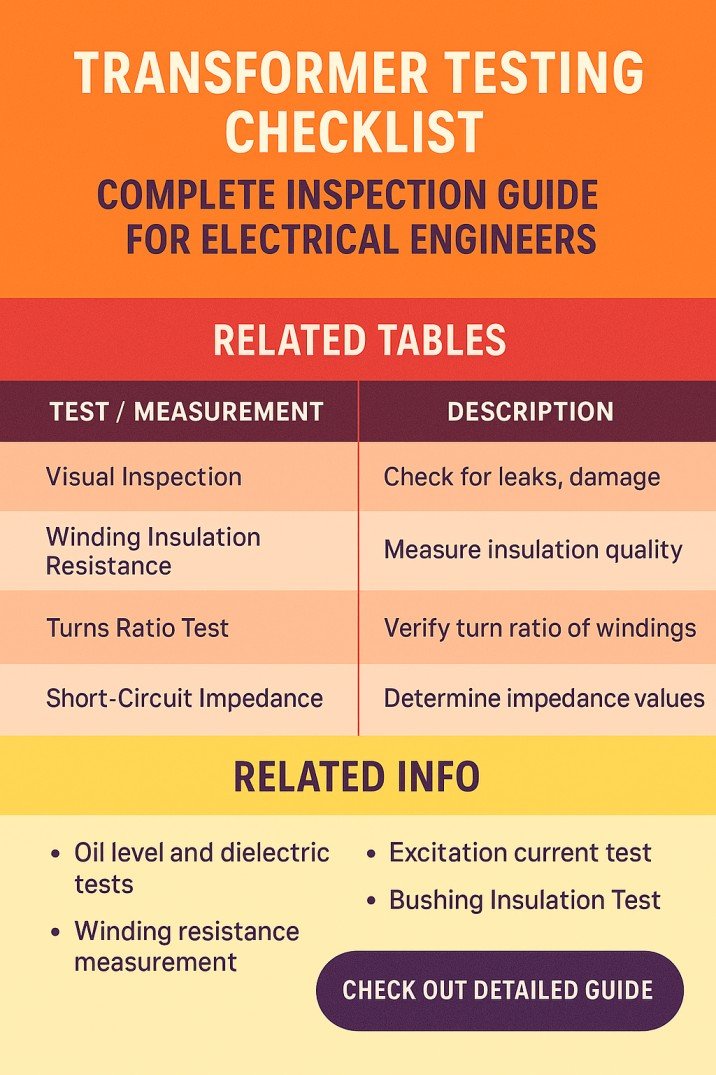
Routine Tests Required by IEC Standards
Routine tests verify that every manufactured transformer meets the required performance standards. These tests are mandatory under the IEC standards for oil filled transformers.
The tests are conducted at the factory before delivery.
| Test | Purpose |
|---|---|
| Winding Resistance Test | Verify conductor integrity |
| Voltage Ratio Test | Confirm correct turns ratio |
| Vector Group Test | Verify phase displacement |
| Insulation Resistance Test | Measure insulation health |
| No-Load Loss Test | Evaluate core performance |
| Load Loss Test | Measure copper losses |
Routine testing ensures that each transformer leaving the factory meets the specified performance requirements.
Find all about Transformer Disconnect Sizing
Type Tests for Oil Filled Transformers
Type tests are performed on prototype units to confirm that the transformer design meets international performance standards.
According to IEC standards for oil filled transformers, type tests include several advanced procedures.
| Type Test | Objective |
|---|---|
| Temperature Rise Test | Verify thermal design |
| Lightning Impulse Test | Simulate lightning surges |
| Switching Impulse Test | Evaluate insulation coordination |
| Short Circuit Test | Confirm mechanical strength |
These tests are typically performed in specialized high-voltage laboratories.
Special Tests for Critical Applications
Some installations require additional testing depending on system requirements or customer specifications.
The IEC standards for oil filled transformers also define special tests for such scenarios.
Know more about Transformers Earthspark Size Chart
Examples include:
• Partial discharge measurement
• Acoustic noise testing
• Vacuum pressure tests
• Zero sequence impedance measurement
Special tests are commonly required for transformers used in power plants, HV substations, or critical infrastructure facilities.
Safety and Protection Requirements
Transformer safety is essential for both personnel protection and system reliability. The IEC standards for oil filled transformers address multiple safety aspects including mechanical protection, thermal limits, and fire risk mitigation.
Pressure Relief Devices
Oil-filled transformers may experience internal faults that generate gas pressure. Pressure relief devices prevent tank rupture by safely releasing excess pressure.
Know all about Transformer Sizing for EV Charger
Buchholz Relay Protection
For large oil-filled transformers, Buchholz relays provide early detection of internal faults such as insulation breakdown or winding failures.
Fire Protection Considerations
Transformer oil is flammable, which makes fire safety a key concern in power installations.
Common protection measures include:
| Protection Method | Description |
|---|---|
| Oil Containment Pits | Prevent environmental contamination |
| Fire Walls | Limit fire spread |
| Nitrogen Inerting | Reduce oxygen presence |
| Fire Detection Systems | Early warning capability |
These precautions significantly reduce the risk associated with transformer oil fires. Find more Transformer calculators here
Maintenance Guidelines Based on IEC Practices
Although IEC primarily focuses on design and testing, operational practices also follow recommendations aligned with IEC standards for oil filled transformers.
Regular maintenance activities typically include:
• Dissolved Gas Analysis (DGA)
• Oil dielectric strength testing
• Moisture content measurement
• Winding resistance monitoring
• Infrared thermal inspection
Routine monitoring allows early detection of insulation deterioration, overheating, or internal faults.
Advantages of Following IEC Transformer Standards
Compliance with the IEC standards for oil filled transformers provides several benefits for utilities and manufacturers.
| Benefit | Description |
|---|---|
| Global Compatibility | Equipment can operate in international markets |
| Improved Reliability | Standardized testing ensures durability |
| Safety Assurance | Reduced risk of electrical failure |
| Regulatory Compliance | Meets international certification requirements |
| Long Service Life | Optimized thermal and insulation design |
Because of these advantages, IEC transformer standards are widely adopted across Europe, Asia, the Middle East, and many other regions.
Explore all about Transformer Bond Sizing
Practical Compliance Checklist
Engineers and procurement teams often use compliance checklists to verify that a transformer meets all required standards.
Below is a simplified checklist based on IEC standards for oil filled transformers.
| Compliance Area | Key Requirement |
|---|---|
| Design | Meets IEC 60076 specifications |
| Insulation | Verified by dielectric testing |
| Oil Quality | Complies with IEC 60296 |
| Routine Testing | Completed before shipment |
| Type Testing | Verified during prototype stage |
| Protection | Includes pressure relief and monitoring |
Following this checklist helps utilities avoid installation risks and ensures proper transformer performance.
Know more about Transformer Cooling Methods: ONAN, ONAF, OFAF & More
Conclusion
Power transformers are critical assets in electrical networks, and their reliability directly affects power system stability. The IEC standards for oil filled transformers provide a comprehensive framework covering design principles, insulation systems, cooling methods, testing procedures, and safety requirements.
By adhering to these standards, manufacturers can produce high-quality transformers that meet international performance expectations. Utilities benefit from improved reliability, reduced failure risks, and longer equipment life cycles. Know more about Transformer Sizing for Residential Building
Follow Us on Social:
Subscribe our Newsletter on Electrical Insights for latest updates from Electrical Engineering Hub
#IECStandards, #OilFilledTransformers, #TransformerStandards, #ElectricalEngineering, #PowerTransformers, #IECCompliance, #TransformerTesting, #ElectricalDesign, #PowerSystemEngineering, #SubstationEngineering