Cable Trench Inspection Checklist: Comprehensive Guide
A properly structured Cable Trench Inspection Checklist is essential for ensuring safe installation, long-term reliability, and compliance in underground electrical systems. In high-voltage and medium-voltage networks, even a small oversight in trench inspection can lead to insulation failure, grounding issues, or serious safety hazards. This guide explains a practical and industry-focused approach to inspection that helps engineers, site supervisors, and maintenance teams maintain high standards during cable laying and post-installation checks.
A well-prepared Cable Trench Inspection Checklist ensures that every stage of trench construction is verified, from excavation depth to final backfilling. It also helps identify risks such as improper bedding, exposed cables, and inadequate separation from other utilities. When followed correctly, it improves system performance and reduces long-term maintenance costs.
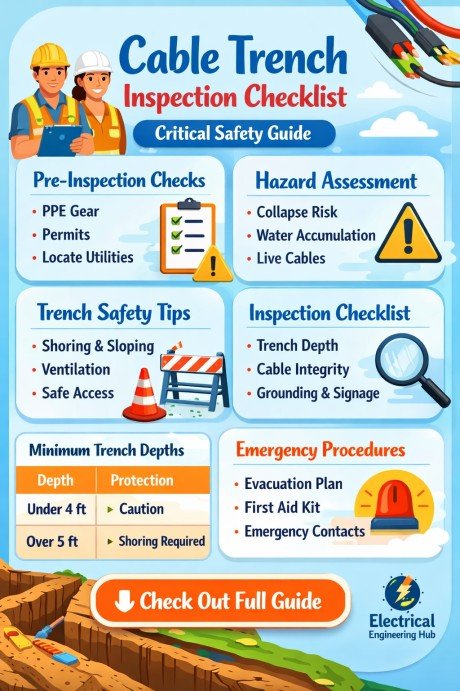
Table of Contents
Field engineers often rely on a structured Cable Trench Inspection Checklist to confirm that duct banks, warning tapes, and protective layers are installed according to design drawings. This reduces the chances of rework and ensures compliance with electrical safety codes. Without a proper checklist, critical details like soil compaction and thermal backfill quality may be overlooked. Access our powerful online calculator now Conduit Fill Calculator (NEC Standard)
Another important aspect of a Cable Trench Inspection Checklist is ensuring that environmental and mechanical protection measures are properly implemented. This includes verifying drainage conditions, trench stability, and protection against external mechanical stress.
Know everything about NEC Article 310 which include Ampacity Rules, Wire Sizing & Code Secrets Electricians Must Know
Key Takeaways
- Proper trench depth and alignment must match approved engineering drawings
- Bedding material should be uniform and free from sharp objects
- Warning tapes and markers must be placed at correct depths
- Proper separation between power and communication cables is essential
- Documentation at every stage improves compliance and traceability
Experience fast and accurate results using our online tool Conduit Fill Calculator for Multiple Wire Sizes
Importance of Cable Trench Inspection Checklist in Electrical Projects
The role of a Cable Trench Inspection Checklist in electrical infrastructure projects cannot be overstated. It acts as a quality control tool that ensures safety, reliability, and regulatory compliance. In HV and LV installations, trench faults often lead to overheating, insulation breakdown, or even electrical faults.
One of the major advantages of using a Cable Trench Inspection Checklist is risk reduction. It helps identify improper trench width, insufficient depth, or poorly compacted soil before cables are energized. This proactive approach prevents costly failures and downtime.
Pre-Inspection Safety Preparation
Before starting any field inspection, safety preparation is critical. A structured Cable Trench Inspection Checklist typically begins with site safety verification, including barricading, PPE compliance, and hazard identification.
Inspectors must ensure that excavation areas are stable and free from water accumulation. Gas testing may be required in confined trench environments. Proper coordination with civil teams ensures that all utilities are correctly mapped.
Explore our professional online tool for quick calculations Conduit Fill Calculator for Fiber Optic Cable
Step-by-Step Inspection Process
A systematic approach improves accuracy and reduces oversight during field verification. The following table outlines a practical inspection flow:
| Inspection Stage | Key Checks | Acceptance Criteria |
|---|---|---|
| Excavation | Depth, width, alignment | As per approved drawings |
| Bedding Layer | Material type, thickness | Sand or fine soil, uniform layer |
| Cable Placement | Bend radius, spacing | No sharp bends or stress |
| Protection Layer | Tiles, bricks, covers | Fully covered and aligned |
| Warning Tape | Placement depth | Visible at standard depth |
| Backfilling | Compaction level | Properly compacted soil |
Following a Cable Trench Inspection Checklist at each stage ensures that no critical step is missed during installation.
Learn more about Demand Factor as Per NEC
Common Issues Found During Inspection
| Issue Type | Possible Cause | Risk Level |
|---|---|---|
| Improper trench depth | Poor excavation control | High |
| Cable insulation damage | Sharp stones in bedding | High |
| Water accumulation | Inadequate drainage | Medium |
| Missing warning tape | Installation oversight | Medium |
| Uneven backfilling | Poor compaction | High |
A detailed Cable Trench Inspection Checklist helps reduce these issues significantly by enforcing strict quality control at every phase.
Integration with High Voltage Standards and Compliance
For HV projects, trench design must align with international and local electrical codes. This is where reference standards become highly important. Engineers often align inspection procedures with technical requirements such as thermal resistivity, soil conditions, and cable derating factors.
For deeper technical understanding, you can refer to this guide on High Voltage Cable Trench Depth Standards, which explains how depth requirements directly impact system safety and performance.
A Cable Trench Inspection Checklist aligned with these standards ensures proper insulation clearance, thermal stability, and long-term reliability of underground power networks.
Access our powerful online calculator now Conduit Fill Calculator (NEC Standard)
Maintenance and Documentation Practices
Post-installation documentation is often ignored, but it plays a crucial role in lifecycle management. Every Cable Trench Inspection Checklist should include recordkeeping of photographs, measurements, and approval signatures.
Proper documentation helps during future maintenance, fault tracing, and system upgrades. It also ensures accountability and compliance with audit requirements. Regular inspection cycles further improve system durability and reduce unexpected failures.
FAQs
1. What is a Cable Trench Inspection Checklist used for?
It is used to verify that underground cable trenches meet safety, engineering, and installation standards before energizing the system.
2. Why is trench depth important in cable installation?
Correct depth prevents mechanical damage, overheating, and interference from surface loads or other utilities.
3. What materials are used in cable trench bedding?
Typically, fine sand or selected soil is used to avoid damage to cable insulation and ensure proper thermal dissipation. Use our online tool EMT Conduit Fill Calculator for Accurate Electrical Wiring and conduits selection
4. How often should trench inspections be done?
Inspections should be conducted during excavation, cable laying, and after backfilling to ensure compliance at every stage.
5. Can poor trench inspection cause electrical faults?
Yes, improper inspection can lead to insulation failure, cable overheating, and long-term system breakdowns.
Follow Us on Social:
Subscribe our Newsletter on Electrical Insights for latest updates from Electrical Engineering Hub
#cabletrenchinspectionchecklist,#cabletrenchinspection,#trenchinspectionchecklist,#cabletrenchsafety,#trenchsafety,#electricaltrench,#civilinspection,#siteinspection,#constructionchecklist,#qualitycontrolengineering