
Earth Loop Impedance Test With Multimeter | Complete Electrical Safety Testing Guide for Accurate Results
Electrical safety testing is one of the most important parts of maintaining a secure home, office, or industrial installation. A proper earth loop impedance test helps electricians identify faults in the earthing system and ensures protective devices operate correctly during a fault condition. Many professionals and technicians now perform an Earth Loop Impedance Test With Multimeter to verify whether an electrical circuit can safely carry fault current and disconnect power within the required time.
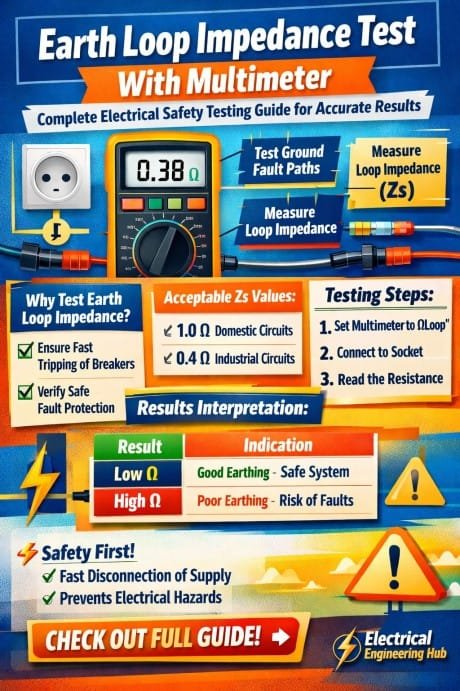
Table of Contents
This guide explains the purpose of earth loop impedance testing, how to perform it safely with a multimeter, common mistakes to avoid, and the best practices for obtaining accurate readings.
What Is Earth Loop Impedance?
Earth loop impedance refers to the total resistance encountered by fault current as it travels through the electrical system and returns to the power source. The measurement includes:
- Phase conductor resistance
- Protective earth conductor resistance
- Transformer impedance
- Supply cable resistance
- Earthing system resistance
Low earth loop impedance ensures that protective devices such as circuit breakers and fuses trip quickly during an electrical fault. If the impedance is too high, fault current may not be sufficient to disconnect the supply, increasing the risk of electric shock and fire hazards.
Know more about How to Check 3 Phase Motor Winding with Multimeter
Why Earth Loop Impedance Testing Is Important
Performing an Earth Loop Impedance Test With Multimeter helps maintain electrical safety standards and prevents dangerous situations in residential and commercial systems.
The test is important because it:
| Benefit | Description |
|---|---|
| Improves Safety | Reduces the risk of electric shock and electrical fires |
| Verifies Earthing | Confirms the grounding system works properly |
| Ensures Compliance | Helps meet electrical code requirements |
| Detects Faults | Identifies loose connections and damaged cables |
| Protects Equipment | Prevents damage to appliances and electrical devices |
A faulty grounding system can lead to severe accidents. Regular testing ensures all protective systems remain effective over time.
Choosing the right meter can improve troubleshooting efficiency. Explore our recommendations for the Best Multimeter Under $50 before making a purchase.
Can You Perform Earth Loop Impedance Testing With a Multimeter?
A standard digital multimeter is not a dedicated loop impedance tester, but it can still help measure related values and identify grounding problems. Electricians sometimes use a multimeter to perform preliminary checks before using specialized earth loop testers.
When using a multimeter for this purpose, you can:
- Measure continuity of the earth conductor
- Check voltage between phase and earth
- Verify resistance in grounding connections
- Identify abnormal voltage drops
However, for certified inspection reports and highly accurate measurements, professional loop impedance testers are recommended.
Find all about How to Test Resistance With Multimeter
Tools Required for Testing
Before starting an Earth Loop Impedance Test With Multimeter, gather the following tools:
| Tool | Purpose |
|---|---|
| Digital Multimeter | Measures voltage and resistance |
| Insulated Gloves | Protects against electric shock |
| Safety Shoes | Reduces grounding risk |
| Screwdrivers | Accesses terminals safely |
| Test Leads | Connects multimeter probes |
| Circuit Diagram | Helps identify the circuit layout |
Always use calibrated equipment to improve accuracy.
Safety Precautions Before Testing
Electrical testing should never be performed carelessly. Follow these important safety measures before handling any live circuit.
Turn Off Unnecessary Loads
Disconnect sensitive appliances and heavy equipment before testing to avoid fluctuations.
Wear Personal Protective Equipment
Use insulated gloves, protective glasses, and proper footwear while working near electrical panels.
Know more about How to Test Solar Panel With Multimeter
Inspect the Multimeter
Ensure the test leads are not damaged and confirm the multimeter is functioning correctly.
Follow Lockout Procedures
If working in an industrial environment, apply lockout and tagout procedures where necessary.
Avoid Wet Conditions
Never perform electrical testing in wet or damp areas because moisture increases shock risk.
Step-by-Step Earth Loop Impedance Test With Multimeter
The following procedure explains how to conduct a basic Earth Loop Impedance Test With Multimeter safely and effectively.
Step 1: Set the Multimeter
Turn the digital multimeter to the AC voltage setting. Select a range higher than the system voltage.
For example:
- 250V range for 230V systems
- 600V range for industrial systems
Know more about How to Check Transistor With Multimeter
Step 2: Measure Phase to Earth Voltage
Place one probe on the phase terminal and the other on the earth terminal.
A healthy electrical installation usually shows:
| System Type | Typical Reading |
|---|---|
| Single Phase 230V | 220V to 240V |
| Three Phase 415V | Around 230V phase to earth |
Abnormal readings may indicate poor grounding or loose connections.
Step 3: Check Earth Continuity
Switch the multimeter to resistance mode.
Measure continuity between the earth electrode and the main grounding terminal. A low resistance value generally indicates a good earth connection.
Typical acceptable resistance values:
| Earthing Condition | Resistance Range |
|---|---|
| Excellent Grounding | Below 1 Ohm |
| Acceptable Grounding | 1 to 5 Ohms |
| Poor Grounding | Above 5 Ohms |
Know more about Earth Cable Size for Lightning Protection
Step 4: Inspect Voltage Drop
Check voltage differences between neutral and earth.
A significant voltage drop may indicate:
- Loose neutral connection
- Corroded grounding conductor
- High resistance in the earth path
- Faulty distribution board connections
Step 5: Compare Results With Standards
Compare your readings with local electrical regulations and manufacturer recommendations.
If measurements exceed safe limits, corrective action should be taken immediately.
Common Problems Found During Testing
An Earth Loop Impedance Test With Multimeter often reveals hidden electrical problems that may otherwise remain unnoticed.
Loose Earthing Connections
Loose terminals increase resistance and reduce fault current flow.
Corroded Ground Rods
Moisture and soil chemicals can corrode grounding electrodes over time.
Learn more about earthing cable size as per iec
Damaged Cables
Old or damaged insulation can affect earth continuity and system protection.
Incorrect Wiring
Improper phase and neutral connections create unsafe operating conditions.
Difference Between Loop Impedance Tester and Multimeter
Many people confuse a standard multimeter with a dedicated loop impedance tester. While both are useful, they serve different purposes.
| Feature | Multimeter | Loop Impedance Tester |
|---|---|---|
| Measures Voltage | Yes | Yes |
| Measures Resistance | Yes | Limited |
| Direct Loop Impedance Reading | No | Yes |
| High Accuracy | Moderate | High |
| Suitable for Certification | No | Yes |
| Cost | Affordable | Expensive |
A multimeter is suitable for basic diagnostics, while certified inspections require professional testing equipment.
Dive deeper into instrument earthing iec standard
Best Practices for Accurate Results
Accurate testing depends on proper procedure and consistent measurement techniques.
Use a Quality Multimeter
Cheap or damaged meters may produce unstable readings.
Keep Test Leads Clean
Dirty probes increase contact resistance and affect measurement accuracy.
Test During Stable Conditions
Avoid testing during voltage fluctuations or unstable supply conditions.
Record All Measurements
Maintain a testing log for future comparison and maintenance planning.
Inspect Earthing System Regularly
Routine inspections help identify deterioration before serious faults occur.
Know more about IEC Standard for Earthing System
How Often Should Earth Loop Impedance Testing Be Performed?
Testing frequency depends on the installation type and operating conditions.
| Installation Type | Recommended Testing Interval |
|---|---|
| Residential Homes | Every 5 Years |
| Commercial Buildings | Every 3 to 5 Years |
| Industrial Facilities | Annually |
| Construction Sites | Every 3 Months |
Frequent inspections are important in harsh environments where moisture, dust, or vibration may affect grounding performance.
Signs of Poor Earth Loop Impedance
Several warning signs may indicate issues in the grounding system.
- Frequent circuit breaker tripping
- Mild electric shocks from appliances
- Flickering lights
- Overheating electrical panels
- Burning smell near wiring
- Equipment malfunction during faults
Ignoring these symptoms can create serious safety hazards.
Know more about IEC Standard for Neutral to Earth Voltage – Limits, Measurement & Safety Guidelines
Final Thoughts
An Earth Loop Impedance Test With Multimeter is an essential part of electrical safety inspection and preventive maintenance. While a standard multimeter cannot fully replace a professional loop impedance tester, it remains useful for identifying grounding issues, checking continuity, and verifying voltage conditions.
Proper earthing protects people, equipment, and electrical installations from dangerous fault currents. By following safe testing procedures, using calibrated tools, and performing regular inspections, electricians and technicians can maintain reliable grounding systems and improve overall electrical safety.
Whether you are inspecting a residential panel, commercial building, or industrial installation, understanding earth loop impedance testing helps ensure compliance, safety, and long-term system performance.
Know more about Ground Fault Protection vs Earth Leakage Protection
Follow Us on Social:
Subscribe our Newsletter on Electrical Insights for latest updates from Electrical Engineering Hub
#EarthLoopImpedanceTest,#MultimeterTesting,#ElectricalSafety,#LoopImpedance,#ElectricianTools,#ElectricalTesting,#FaultLoopTest,#ElectricalMaintenance,#PowerSystemSafety,#IndustrialElectrical
