How to Test Resistance With Multimeter: Step-by-Step Guide for Accurate Electrical Measurements | Professional DIY & Technician Guide
Understanding electrical resistance is essential for anyone working with circuits, whether you are a technician, engineer, or DIY enthusiast. A multimeter is one of the most reliable tools for measuring resistance, checking continuity, and diagnosing electrical faults. Proper use of this tool ensures accurate readings and prevents damage to components.
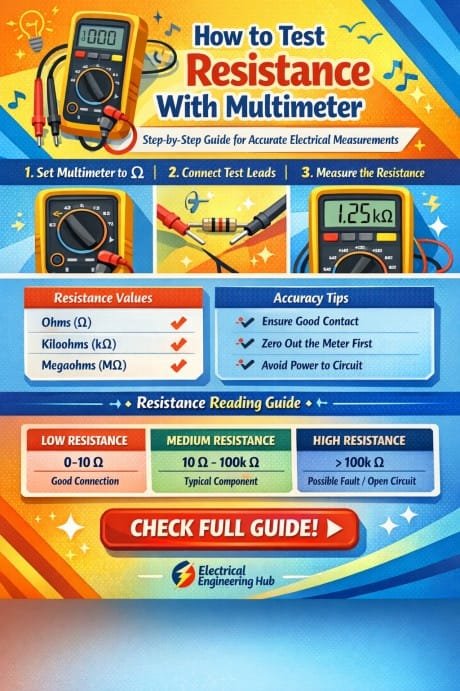
Table of Contents
This guide explains the complete process in a practical and easy-to-follow way, helping you build confidence in electrical testing and troubleshooting tasks.
Understanding Resistance Measurement in Electrical Circuits
Before learning How to Test Resistance With Multimeter, it is important to understand what resistance actually means. Resistance is the opposition to the flow of electric current in a circuit. It is measured in ohms (Ω) and can vary depending on the material, length, and condition of a component.
Know more about How to Check 3 Phase Motor Winding with Multimeter
A digital multimeter or analog ohmmeter is commonly used for resistance measurement. These devices help detect faulty components, broken wires, or short circuits in electrical systems.
Common applications of resistance testing include:
- Checking resistors in electronic boards
- Verifying wiring continuity
- Diagnosing faulty heating elements
- Testing sensors and coils
- Identifying open or short circuits
Tools Required for Accurate Resistance Testing
To perform accurate measurements, you need the right setup. The quality of results depends on proper tool usage and preparation.
| Tool | Purpose |
|---|---|
| Digital Multimeter | Measures resistance, voltage, and current |
| Test Leads | Connect multimeter to circuit points |
| Safety Gloves | Protection from electrical hazards |
| Component Data Sheet | Helps compare expected resistance values |
| Clean Work Surface | Ensures accurate and stable readings |
A digital multimeter is preferred due to its precision and ease of reading. However, analog meters are still used in some troubleshooting scenarios.
Step-by-Step Method for Resistance Testing
When performing How to Test Resistance With Multimeter, following a structured process ensures accuracy and prevents measurement errors.
Step 1: Turn Off Power Supply
Always disconnect the circuit from any power source. Resistance measurement must be done on a de-energized circuit to avoid incorrect readings and safety risks.
Know more about What is the Difference Between GFCI and Overcurrent Protection?
Step 2: Set the Multimeter to Ohms Mode
Rotate the dial of the multimeter to the resistance setting (Ω). If your device has multiple ranges, select an appropriate range based on the expected resistance value.
Before buying a digital meter, read our comparison of the Best Multimeter Under $50 to find the right option for your needs.
Step 3: Insert Test Leads Properly
Connect the black lead to COM port and the red lead to the VΩ port. Ensure the probes are clean and undamaged for precise readings.
Step 4: Connect Probes to Component
Place the probes across the component or section of the circuit you want to test. Polarity does not matter in resistance measurement.
Step 5: Read the Display
Observe the reading on the screen. A stable value indicates proper resistance, while fluctuating or infinite readings may indicate a fault.
Interpreting Multimeter Readings
Understanding the results is a key part of How to Test Resistance With Multimeter. The values you see on the display help diagnose the condition of components.
| Reading Type | Meaning |
|---|---|
| 0–1 Ω | Very low resistance or short circuit |
| Normal rated value | Component is healthy |
| OL or Infinite | Open circuit or broken connection |
| High unstable reading | Faulty or damaged component |
Correct interpretation helps in effective troubleshooting and reduces unnecessary replacement of components.
Know more about Coincidence Factor vs Diversity Factor: The Load Calculation Mistake Engineers Still Make
Common Mistakes to Avoid During Testing
Many beginners face inaccurate results due to simple mistakes. Avoiding these errors improves reliability.
- Measuring resistance in a live circuit
- Touching metal parts of probes
- Not zeroing the meter (in analog models)
- Using incorrect range setting
- Testing without disconnecting components
Careful handling ensures that How to Test Resistance With Multimeter delivers precise and repeatable results.
Applications in Real-World Electrical Work
Resistance testing is widely used in industrial and household electrical systems. It plays a crucial role in maintenance and repair work.
Electronics Repair
Technicians use resistance measurement to check resistors, capacitors, and PCB traces for faults.
Automotive Diagnostics
Car mechanics test sensors, ignition coils, and wiring harnesses to identify electrical issues.
Home Electrical Systems
Electricians check switches, sockets, and wiring continuity to ensure safe operation.
Know more about How to Wire a 480/277 Lighting System: Step-By-Step Guide for Safe Commercial Installation
Industrial Equipment
Large machines require regular insulation and circuit resistance checks to avoid breakdowns.
Comparison of Multimeter Types for Resistance Testing
Choosing the right device improves accuracy and efficiency.
| Type | Advantages | Limitations |
|---|---|---|
| Digital Multimeter | Accurate, easy to read, compact | Slight delay in response |
| Analog Multimeter | Good for observing fluctuations | Less precise, harder to read |
| Clamp Meter (with resistance mode) | Convenient for field work | Limited resistance range |
For most users, a digital multimeter is the best choice for How to Test Resistance With Multimeter due to its reliability and ease of use.
Safety Precautions During Electrical Testing
Safety should always be a priority when working with electrical systems. Even low-voltage circuits can cause damage if handled improperly.
- Always disconnect power before testing
- Avoid touching exposed metal parts
- Use insulated test leads
- Wear protective gloves if necessary
- Keep workspace dry and clean
Know more about Difference Between Relay and Contactor: 7 Powerful Reasons This Guide Makes It Easy
Following these precautions ensures safe and efficient resistance measurement.
Troubleshooting Based on Resistance Values
Resistance readings are often used to identify problems in circuits. Understanding patterns helps in faster diagnostics.
- No continuity (OL reading): Broken wire or open circuit
- Very low resistance: Short circuit between conductors
- Gradual increase in resistance: Component heating or wear
- Inconsistent values: Loose connection or internal damage
By analyzing these results, technicians can quickly locate faults without dismantling entire systems. Use our online tool Kirchhoffs Law Calculator: Instantly Solve KCL & KVL Circuits Online
Practical Tips for Better Accuracy
Improving measurement accuracy requires good technique and attention to detail.
- Calibrate your multimeter regularly
- Keep probes clean and sharp
- Avoid holding both probe tips with fingers
- Use stable contact points on components
- Compare readings with manufacturer specifications
These small adjustments significantly improve the reliability of How to Test Resistance With Multimeter in real applications.
Conclusion
Resistance testing is a fundamental skill in electrical and electronic work. With proper understanding, correct tools, and careful technique, anyone can perform accurate measurements and diagnose circuit issues effectively. Whether you are repairing home appliances or working on industrial systems, mastering How to Test Resistance With Multimeter will enhance your troubleshooting efficiency and ensure safer electrical practices.
Know more about Power Factor vs Crest Factor: Important Differences & Comparison
Consistent practice and attention to detail will help you become more confident in handling multimeter-based diagnostics and improve your overall technical capability in electrical testing.
Get new guides in your feed. Follow Electrical Insights on LinkedIn for new electrical standards guides, calculators and design tips from Azad Circuit Hub.
#multimeter,#resistance,#ohmmeasurement,#electricaltesting,#electronics,#howto,#diy,#electrician,#continuitytest,#troubleshooting