Weak Ignition Coil Symptoms: 9 Proven Signs Every Driver Can Trust
Understanding Weak Ignition Coil Symptoms is essential for every driver who wants a smooth and reliable ride. A failing ignition coil affects engine performance, fuel efficiency, and overall drivability. Many drivers overlook the early signs, which leads to bigger repair costs later. This guide explains the most trusted signs that your ignition coil is getting weak and what you should watch closely. The goal is to make the information simple, clear, and practical.
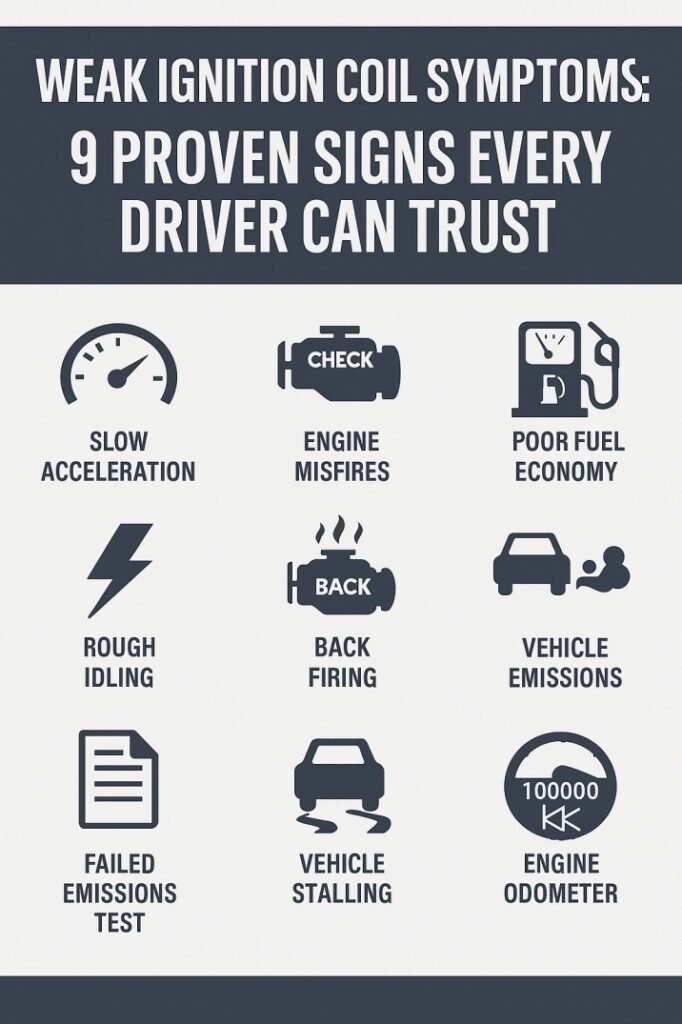
Table of Contents
A weak ignition coil disrupts the spark needed for combustion. When this spark becomes inconsistent, the engine struggles. This can appear in different ways, from rough idle to power loss. By learning all the important signs, you can take action at the right time and avoid unexpected breakdowns.
Engine Misfire
One of the most noticeable Weak Ignition Coil Symptoms is an engine misfire. The engine needs a strong spark to ignite the air-fuel mixture. When the ignition coil weakens, the spark becomes weak or irregular.
Misfires usually appear when accelerating, idling, or climbing a hill. Drivers may also hear popping sounds from the exhaust. If the misfire continues, fuel economy drops and engine damage can occur.
Know more about Best Gaming Laptop Under $500: Budget Guide 2025
Rough Idle
A rough idle is another common clue. The engine should idle smoothly when the car is stopped. If the coil loses strength, the spark becomes unstable. That instability causes the engine to shake or vibrate.
Drivers often feel the vibration through the steering wheel or car body. This is a classic part of Weak Ignition Coil Symptoms and should not be ignored. Fixing it early helps improve performance.
Hard Starting
A weak ignition coil makes cold starts more difficult. The engine needs a powerful spark to start quickly. When the coil is weak, the engine cranks longer than usual.
Morning starts may be worse because the battery voltage is slightly lower in cold conditions. Hard starting is a warning sign that shows the coil is no longer delivering the required spark energy.
Power Loss During Acceleration
If the vehicle hesitates during acceleration, the coil may be struggling. A strong spark ensures complete combustion. When the coil weakens, the engine fails to produce enough power.
This hesitation becomes more noticeable under load. It affects highway merging, overtaking, and quick acceleration. Many drivers describe it as sluggish performance, which is a key part of Weak Ignition Coil Symptoms.
Know more about What is Knock Sensor? A Comprehensive Guide
Poor Fuel Economy
Fuel efficiency drops when the ignition coil is weak. Incomplete combustion wastes fuel. The engine tries to compensate by injecting more fuel to maintain power.
A sudden increase in fuel consumption without a mechanical reason often points to ignition issues. Tracking fuel usage helps detect this symptom early.
Check Engine Light On
A weak ignition coil often triggers the check engine light. Modern vehicles use sensors to detect misfires and ignition timing problems. When the coil fails to deliver consistent spark energy, the ECU logs an error.
Common trouble codes include P0300 to P0312, depending on the misfire location. The check engine light is one of the most trusted Weak Ignition Coil Symptoms and should always be diagnosed promptly.
Backfiring or Fuel Smell
A weak ignition coil can cause unburned fuel to escape into the exhaust system. When this fuel burns outside the combustion chamber, it creates backfiring.
Drivers may also notice a strong fuel smell. This happens because the air-fuel mixture is not igniting properly. Continuous backfiring can damage the catalytic converter. That makes early detection important for both safety and repair cost.
Know more about Throttle Position Sensor Working & Types: Best Guide
Engine Stalling
Stalling happens when the engine stops unexpectedly. A weak ignition coil interrupts the spark signal. When this happens at idle or low speed, the engine may shut off completely.
Stalling can be dangerous in traffic. It is one of the severe Weak Ignition Coil Symptoms and requires quick inspection. Replacing the coil often solves the issue immediately.
Reduced Engine Performance
Overall engine performance declines as the ignition coil weakens. Drivers may notice sluggish throttle response, uneven acceleration, and reduced engine smoothness.
The car may feel heavier and less responsive. This general performance drop is often mistaken for fuel issues or clogged injectors. However, ignition coils are a more common cause. Understanding this helps avoid unnecessary repairs.
Know more about Acoustic Emission Analysis: Best Guide
Table: Common Weak Ignition Coil Symptoms and Their Impact
| Symptom | Driver Experience | Impact on Vehicle |
|---|---|---|
| Misfire | Jerking, popping sounds | Loss of power |
| Rough idle | Vibration at standstill | Reduced comfort |
| Hard starting | Longer cranking | Battery strain |
| Power loss | Weak acceleration | Unsafe driving on highways |
| Poor fuel economy | More fuel consumption | Higher running cost |
| Check engine light | Warning on dashboard | Diagnostic trouble codes |
| Backfiring | Loud noises, fuel smell | Catalytic converter damage |
| Stalling | Engine stops | Safety risk |
| Low performance | Sluggish driving | Uneven combustion |
Table: Quick Comparison of Weak vs. Healthy Ignition Coil
| Condition | Healthy Coil | Weak Coil |
|---|---|---|
| Spark Strength | Strong | Weak |
| Combustion | Complete | Incomplete |
| Engine Response | Smooth | Hesitant |
| Fuel Usage | Normal | High |
| Reliability | Stable | Unpredictable |
Why These Signs Matter
All these Weak Ignition Coil Symptoms show that the ignition system is not working the way it should. A weak coil affects the entire engine. It disrupts combustion, reduces efficiency, and increases wear on other components.
Know more about Top 15 Smart EV Chargers with Solar Integration for Efficient Home Charging
By recognizing the signs early, drivers can prevent costly repairs. Replacing a weak ignition coil is affordable compared to engine damage or catalytic converter failure. That is why paying attention to these symptoms improves both safety and long-term reliability.
How to Confirm Ignition Coil Problems
Drivers can check for these signs at home. However, a proper diagnosis requires testing. Mechanics use tools such as:
- OBD scanners
- Spark testers
- Multimeters
- Coil stress tests
These tools confirm whether the ignition coil is weak or failing. If the results show low output, replacement is the best option. Ignition coils usually wear out with age, heat, and vibration.
Know more about OBD2 Pinout: A Comprehensive Guide to OBD2 Connector Wiring
Final Thoughts
Recognizing Weak Ignition Coil Symptoms helps every driver maintain a healthy engine. These nine proven signs provide a reliable guide for early detection. Look for misfires, rough idle, hard starting, poor fuel economy, power loss, and check engine warnings. Stalling, backfiring, and general performance decline are also important indicators.
Taking action at the right time restores performance, improves fuel economy, and prevents expensive repairs. When in doubt, get the ignition system inspected by a professional. It keeps your vehicle running smoothly and safely for years.
Know more about Best EV Charger for Apartment Parking: A Full Guide for Easy Charging
Follow Us on Social:
Subscribe our Newsletter on Electrical Insights for latest updates from Electrical Engineering Hub
#weakignitioncoilsymptoms, #ignitioncoilfailure, #carenginetroubles, #autosymptoms, #engineperformanceissues, #misfirecauses, #carmaintenanceguide, #autotechinsights, #enginehealthtips, #mechanicalproblems