Solar Inverter Selection: A Complete Guide for Optimal Solar Power Performance
Selecting the right inverter is a critical step in any solar power system design. The solar inverter is the heart of a photovoltaic (PV) system, converting direct current (DC) produced by solar panels into alternating current (AC) suitable for homes, offices, or industries. Proper solar inverter selection ensures maximum efficiency, longevity, and reliability of the solar installation. Many factors must be considered to choose an inverter that matches the system size, load requirements, and environmental conditions.
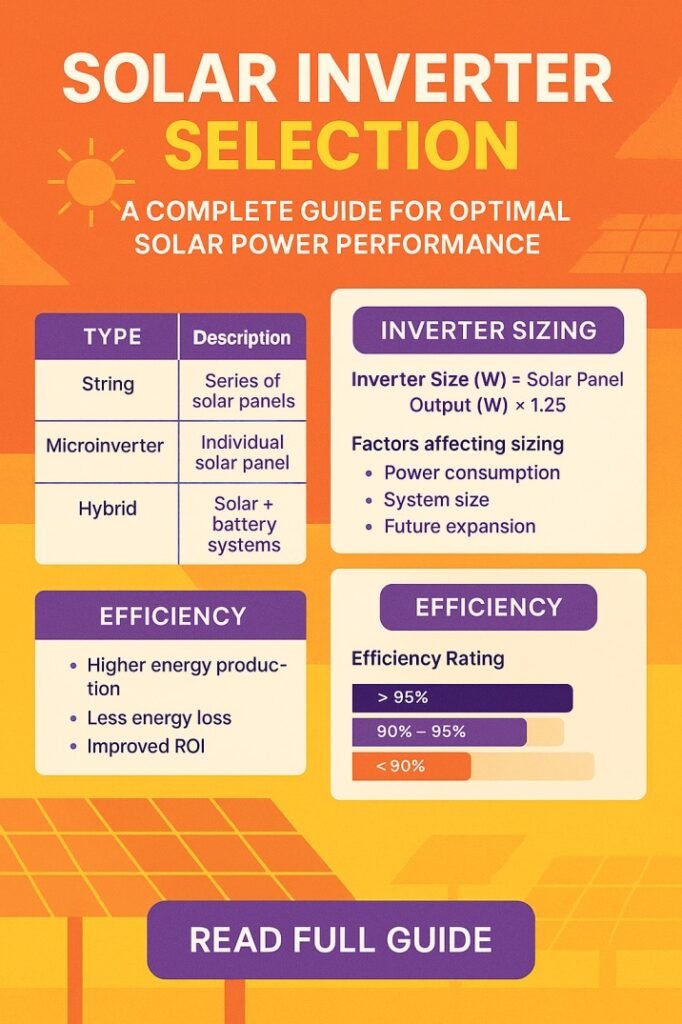
Table of Contents
Understanding Solar Inverters
A solar inverter is not just a converter; it also regulates the voltage, monitors system performance, and protects the PV system from electrical faults. Inverter types primarily include string inverters, central inverters, and microinverters. Each type has advantages depending on system size, shading conditions, and installation complexity.
Find all about Renewable Energy Grid Compliance UK
Types of Solar Inverters
| Inverter Type | Description | Ideal Application | Pros | Cons |
|---|---|---|---|---|
| String Inverter | Connects multiple panels in series | Residential and small commercial | Cost-effective, easy maintenance | Performance drops with shading |
| Central Inverter | High-capacity inverter for large PV arrays | Utility-scale solar farms | Efficient for large systems, fewer units | Expensive, single point of failure |
| Microinverter | Individual inverter for each panel | Residential with complex rooftops | Maximizes output per panel, shading resistant | Higher initial cost, complex installation |
Key Parameters in Solar Inverter Selection
When choosing an inverter, several technical specifications must be considered to ensure compatibility and optimal performance.
Find more about Best Medium Voltage Transformers for Solar Plants
1. Inverter Capacity
The capacity of the inverter should match the total output of the solar array. Undersizing an inverter reduces the usable power, while oversizing can lead to unnecessary costs. Typically, the inverter capacity is chosen as 80–120% of the total DC power of the solar panels.
2. Input Voltage Range
The inverter must handle the voltage generated by the solar panels. A wide input voltage range provides flexibility for varying sunlight conditions and panel configurations. Check the minimum and maximum DC voltage ratings to avoid system shutdowns during low or high solar irradiance.
3. Efficiency
Inverter efficiency directly affects system performance. Higher efficiency means more DC power is converted into usable AC power. Modern inverters achieve efficiencies above 98%, but actual efficiency depends on load conditions and operating temperature.
4. Output Waveform
Solar inverters produce either a pure sine wave or modified sine wave. Pure sine wave inverters are preferable for sensitive electronics and modern appliances. Modified sine wave inverters are cheaper but may cause overheating or inefficiency in some devices.
Find more about Anti Islanding Protection in Solar Inverter
5. Maximum Power Point Tracking (MPPT)
MPPT technology optimizes the power output from solar panels by continuously adjusting the voltage to match the maximum power point. Inverters with multiple MPPT channels are recommended for installations with panels facing different directions or partial shading conditions.
6. Grid Compatibility
For grid-tied systems, the inverter must comply with local utility regulations. Features such as anti-islanding protection, reactive power control, and communication capabilities are essential for safe integration with the grid.
7. Environmental Ratings
Consider the inverter’s operating temperature range, IP rating for dust and water protection, and cooling type. Outdoor installations require high IP-rated and weatherproof inverters to withstand harsh conditions.
Practical Tips for Solar Inverter Selection
- Match the inverter type with your installation size and roof configuration.
- Choose inverters with multiple MPPT inputs for complex layouts.
- Verify warranty terms, as longer warranties reflect manufacturer confidence.
- Consider remote monitoring features for easy maintenance.
- Evaluate the total lifecycle cost, not just the initial investment.
Use our online tool Solar Inverter Sizing Calculator
Solar Inverter Selection Checklist
| Parameter | Recommended Consideration |
|---|---|
| Inverter Type | String, Micro, Central based on system size |
| Capacity | 80–120% of PV array power |
| Input Voltage Range | Must cover panel voltage variations |
| Efficiency | Preferably >97% |
| Output Waveform | Pure sine wave for residential/commercial |
| MPPT | Single or multiple based on shading/layout |
| Grid Compliance | Follow local utility standards |
| IP Rating / Cooling | IP65+ for outdoor, natural or forced cooling |
| Warranty & Support | Minimum 5 years, preferably 10+ years |
| Monitoring | Remote monitoring recommended |
Common Mistakes in Solar Inverter Selection
Many system owners make errors that reduce solar system efficiency:
- Choosing an inverter based solely on price
- Ignoring shading effects and multiple MPPT requirements
- Overlooking environmental conditions and cooling needs
- Selecting oversized or undersized inverters without consulting panel capacity
- Failing to check grid compatibility and local regulations
Avoiding these mistakes during the solar inverter selection process ensures long-term performance, energy savings, and system safety.
Know more about Hybrid Solar Inverter Working Principle with Circuit Diagram
Conclusion
Proper solar inverter selection is crucial for maximizing energy production, protecting electrical equipment, and ensuring long-term reliability. Understanding inverter types, matching capacity with the PV array, considering efficiency, MPPT, waveform, and environmental factors will help make an informed choice. Using the tables and checklist provided, solar system designers and homeowners can confidently select the most suitable inverter for any application, whether residential, commercial, or utility-scale.
Follow Us on Social:
Subscribe our Newsletter on Electrical Insights for latest updates from Electrical Engineering Hub