
What Is Air Terminal in Lightning Protection? Function, Types & Installation Explained
An air terminal in lightning protection is one of the most critical components of any lightning protection system. It is the first point of contact designed to intercept a lightning strike and safely guide the electrical energy away from a structure. Without a properly designed air terminal, even the most advanced grounding system cannot provide effective protection.
This article explains what an air terminal in lightning protection is, how it works, its functions, common types, and correct installation practices. The explanations are practical, easy to understand, and suitable for engineers, technicians, contractors, and building owners.
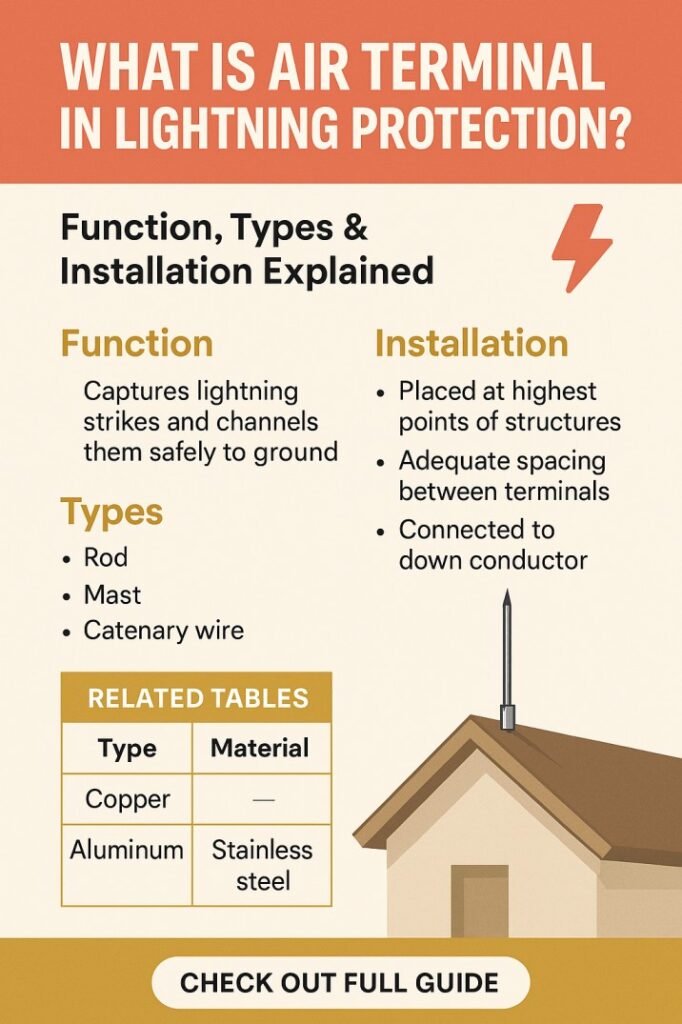
Table of Contents
Understanding an Air Terminal in Lightning Protection
An air terminal in lightning protection is a metallic conductor installed at the highest point of a structure. Its primary role is to attract lightning strikes and provide a controlled path for the discharge to flow into the down conductors and grounding system.
Air terminals are commonly referred to as lightning rods, but modern lightning protection systems use engineered air terminals based on international standards. Their placement, height, and material directly affect the effectiveness of the overall system.
Know more about Top 10 Lightning Protection Design Softwares: Best Guide
Lightning always seeks the shortest and least resistant path to ground. By installing an air terminal in lightning protection at strategic points, the strike is intercepted before it can damage roofs, equipment, or structural elements.
Function of an Air Terminal in Lightning Protection
The function of an air terminal in lightning protection is not to prevent lightning but to manage it safely. When lightning strikes, enormous current flows within microseconds. If uncontrolled, this energy can cause fires, explosions, and equipment failure.
The main functions include:
- Intercepting lightning strikes at a preferred point
- Providing a low-impedance path for lightning current
- Protecting roofs, facades, and electrical installations
- Reducing the risk of side flashing
- Improving overall system reliability
By doing so, the air terminal in lightning protection works together with down conductors, bonding, and grounding electrodes to create a complete protection system.
How an Air Terminal Works During a Lightning Strike
When thunderclouds build up, electrical charges accumulate between the cloud and the earth. Sharp metallic objects create localized electric field intensification. An air terminal in lightning protection takes advantage of this phenomenon.
As the electric field strength increases, upward streamers can form from the air terminal. When these streamers connect with the downward leader from the cloud, a lightning strike occurs at that point. The current then flows through the down conductor into the earth termination system.
This controlled path ensures the lightning energy does not pass through unintended building components or internal wiring.
Uncover insights on iec standard for lighting lux level
Types of Air Terminals Used in Lightning Protection
Different structures require different air terminal designs. The selection depends on building height, roof geometry, exposure level, and applicable standards.
Conventional Air Terminals
Conventional air terminals are simple vertical rods made of copper, aluminum, or stainless steel. They are widely used and proven over decades.
Key features include:
- Simple construction
- Easy installation
- Compliance with IEC and NFPA standards
- Suitable for most residential and commercial buildings
Early Streamer Emission Air Terminals
Early streamer emission terminals are designed to enhance upward streamer formation. They are often used on tall structures where wider protection zones are required.
They are commonly applied on:
- High-rise buildings
- Communication towers
- Industrial plants
- Airports and refineries
Mesh and Network Air Terminals
In flat or complex roofs, multiple air terminals are connected in a mesh pattern. This ensures uniform coverage and reduces the risk of unprotected zones.
This method is effective for:
- Large warehouses
- Data centers
- Manufacturing facilities
Know more about Types of Lightning Arrester Explained: Important Guide for Power Systems & Substations
Comparison of Common Air Terminal Types
| Air Terminal Type | Typical Application | Protection Coverage | Installation Complexity |
|---|---|---|---|
| Conventional Rod | Homes, offices | Localized | Low |
| Early Streamer Emission | Tall structures | Wide area | Medium |
| Mesh Network | Flat roofs | Uniform coverage | High |
Materials Used for Air Terminals
Material selection plays a major role in performance and durability. An air terminal in lightning protection must withstand weather, corrosion, and high electrical stress.
Common materials include:
- Copper for high conductivity and long life
- Aluminum for lightweight applications
- Stainless steel for corrosive environments
Material compatibility with down conductors and bonding systems is essential to prevent galvanic corrosion.
Placement and Height Requirements
Correct placement is critical for the effectiveness of an air terminal in lightning protection. Terminals must be installed at the highest points of a structure, including ridges, corners, and rooftop equipment.
Know more about IEC Standard for Lightning Arrester – IEC 60099 Guide for Surge and Overvoltage Protection
General placement guidelines include:
- Install at roof edges and corners
- Protect rooftop HVAC and antennas
- Maintain minimum height above the protected object
- Ensure overlapping protection zones
Improper placement can leave vulnerable areas exposed, even if high-quality components are used.
Installation of an Air Terminal in Lightning Protection
Installation must follow recognized standards such as IEC 62305 or NFPA 780. Proper workmanship is as important as correct design.
Basic installation steps include:
- Secure mounting to structural elements
- Use corrosion-resistant fasteners
- Connect directly to down conductors
- Avoid sharp bends in conductors
- Ensure firm mechanical and electrical joints
A poorly installed air terminal in lightning protection can fail under real lightning conditions, leading to severe damage.
Integration with the Lightning Protection System
An air terminal does not work alone. It must be properly integrated with:
- Down conductors
- Equipotential bonding
- Earth termination system
- Surge protection devices
All components must work together to safely dissipate lightning energy into the ground. Any weak link can compromise the entire system.
Know more about IEC Standard for Lightning Protection: A Complete Technical Guide
Maintenance and Inspection Requirements
Regular inspection ensures long-term reliability. Over time, environmental factors can loosen connections or cause corrosion.
Recommended maintenance practices include:
- Visual inspection after severe storms
- Checking mechanical tightness annually
- Verifying continuity of conductors
- Inspecting grounding resistance periodically
Well-maintained systems provide consistent protection throughout the building’s life cycle.
Common Mistakes to Avoid
Some common mistakes reduce the effectiveness of an air terminal in lightning protection:
- Installing too few air terminals
- Ignoring roof-mounted equipment
- Using incompatible materials
- Poor grounding connections
- Skipping periodic inspections
Avoiding these errors significantly improves system performance and safety.
Know more about Leakage Current in Lightning Arrester: Best Guide
Why an Air Terminal Is Essential for Modern Structures
With increasing use of sensitive electronics, lightning-related losses are rising every year. An air terminal in lightning protection is no longer optional for critical infrastructure.
It provides:
- Structural safety
- Fire risk reduction
- Equipment protection
- Compliance with safety codes
- Peace of mind during storms
When properly designed and installed, it becomes a reliable first line of defense against one of nature’s most destructive forces.
Final Thoughts
An air terminal in lightning protection plays a vital role in safeguarding buildings and people from lightning hazards. By intercepting strikes and directing energy safely to ground, it prevents catastrophic damage and costly downtime. Understanding its function, types, and installation requirements helps ensure a reliable and code-compliant lightning protection system.
Know more about Earth Cable Size for Lightning Protection
Whether for residential, commercial, or industrial applications, selecting the right air terminal and installing it correctly is a smart investment in long-term safety and resilience.
Follow Us on Social:
Subscribe our Newsletter on Electrical Insights for latest updates from Electrical Engineering Hub
#AirTerminal, #LightningProtectionSystem, #AirTerminalLightning, #LightningArrester, #ElectricalSafety, #EarthingSystem, #SurgeProtection, #BuildingProtection, #ElectricalEngineering, #PowerSafety

Your viewpoint is both relevant and professionally delivered.