
IEEE Standard for Transformer Oil Testing | Complete Guide to Compliance, Procedures & Industry Best Practices
Introduction to Transformer Oil Testing Standards
Transformer oil plays a critical role in maintaining the performance and lifespan of power transformers. It provides insulation, cooling, and arc-quenching properties that ensure stable operation of electrical systems. Utilities, industries, and maintenance teams rely on structured guidelines to evaluate oil quality and detect early signs of equipment failure.
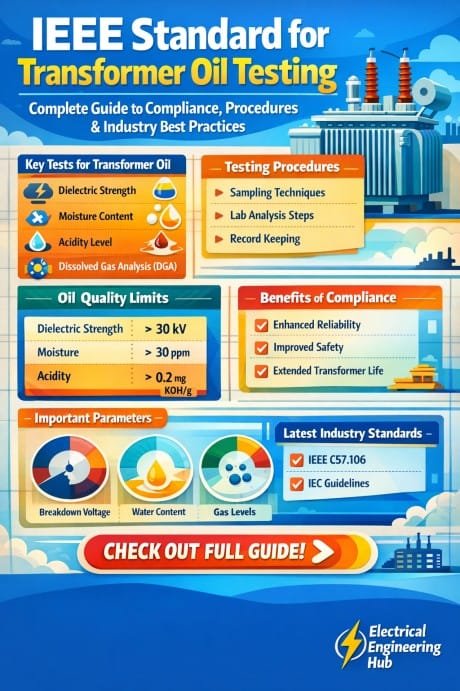
Table of Contents
The IEEE standard for transformer oil testing is widely used as a benchmark for assessing oil condition in both new and in-service transformers. It helps engineers maintain reliability by defining acceptable limits for dielectric strength, moisture content, and chemical stability. Without such structured guidance, transformer failures due to insulation breakdown and overheating would become far more common.
Find all about IEEE Standard for Insulation Resistance Test
In modern power systems, the IEEE standard for transformer oil testing is considered essential for predictive maintenance strategies. It supports decision-making related to oil replacement, filtration, and transformer servicing schedules.
Importance of Transformer Oil Testing in Power Systems
Electrical networks depend heavily on transformer health, and oil quality is directly linked to insulation performance. Regular monitoring helps detect issues such as oxidation, contamination, and gas formation inside transformers.
The IEEE standard for transformer oil testing provides a reliable framework to ensure transformers operate within safe limits. It also helps reduce unexpected outages and costly equipment damage. Engineers use oil test results to evaluate whether a transformer is aging normally or showing signs of internal stress.
Key benefits include improved reliability, reduced maintenance costs, and extended transformer lifespan. The IEEE standard for transformer oil testing is especially important in high-load environments such as industrial plants and power distribution grids.
Know more about IEEE Standard for Instrument Transformers
Key Parameters in Transformer Oil Evaluation
Transformer oil is evaluated using several electrical and chemical parameters. These indicators help determine whether the oil is still suitable for continued use.
Common parameters include:
- Dielectric breakdown voltage (BDV)
- Moisture content in oil
- Dissolved gas analysis (DGA)
- Acidity level (neutralization number)
- Interfacial tension
- Power factor or dissipation factor
The IEEE standard for transformer oil testing defines acceptable thresholds for these parameters to ensure safe transformer operation. For example, low BDV values indicate contamination or moisture ingress, while high acidity suggests oil degradation.
| Parameter | Purpose | Typical Concern |
|---|---|---|
| BDV (Breakdown Voltage) | Measures insulation strength | Water or particle contamination |
| Moisture Content | Detects water presence | Insulation weakening |
| DGA | Identifies internal faults | Arcing or overheating |
| Acidity | Indicates oxidation level | Aging oil |
| Interfacial Tension | Measures oil purity | Contamination level |
Each of these parameters is essential for interpreting transformer health under the IEEE standard for transformer oil testing guidelines.
Explore all about IEEE Standard for Cable Insulation Resistance Test
IEEE Standard Framework for Oil Testing
The IEEE framework provides structured procedures for sampling, testing, and interpreting transformer oil results. It aligns with international practices to ensure consistency across laboratories and utilities.
The IEEE standard for transformer oil testing emphasizes accuracy in sampling techniques because even minor contamination during collection can affect results. It also defines calibration requirements for laboratory equipment and outlines acceptable testing methods.
Engineers follow standardized reporting formats to ensure results are comparable across different testing facilities. This structured approach helps in long-term condition monitoring and asset management planning.
Step-by-Step Transformer Oil Testing Procedures
Transformer oil testing involves a sequence of controlled steps to ensure accurate results.
- Proper sampling from energized or de-energized transformers
- Immediate sealing of samples to avoid moisture contamination
- Laboratory preparation and filtration if required
- Execution of electrical and chemical tests
- Data analysis and comparison with standards
- Maintenance decision based on results
The IEEE standard for transformer oil testing ensures each of these steps is performed under controlled conditions. It reduces human error and ensures consistency in results across multiple testing cycles.
Know more about IEEE Standard for Contact Resistance
Laboratory Testing Methods and Equipment
Different laboratory methods are used to evaluate transformer oil quality. Each method focuses on a specific property of the oil.
| Test Method | Equipment Used | Purpose |
|---|---|---|
| BDV Test | Oil test set | Measures dielectric strength |
| Karl Fischer Test | Moisture analyzer | Detects water content |
| DGA Test | Gas chromatograph | Identifies dissolved gases |
| Acidity Test | Titration setup | Measures oxidation level |
| Resistivity Test | Megohmmeter | Checks insulation resistance |
The IEEE standard for transformer oil testing ensures these methods are performed under calibrated and controlled environments. This helps maintain accuracy and repeatability across different laboratories and service providers.
Proper laboratory practices are essential because transformer oil condition directly impacts grid reliability and equipment safety.
Know more about IEC Standard for Neutral to Earth Voltage – Limits, Measurement & Safety Guidelines
Field Testing and Diagnostic Techniques
Field testing is commonly used for quick assessment of transformer oil condition without sending samples to a laboratory. Portable kits allow engineers to perform basic diagnostics on-site.
Common field tests include:
- Portable BDV testing
- Moisture detection kits
- Visual inspection for color and clarity
- Gas detection using handheld analyzers
The IEEE standard for transformer oil testing supports field diagnostics as an initial evaluation method. However, detailed laboratory analysis is still required for final decision-making.
Field testing is especially useful in remote substations where immediate decisions are needed to prevent equipment failure.
Industry Best Practices for Transformer Oil Maintenance
Maintaining transformer oil quality requires consistent monitoring and preventive actions. Utilities and industries follow structured maintenance strategies to ensure long-term reliability.
Best practices include:
- Regular oil sampling at defined intervals
- Vacuum dehydration and filtration for oil regeneration
- Monitoring temperature and load conditions
- Maintaining sealed transformer systems to prevent moisture ingress
- Recording historical test data for trend analysis
Find all about IEC Standard for Relay Testing: Best Guide
The IEEE standard for transformer oil testing plays a key role in defining these maintenance intervals and acceptable limits. It ensures that corrective actions are taken before serious faults develop in the transformer.
Compliance Checklist for Transformer Oil Testing
Following a compliance checklist ensures that transformer oil testing meets industry and regulatory requirements.
| Compliance Area | Requirement | Status Check |
|---|---|---|
| Sampling method | Standardized collection procedure | Verified |
| Testing accuracy | Calibrated instruments | Required |
| Documentation | Proper reporting format | Mandatory |
| Threshold limits | IEEE-defined values | Mandatory |
| Maintenance action | Based on test results | Required |
The IEEE standard for transformer oil testing ensures all compliance aspects are properly addressed. This helps utilities maintain audit readiness and operational safety.
Find all about BS 7671 Wiring Regulations: Expert Guide to Compliance, Safety, and Practical Applications
Conclusion
Transformer oil testing is a vital part of maintaining electrical infrastructure reliability. It ensures that transformers operate safely under varying load and environmental conditions. The IEEE standard for transformer oil testing provides a structured approach that guides engineers in evaluating oil quality, detecting faults early, and implementing corrective actions.
By following standardized procedures, industries can significantly reduce downtime and extend transformer life. The IEEE standard for transformer oil testing remains a cornerstone in modern power system maintenance, helping engineers make informed decisions based on accurate and consistent data.
Know all about ieee and iec standards
Follow Us on Social:
Subscribe our Newsletter on Electrical Insights for latest updates from Electrical Engineering Hub
#IEEEStandards, #TransformerOilTesting, #PowerTransformers, #ElectricalTesting, #DielectricStrength, #OilAnalysis, #SubstationMaintenance, #HighVoltageTesting, #GridReliability, #ElectricalEngineering