IEEE Standard for High-Voltage Testing Techniques: Complete Guide for Accurate Testing, Safety Compliance & Power System Reliability
High-voltage systems are the backbone of modern power infrastructure. From transmission lines to substations, every component must perform reliably under extreme electrical stress. This is where the ieee standard for high-voltage testing techniques plays a critical role. It provides a structured approach to testing insulation strength, equipment durability, and system reliability while ensuring safety and compliance.
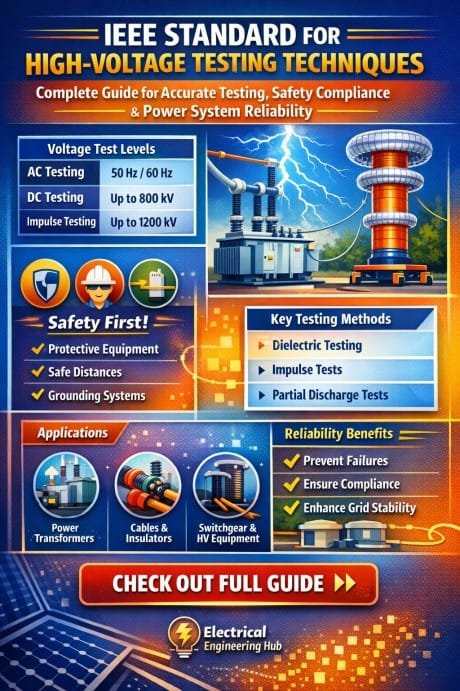
Table of Contents
Understanding these standards is essential for engineers, technicians, and businesses working in power generation, transmission, and distribution. This guide explains the principles, methods, equipment, and safety practices defined under the ieee standard for high-voltage testing techniques in a practical and easy-to-understand way.
Importance of High-Voltage Testing in Power Systems
High-voltage testing ensures that electrical equipment can withstand operational and transient stresses. Without proper testing, failures can lead to outages, equipment damage, and safety hazards.
The ieee standard for high-voltage testing techniques helps in:
- Verifying insulation strength
- Detecting manufacturing defects
- Ensuring long-term reliability
- Preventing unexpected failures
- Maintaining regulatory compliance
Testing is not just a quality check. It is a critical step that directly impacts system performance and operational safety.
Find all about IEEE Standard for Insulation Resistance Test
Overview of IEEE Standards for High-Voltage Testing
The ieee standard for high-voltage testing techniques covers a wide range of procedures used to evaluate electrical equipment. These standards define test voltages, durations, methods, and acceptable limits.
Key IEEE standards related to high-voltage testing include:
| Standard Number | Description |
|---|---|
| IEEE Std 4 | High-voltage testing techniques and measurement methods |
| IEEE Std 95 | Insulation testing procedures |
| IEEE Std 400 | Field testing of power cables |
| IEEE Std 43 | Insulation resistance testing |
These standards ensure consistency across industries and provide a benchmark for accurate measurements.
Types of High-Voltage Tests
Different tests are performed depending on the equipment and purpose. The ieee standard for high-voltage testing techniques categorizes tests into several types.
1. Dielectric Withstand Test
This test checks whether insulation can handle a specified voltage without failure. It is commonly used for transformers, cables, and switchgear.
2. Insulation Resistance Test
This method measures resistance between conductors and ground. It helps identify moisture, contamination, or insulation degradation.
3. Partial Discharge Test
Partial discharge indicates localized insulation failure. Detecting it early helps prevent major breakdowns.
4. Impulse Voltage Test
Impulse testing simulates lightning and switching surges. It ensures equipment can withstand transient overvoltages.
5. AC and DC High-Voltage Tests
Both AC and DC voltages are used depending on the application. AC testing is more common for insulation evaluation, while DC is used for cables.
Know more about IEEE Standard for Instrument Transformers
Essential Equipment Used in High-Voltage Testing
Accurate testing depends on the right equipment. The ieee standard for high-voltage testing techniques defines the specifications and calibration requirements for testing instruments.
| Equipment | Purpose |
|---|---|
| High-voltage transformers | Generate test voltage |
| Voltage dividers | Measure high voltage accurately |
| Oscilloscopes | Analyze waveforms |
| Partial discharge detectors | Identify insulation defects |
| Megohmmeters | Measure insulation resistance |
Proper calibration and maintenance of equipment are necessary to ensure reliable results.
Testing Procedures and Best Practices
Following proper procedures is as important as the test itself. The ieee standard for high-voltage testing techniques outlines step-by-step methods to achieve accurate and repeatable results.
Key best practices include:
- Ensure proper grounding before testing
- Maintain safe distances from energized parts
- Use calibrated instruments only
- Record environmental conditions like temperature and humidity
- Follow standard test durations and voltage levels
Consistency in testing procedures helps in comparing results over time and identifying trends.
Safety Considerations in High-Voltage Testing
Safety is a top priority during high-voltage testing. The ieee standard for high-voltage testing techniques emphasizes strict safety measures to protect personnel and equipment.
Explore all about IEEE Standard for Cable Insulation Resistance Test
Important safety guidelines:
- Always de-energize equipment before setup
- Use protective gear such as insulated gloves and helmets
- Install warning signs and barriers
- Ensure proper earthing and discharge paths
- Never work alone during high-voltage testing
Even a small mistake in high-voltage environments can lead to serious consequences. Following safety protocols reduces risks significantly.
Role of Environmental Factors
Environmental conditions can affect test results. Temperature, humidity, and altitude influence insulation performance and measurement accuracy.
| Factor | Impact on Testing |
|---|---|
| Temperature | Affects resistance values |
| Humidity | Can lower insulation strength |
| Altitude | Changes breakdown voltage |
| Dust and pollution | Causes surface leakage |
The ieee standard for high-voltage testing techniques recommends adjusting test parameters or applying correction factors based on these conditions.
Applications Across Power Industry
High-voltage testing is used across various sectors of the power industry. The ieee standard for high-voltage testing techniques ensures uniformity in all applications.
Common applications include:
- Power transformers testing
- Underground and overhead cable testing
- Circuit breakers and switchgear validation
- Renewable energy systems like solar and wind
- Industrial electrical installations
Know more about IEEE Standard for Contact Resistance
Reliable testing ensures uninterrupted power supply and reduces maintenance costs.
Common Challenges in High-Voltage Testing
Despite standardized procedures, challenges still exist in practical scenarios.
Some common issues include:
- Measurement errors due to noise
- Equipment calibration drift
- Environmental interference
- Improper grounding
- Human error during testing
The ieee standard for high-voltage testing techniques addresses these challenges by providing guidelines for minimizing errors and improving accuracy.
Benefits of Following IEEE Standards
Adhering to the ieee standard for high-voltage testing techniques offers multiple advantages for organizations and professionals.
- Improved reliability of electrical systems
- Enhanced safety for personnel
- Compliance with international regulations
- Better asset management
- Reduced downtime and maintenance costs
These benefits make IEEE standards a preferred choice worldwide.
Future Trends in High-Voltage Testing
Technology is evolving rapidly, and high-voltage testing is no exception. Modern systems are becoming more automated and data-driven.
Emerging trends include:
- डिजिटल monitoring systems for real-time analysis
- AI-based fault detection
- Portable testing equipment for field use
- Advanced insulation diagnostics
- Integration with smart grid systems
Find all about IEEE Standard for Short Circuit Calculation
The ieee standard for high-voltage testing techniques continues to evolve to accommodate these advancements and ensure modern power systems remain reliable.
Conclusion
High-voltage testing is a critical process that ensures the safety, efficiency, and reliability of electrical systems. The ieee standard for high-voltage testing techniques provides a comprehensive framework for conducting accurate tests, maintaining safety, and meeting industry requirements.
By understanding and applying these standards, engineers and organizations can improve system performance, reduce risks, and ensure long-term operational success. Whether working on transmission networks, industrial systems, or renewable energy projects, following the ieee standard for high-voltage testing techniques is essential for achieving consistent and dependable results.
Know more about IEC Standard for Neutral to Earth Voltage – Limits, Measurement & Safety Guidelines
Follow Us on Social:
Subscribe our Newsletter on Electrical Insights for latest updates from Electrical Engineering Hub
#IEEEStandards, #HighVoltageTesting, #ElectricalEngineering, #PowerSystems, #HVTestingTechniques, #EngineeringStandards, #InsulationTesting, #ElectricalSafety, #HVEquipment, #PowerEngineering