ESP12F vs ESP8266: Comprehensive Comparison for IoT Projects and Smart Applications
When it comes to building IoT projects and smart applications, the choice of microcontroller can significantly impact performance, reliability, and scalability. Two popular options in the market are the ESP12F and ESP8266 modules. Both belong to the ESP8266 family, known for their low-cost Wi-Fi capabilities and versatility. However, choosing the right module depends on understanding their technical specifications, features, and real-world application scenarios.
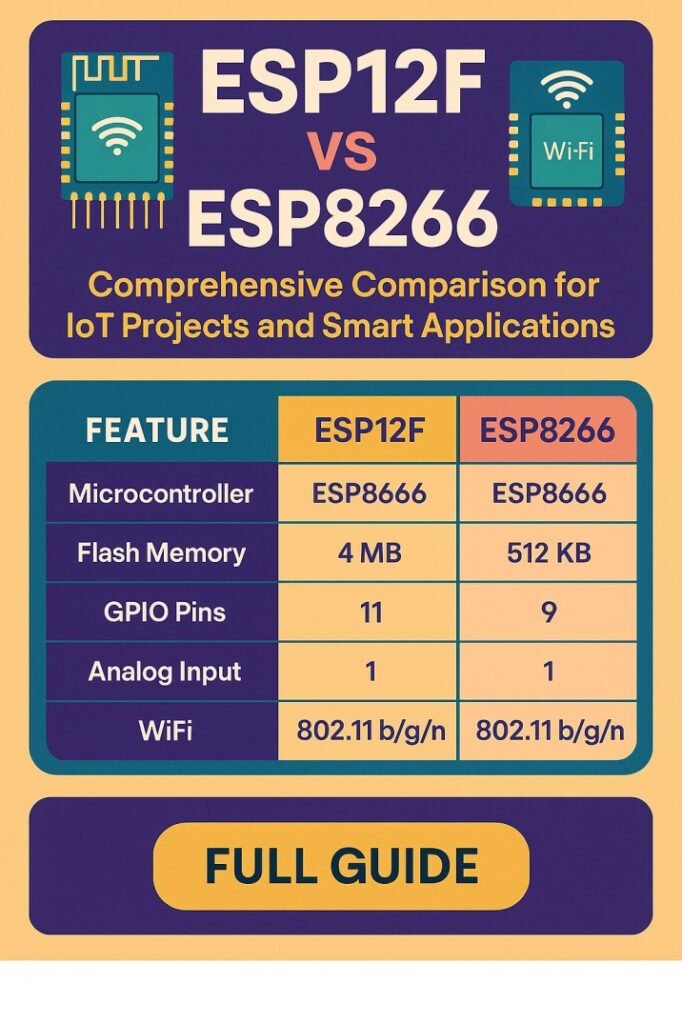
Table of Contents
This detailed comparison of ESP12F vs ESP8266 aims to help hobbyists, engineers, and developers make informed decisions for their next smart project. Know more about esp8266 pinout
Overview of ESP8266
The ESP8266 is a low-cost Wi-Fi microchip with full TCP/IP stack and microcontroller capability, developed by Espressif Systems. It became extremely popular due to its affordability, extensive community support, and ease of integration with Arduino IDE. The module offers sufficient processing power for small to medium IoT applications, including smart lighting, home automation, and sensor monitoring systems.
Key features of the ESP8266 include a 32-bit processor, integrated Wi-Fi, GPIO pins, and support for SPI, I2C, and UART interfaces. Its flexibility allows it to operate as a standalone microcontroller or work alongside other microcontrollers like Arduino or Raspberry Pi.
Know more about Programmable Logic Controller vs Arduino
Introduction to ESP12F
The ESP12F is a variant of the ESP8266 series, specifically designed to enhance stability, antenna performance, and pin availability. While it retains the core features of the ESP8266, it introduces improvements that make it ideal for more complex IoT applications requiring stable Wi-Fi connectivity and additional GPIO access.
The module comes with an onboard PCB antenna, improved RF performance, and a standard footprint compatible with ESP8266-based development boards. Its compact size and reliable wireless connectivity make it a preferred choice for projects like smart sensors, wearable devices, and home automation systems where Wi-Fi reliability is critical.
Technical Comparison: ESP12F vs ESP8266
To understand the differences clearly, the following table highlights the technical specifications of ESP12F against a standard ESP8266 module:
| Feature | ESP8266 | ESP12F |
|---|---|---|
| Processor | 32-bit Tensilica LX106 | 32-bit Tensilica LX106 |
| Operating Frequency | 80 MHz | 80 MHz |
| Flash Memory | 512 KB to 4 MB | 4 MB (typically) |
| GPIO Pins | 17 | 11 (accessible) |
| ADC | 10-bit ADC | 10-bit ADC |
| Wi-Fi | 802.11 b/g/n | 802.11 b/g/n with improved antenna |
| Antenna | External or PCB | PCB onboard with improved stability |
| Power Consumption | 70–170 mA | Slightly lower average consumption |
| Size | Varies by module | 24 x 16 mm |
| Recommended Applications | Basic IoT, DIY projects | Advanced IoT, smart devices, stable connectivity |
From the table, it is evident that while both modules share the same processor and Wi-Fi capability, the ESP12F provides enhanced memory, antenna stability, and a consistent footprint for development.
Know more about Top 10 ESP Based Smart Home Projects for Beginners
Performance and Connectivity
Wi-Fi reliability is a major factor when comparing ESP12F vs ESP8266. The standard ESP8266 may experience signal drops in dense environments or long-range setups due to its external antenna or basic PCB antenna design. ESP12F addresses these limitations with its improved onboard PCB antenna, resulting in fewer connection drops and better throughput.
Processing-wise, both modules can handle similar tasks. However, ESP12F’s additional flash memory ensures larger programs and firmware updates without performance issues. For projects involving multiple sensors, actuators, or cloud integrations, ESP12F proves more robust and scalable. Find all about esp8266mod
Ease of Integration and Development
Both ESP12F and ESP8266 are compatible with popular IDEs like Arduino IDE, PlatformIO, and NodeMCU firmware. Developers can easily program these modules using familiar tools, libraries, and protocols like MQTT, HTTP, and WebSocket.
One advantage of ESP12F over a basic ESP8266 module is the standardized pin layout and higher stability in soldered applications. This makes ESP12F particularly suitable for commercial-grade IoT devices or long-term installations, whereas a generic ESP8266 might be ideal for prototypes or temporary setups.
Explore all about arduino touch sensor
Power Consumption Considerations
Power efficiency is crucial for battery-operated IoT projects. The ESP12F consumes slightly less power in idle mode compared to standard ESP8266 modules, thanks to optimized circuitry and antenna design. Both modules support deep sleep mode, which is essential for sensors, wearable devices, and remote monitoring systems where low power operation extends battery life.
| Mode | ESP8266 | ESP12F |
|---|---|---|
| Active | 70–170 mA | 65–150 mA |
| Sleep | 20 µA | 15 µA |
| Peak Transmission | 200 mA | 180 mA |
This efficiency difference might seem minor in a single device but becomes significant in large-scale deployments with multiple modules operating continuously. Here is a detailed guide on esp12f pinout
Application Scenarios
Choosing between ESP12F and ESP8266 depends largely on the intended use case:
- ESP8266: Ideal for DIY enthusiasts, learning projects, and simple home automation setups where occasional Wi-Fi drops are not critical. Examples include smart lamps, temperature monitors, and hobby robots.
- ESP12F: Best suited for professional IoT applications requiring stable Wi-Fi, multiple GPIO operations, and long-term reliability. Examples include industrial sensors, smart switches, energy monitoring systems, and wearable devices.
Find all about nema 17 pinout
By analyzing ESP12F vs ESP8266, developers can match the module with project requirements, balancing cost, stability, and performance.
Conclusion
In the comparison of ESP12F vs ESP8266, both modules offer strong capabilities for IoT projects, but their differences influence practical usage. ESP8266 is perfect for prototypes and learning projects due to its low cost and flexibility, while ESP12F provides enhanced stability, reliable connectivity, and more memory for advanced applications. Evaluating factors like Wi-Fi reliability, GPIO requirements, and power efficiency will guide developers in selecting the right module.
Explore details on esp32 wroom 32 uart pins
For anyone aiming to develop smart home systems, industrial IoT solutions, or wearable devices, understanding these distinctions ensures efficient and scalable designs. By choosing the right module for your needs, your IoT project will not only function reliably but also remain adaptable for future expansions.
Follow Us on Social:
Subscribe our Newsletter on Electrical Insights for latest updates from Electrical Engineering Hub
#ESP12FvsESP8266, #ESP12F, #ESP8266, #IoTModules, #WiFiModuleComparison, #Microcontroller, #ESP8266Projects, #ESP12FProjects, #ArduinoWiFi, #IoTDevelopment