Doncaster Cable Size Calculator – Instantly Find the Right Cable for Safe & Efficient Installations
Introduction
The doncaster cable size calculator is designed to help engineers, electricians, and contractors determine the correct electrical cable size for a given load and installation condition. In real-world electrical work, cable sizing is not just about carrying current. It directly affects voltage drop, thermal performance, safety, and long-term reliability of the system.
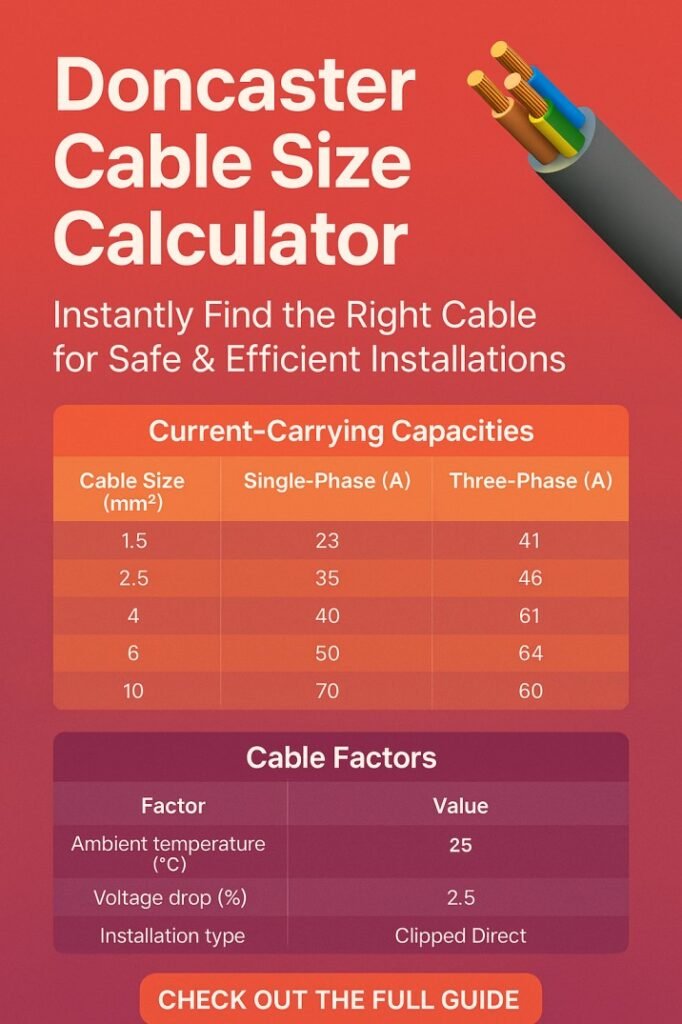
Table of Contents
This calculator is commonly used during the design and planning stages of residential, commercial, and industrial electrical installations. It is equally useful for new projects, equipment upgrades, and load expansions where existing cables may no longer be adequate.
Accurate electrical calculation matters because undersized cables can overheat, cause excessive voltage drop, and fail prematurely. Oversized cables, on the other hand, increase material costs and installation complexity. The doncaster cable size calculator helps strike the right balance by converting load requirements and operating conditions into a practical cable size recommendation.
Use this tool if you are trying to calculate cable size for underground cables. Try here Underground Cable Size Calculator – Find Correct Wire Size for Long Distance Runs
Doncaster Cable Size Calculator
The calculator is embedded above for direct use. Enter the required electrical values, review the selected options, and calculate to obtain the recommended cable size for your application.
Doncaster Cable Size Calculator
How to Use
Enter load power, voltage, power factor, cable length, conductor material, and system type. The calculator applies IEC/NEC formulas for design current and voltage drop to recommend the minimum cable cross‑section.
Find more Electrical Engineering Tools for easy electrical calculations and estimations.
How to Use Doncaster Cable Size Calculator (Step-by-Step)
- Select the system type, such as single-phase or three-phase, based on your electrical supply.
- Enter the operating voltage of the circuit from the source to the load.
- Input the load current or power rating, depending on what information is available.
- Choose the cable length to account for voltage drop over distance.
- Specify installation conditions such as ambient temperature or grouping if required.
- Click calculate to view the suggested cable size and related electrical parameters.
Each step is designed to guide users with minimal electrical background while still supporting professional-level decision making.
How the Calculation Works
The doncaster cable size calculator works by evaluating how much current the cable must safely carry under defined conditions. It considers the electrical load demand and compares it against the current-carrying capacity of standard cable sizes.
The logic also accounts for voltage drop, which increases as cable length grows. If voltage drop exceeds acceptable limits, the calculator selects a larger conductor size to compensate. Environmental factors such as temperature or installation method are applied as correction influences, ensuring the output reflects real operating conditions rather than ideal assumptions.
The final output is a cable size that balances thermal safety, voltage performance, and practical installation requirements.
Practical Electrical Example
Consider a small commercial workshop supplied with a three-phase system. The total connected load requires a steady operating current, and the distribution board is located a significant distance from the main panel.
The electrician enters the system type, supply voltage, calculated load current, and cable run length into the doncaster cable size calculator. Installation conditions are selected based on cables installed in conduit along a wall.
Discover our Electrical Cable Sizing Tools, a great resource for all types of cable calculations. It includes cable calculators for generators, transformers, earthing, and more.
After calculation, the result indicates a larger cable size than initially expected. This outcome reflects voltage drop considerations rather than current alone. By following the calculator’s result, the installer ensures that equipment at the workshop receives stable voltage and avoids overheating of the conductors during continuous operation.
Key Factors That Affect the Result
Several electrical and operational factors influence the final cable size:
- Voltage level of the system, which impacts current flow and losses
- Load type, such as resistive, inductive, or mixed loads
- Power factor, particularly in motor-driven or industrial applications
- Equipment efficiency, affecting actual current demand
- Ambient temperature, which alters cable heat dissipation
- Installation method, including conduit, tray, or direct burial
- Circuit length, directly affecting voltage drop
Understanding these factors helps users interpret the calculator output correctly rather than treating it as a generic value.
Common Mistakes to Avoid
One frequent mistake is entering the rated power of equipment without accounting for efficiency or power factor. This can result in underestimated current values and an undersized cable.
Know more about Cable Gland Size Chart Hawke: Best NEC-Compliant Sizing & Industrial Application Guide
Another common error is ignoring actual cable length and only considering straight-line distance. Routing around structures often increases run length, which impacts voltage drop calculations.
Users sometimes select incorrect system types, such as choosing single-phase for a three-phase supply. This leads to incorrect assumptions about current distribution and cable loading.
Incorrect inputs do not just affect numbers on a screen. They can lead to non-compliant installations, nuisance tripping, and long-term safety risks.
Why Use Doncaster Cable Size Calculator
The doncaster cable size calculator provides a structured and repeatable method for cable selection. It reduces reliance on rough estimates and minimizes manual calculation errors.
By combining multiple electrical considerations into one process, it saves time during design reviews and site planning. The calculator also supports consistent engineering decisions, especially when comparing multiple load scenarios or future expansion options.
For students and junior technicians, it reinforces correct electrical thinking. For experienced professionals, it acts as a verification tool before finalizing specifications.
Electrical Standards & Practical Considerations
Cable sizing should always align with recognized electrical standards and local regulations. These standards define acceptable current limits, voltage drop ranges, and safety margins for different installation environments.
Know more about Cable Size Chart Gland Guide for Engineers: NEC-Compliant Sizing, Selection & Best Applications
Following established guidelines improves system reliability and reduces the risk of insulation failure or fire hazards. While calculators assist with technical selection, final decisions should always consider site inspections, manufacturer data, and regulatory approval requirements.
Using tools like the doncaster cable size calculator within the framework of accepted electrical practice leads to safer and more predictable installations.
Frequently Asked Questions (FAQs)
Is the doncaster cable size calculator suitable for industrial applications?
Yes, it can be used for industrial loads as long as correct system parameters and operating conditions are entered.
Does the calculator account for voltage drop automatically?
Voltage drop is considered based on cable length and load, influencing the recommended cable size. Designing electrical system? Use this clearance and creepage calculator for accurate distances
Can this calculator be used for motor circuits?
It can be used for motor circuits, but users should ensure correct load current and power factor values are applied.
Is the calculated cable size always the final selection?
The result should be treated as a technical recommendation and verified against local standards and site conditions.
What happens if installation conditions change later?
Any change in temperature, grouping, or load may require recalculating the cable size to maintain safety and performance.
Discover how this tool works and why it’s worth using NEC Wire Size Calculator – Voltage Drop Compliant Sizing for 120V & 240V Circuits
Follow Us on Social:
Subscribe our Newsletter on Electrical Insights for latest updates from Electrical Engineering Hub
#DoncasterCableSizeCalculator, #CableSizeCalculator, #ElectricalCalculator, #CableSizing, #ElectricalEngineeringTools, #PowerCableSizing, #ElectricalDesign, #VoltageDropCalculator, #ElectricianTools, #EngineeringCalculations